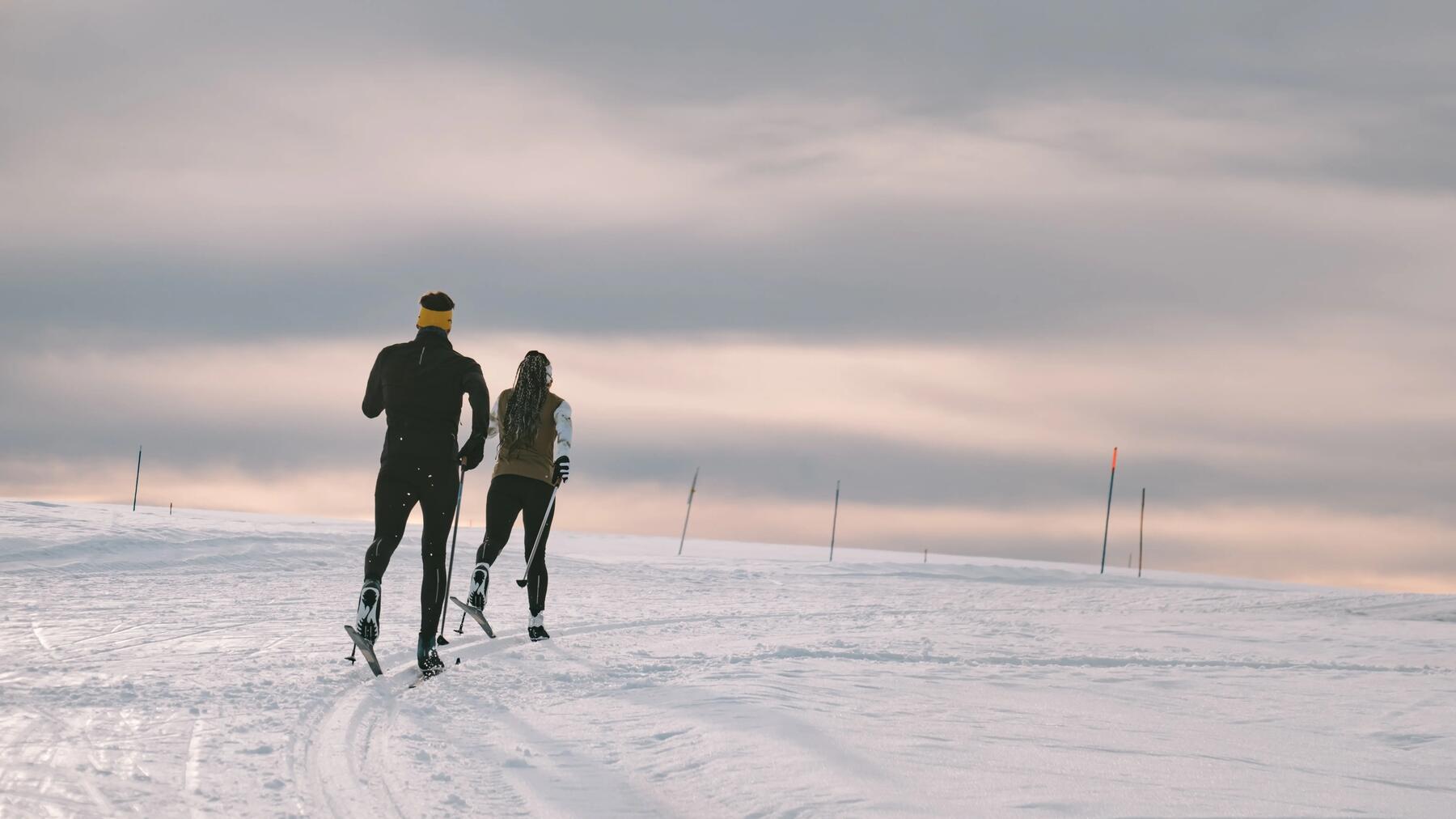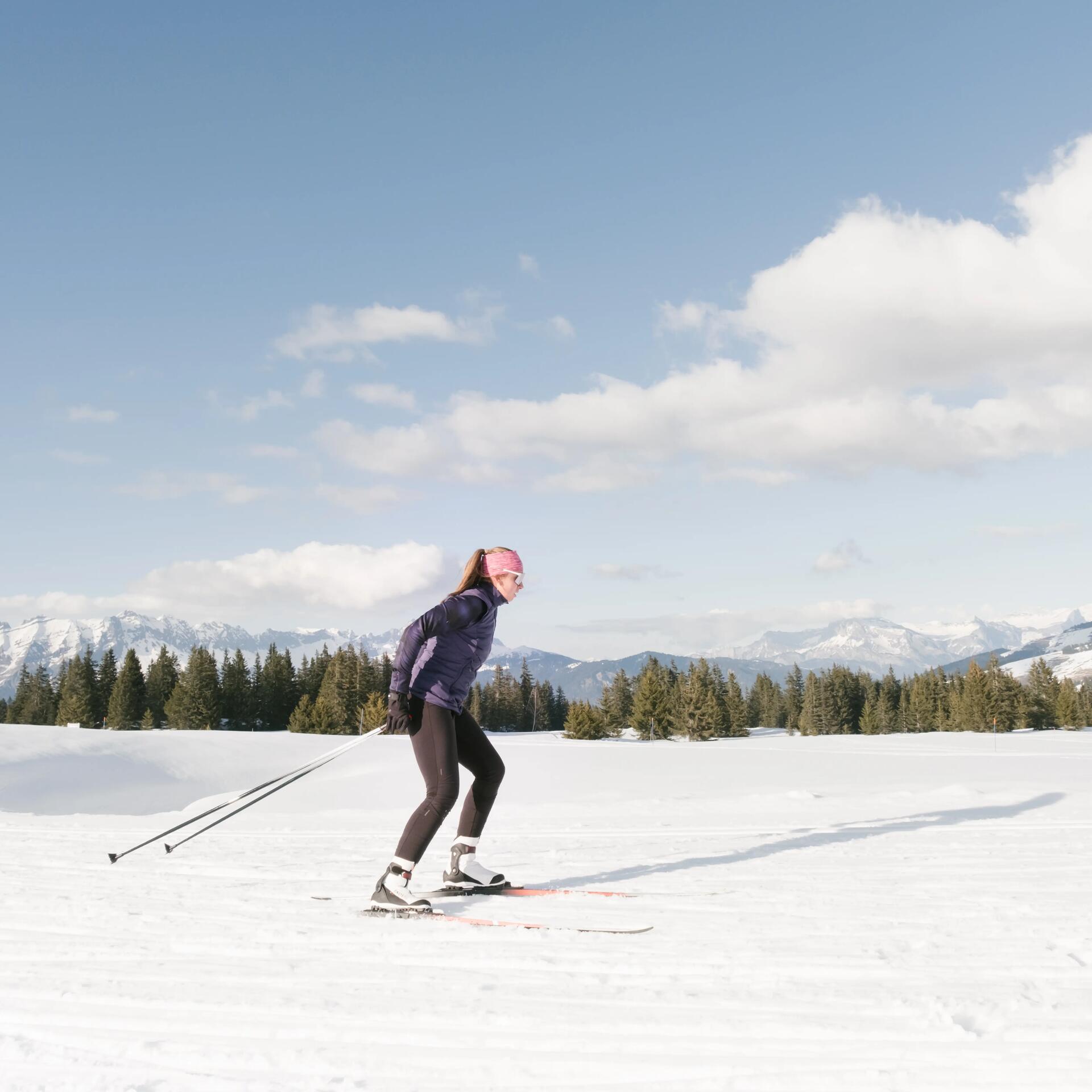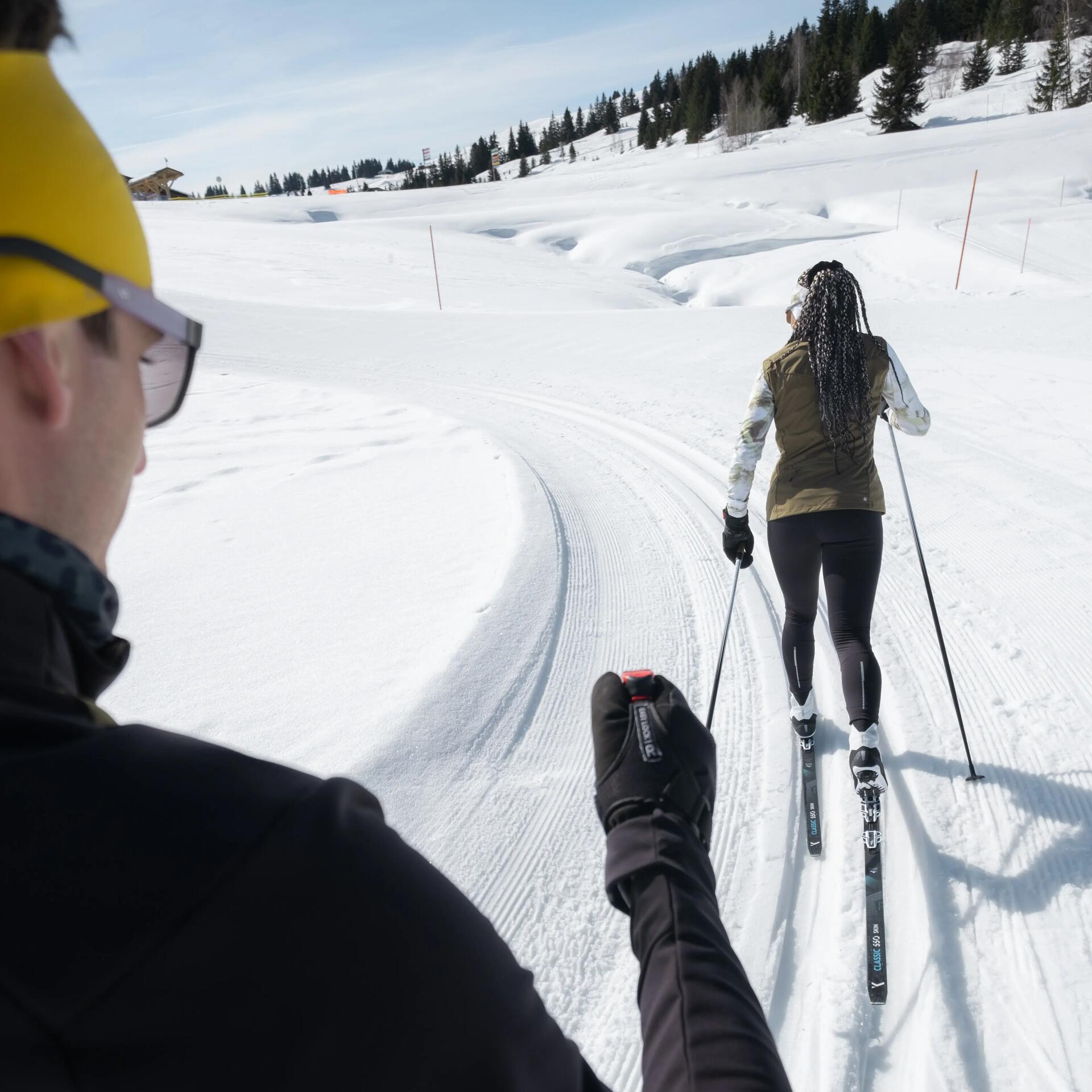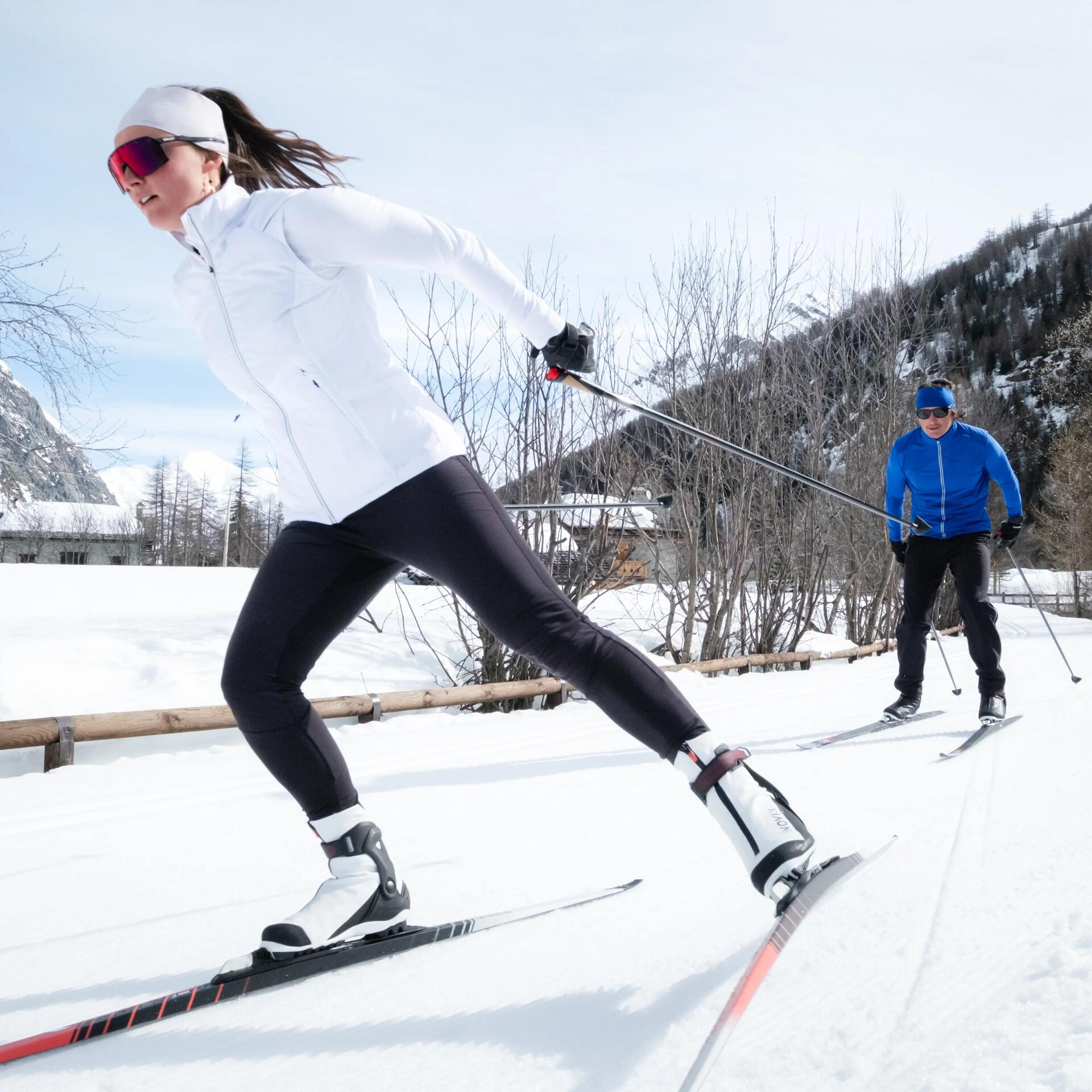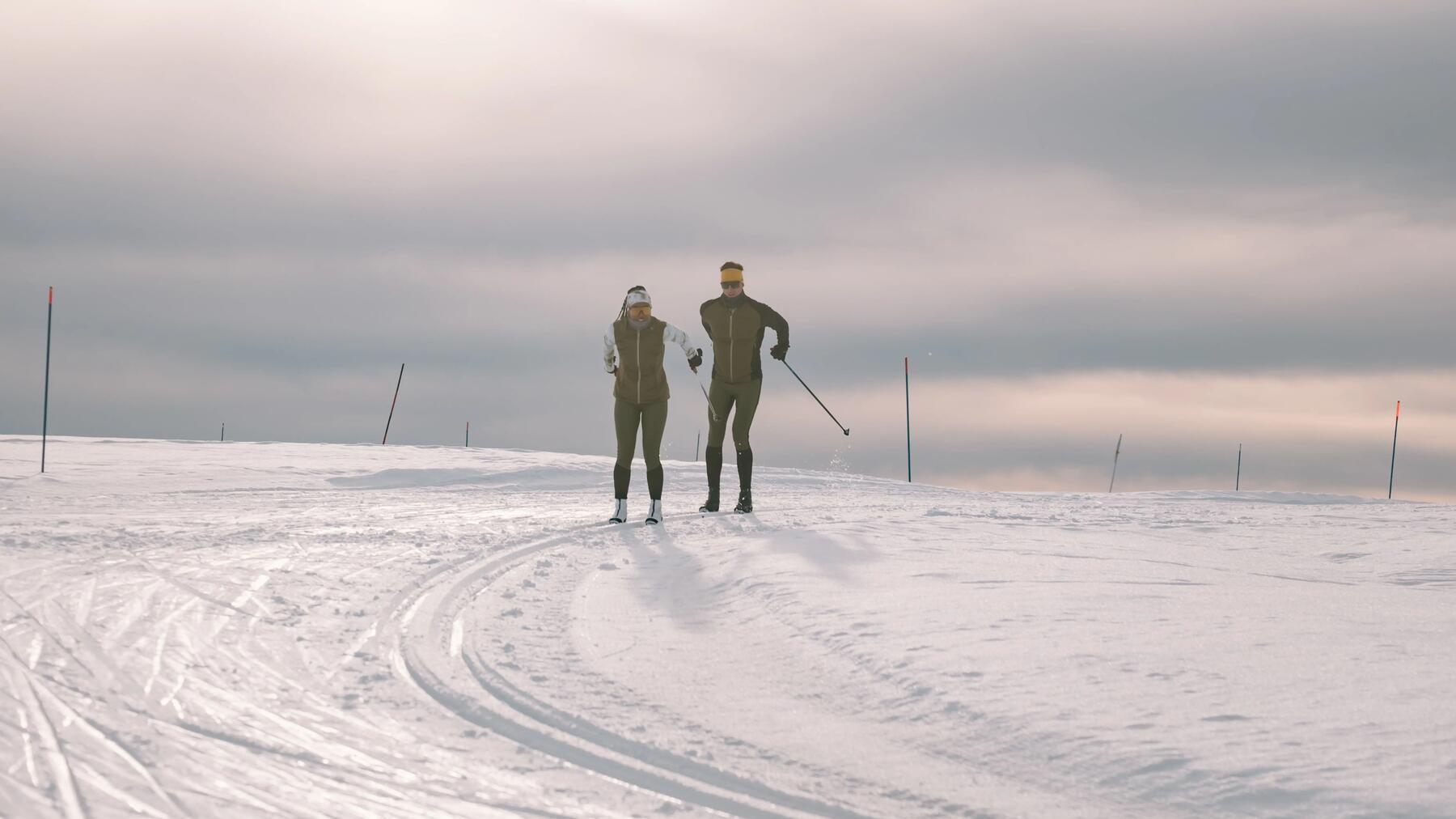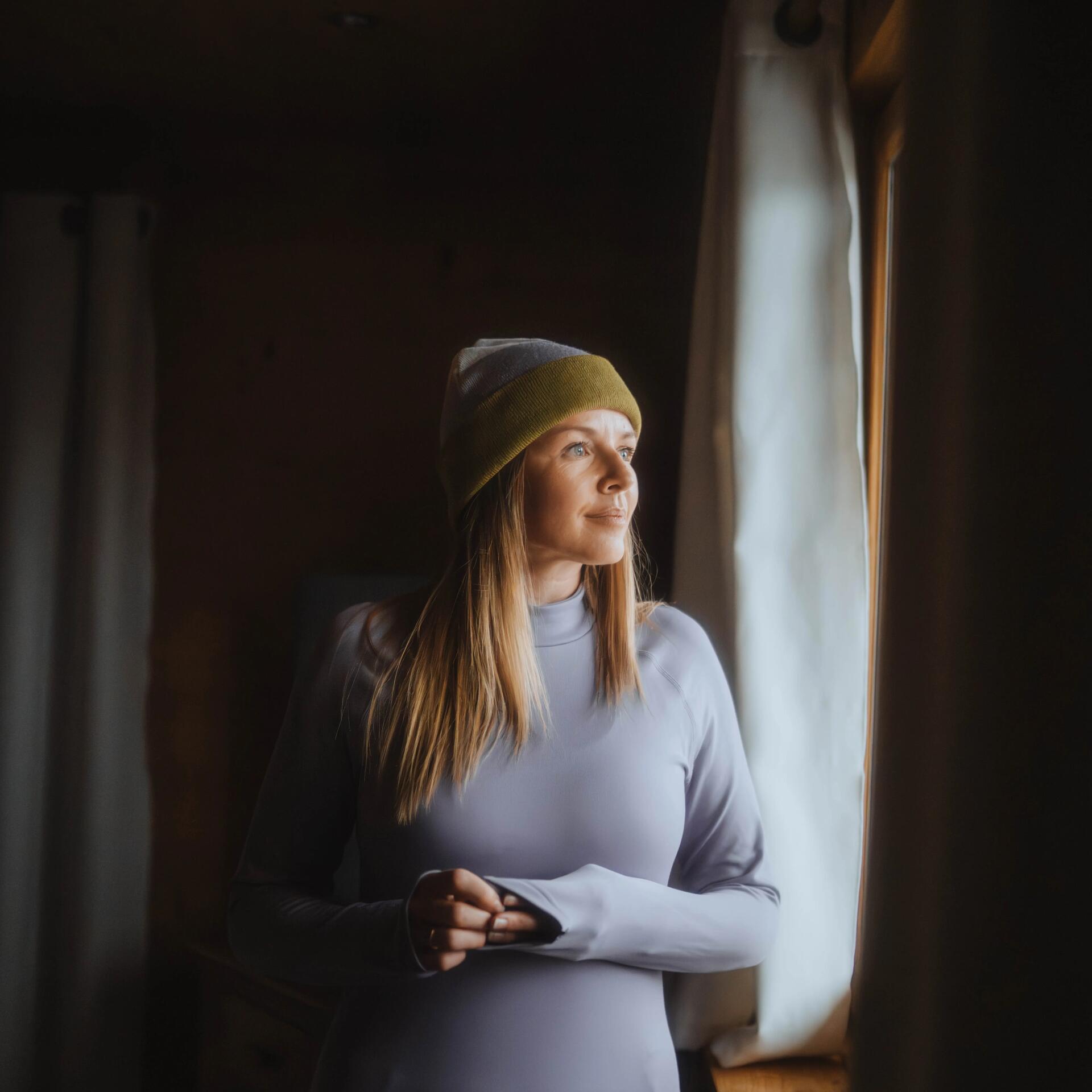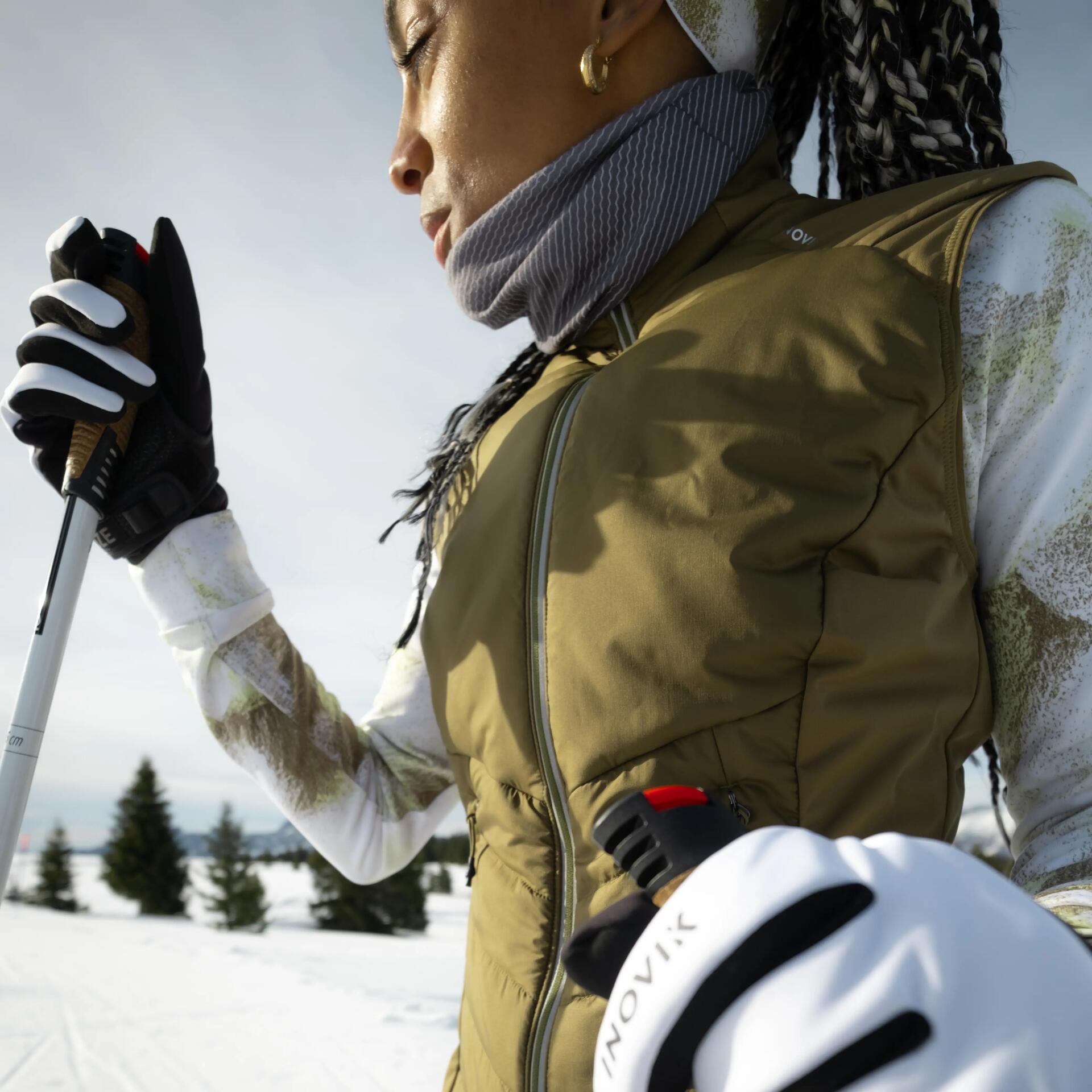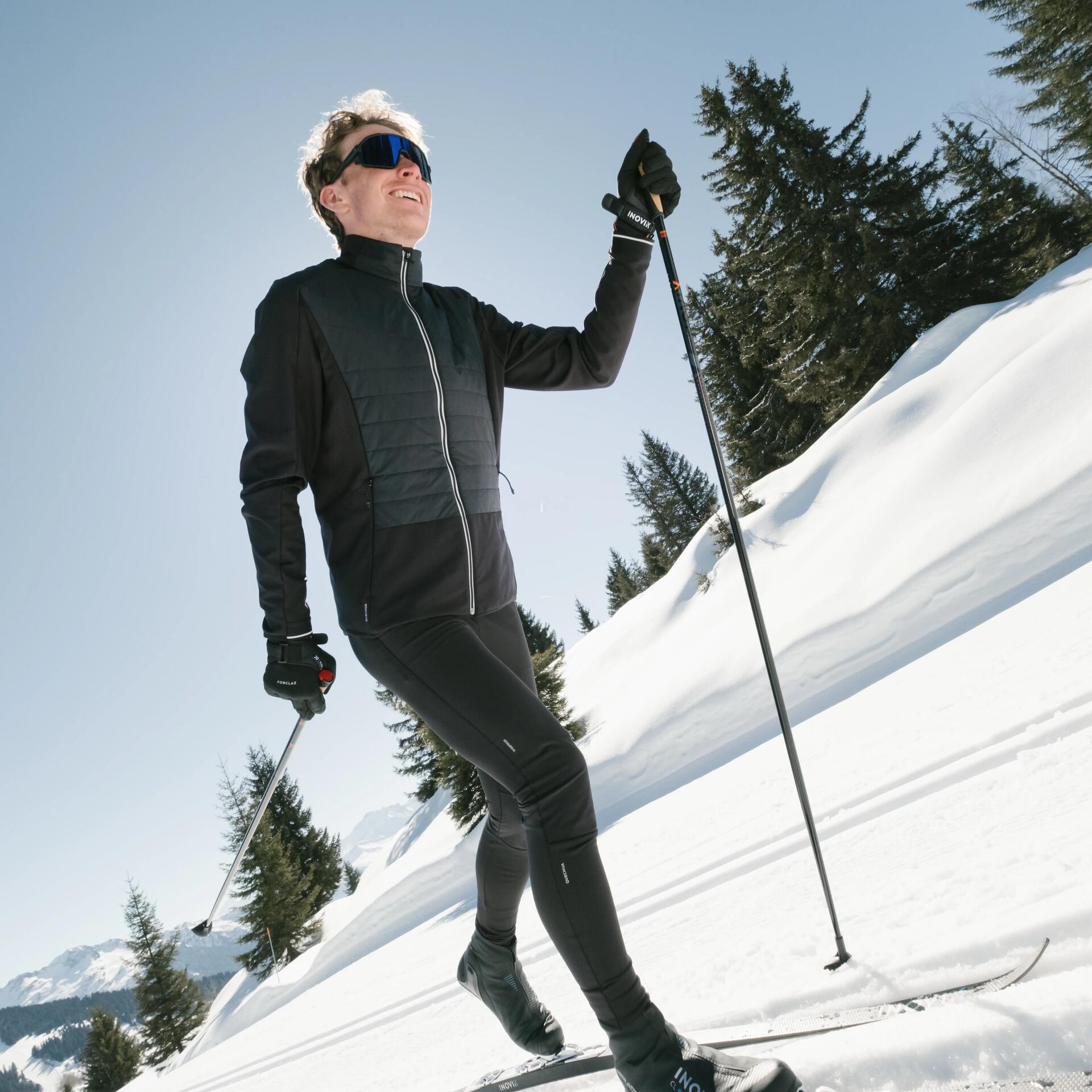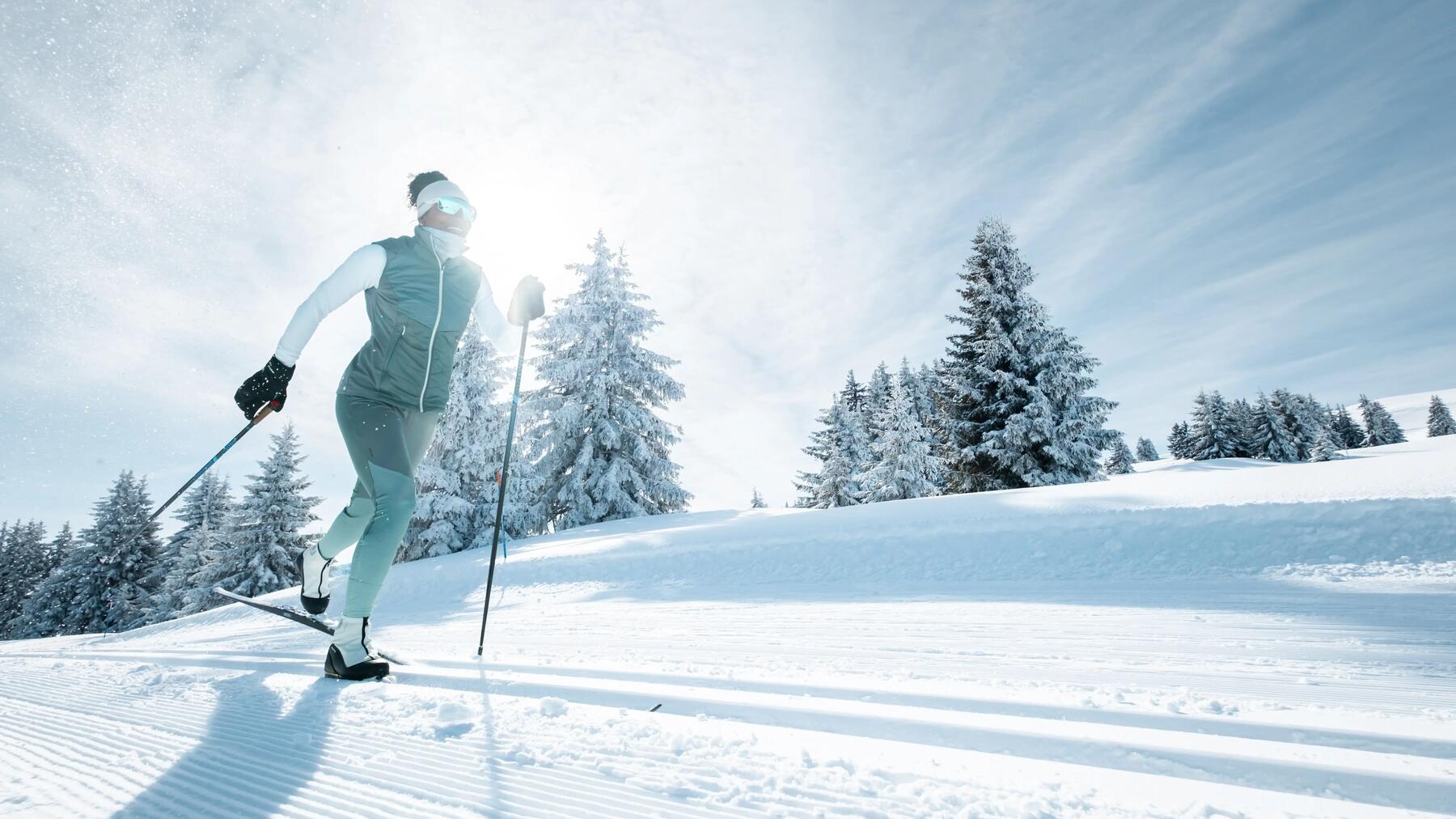
How to choose your cross-country skiing clothes?

Wondering how to choose your cross-country skiing outfit? Follow our advice to be perfectly equipped and enjoy your future outings to the fullest!

To enjoy cross-country skiing without getting too hot, too cold or wet, choose technical clothing designed for this activity. Consider your intensity level and weather conditions when choosing the ideal clothing so you can get the most out of your outings.

Which jacket should you wear for cross-country skiing?

Although Nordic skiing is practised in winter conditions, it is an endurance sport that causes significant variations in body temperature. Unlike downhill skiing, which alternates between static phases on the ski lifts and dynamic phases, cross-country skiing is an ‘active’ sport, meaning you are constantly moving. The intensity of the effort varies greatly depending on the slope of the terrain and your level of commitment on the trails.

So for this sport, forget your downhill skiing outfit, clothes that are too loose and let in cold air, or materials such as cotton that retain moisture and don't dry quickly enough! To avoid getting too hot, too cold or wet on the slopes, it is important to choose thermal clothing that offers excellent thermoregulation. From trousers to cross-country skiing jackets, choose clothing that is breathable, protective and offers good freedom of movement and a high level of comfort.
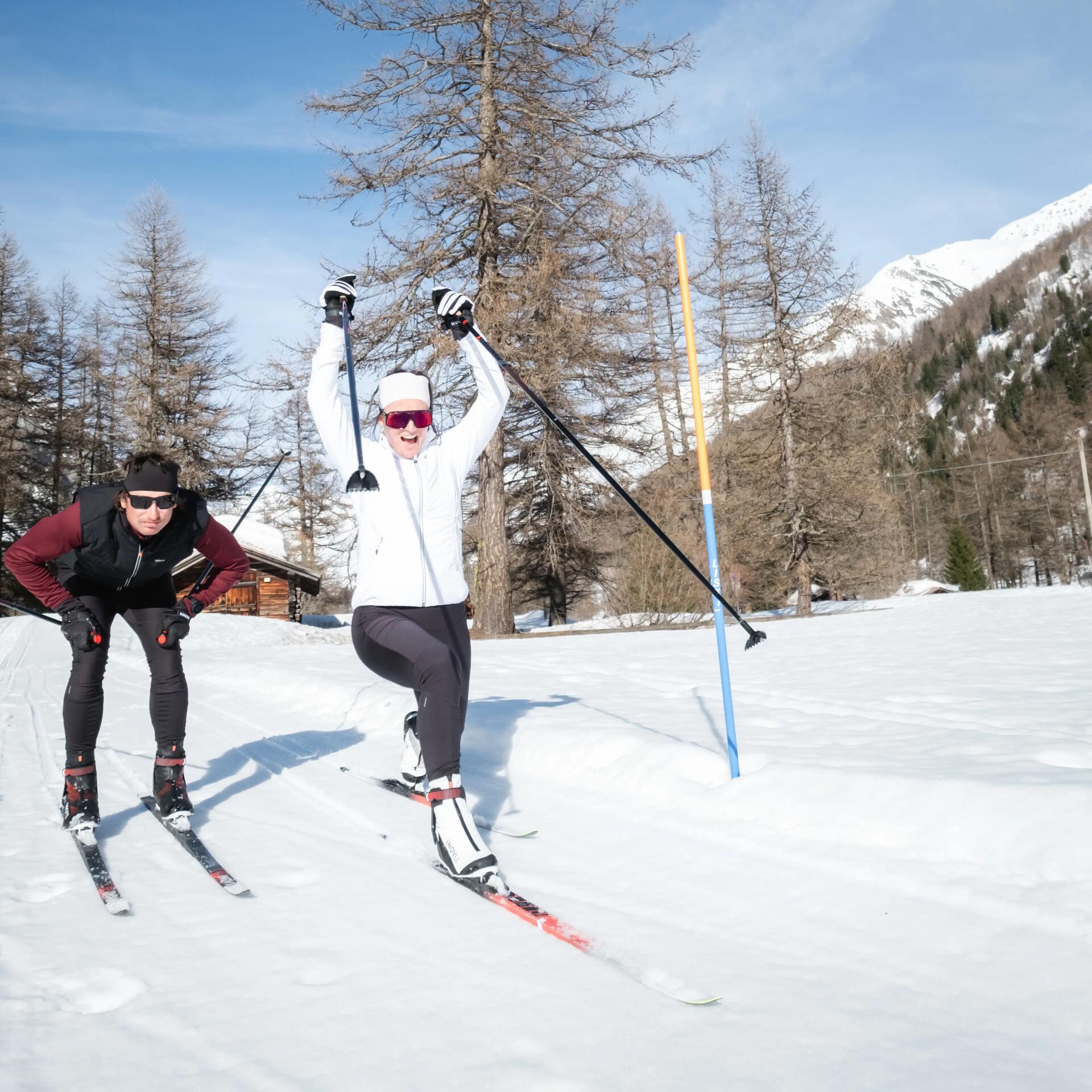
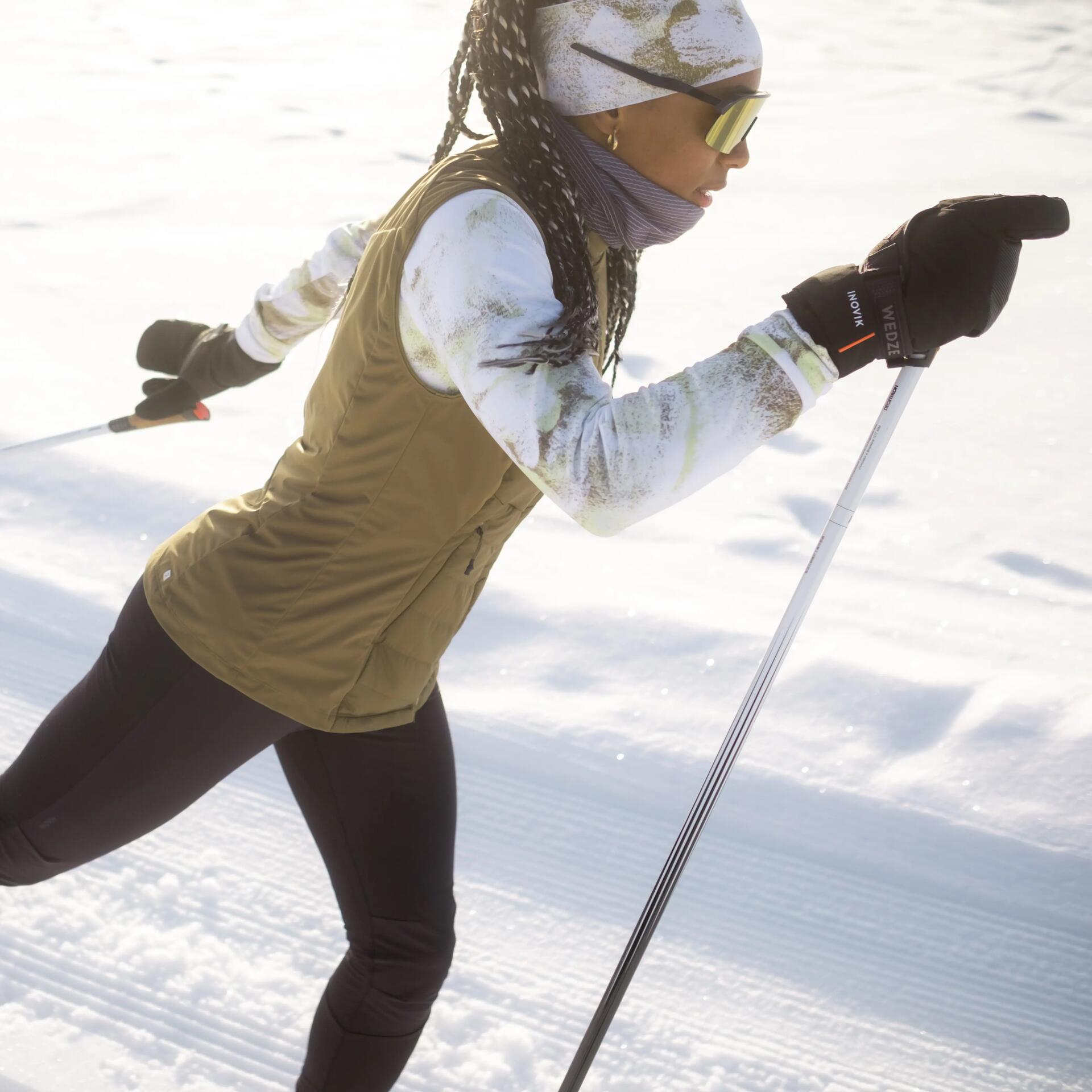
  • what should you wear for cross country skiing

    Which trousers should you wear for cross-country skiing? 

    If you're thinking of using your downhill skiing trousers for cross-country skiing, think again. You'll be far too hot and won't have enough freedom of movement. Instead, depending on the weather, opt for cross-country skiing tights with overtrousers if necessary, depending on the conditions. Comfort and freedom of movement are the winning combination!

  • jackets for cross country skiing

    Which jacket should you wear for cross-country skiing?

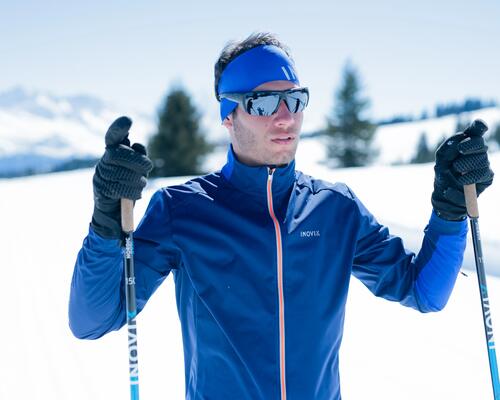
    As explained above, cross-country skiing (especially skating) is physically demanding: your body temperature is likely to rise quickly. It is therefore not ideal to use your downhill skiing jacket for cross-country skiing, as it will keep you much too warm and restrict your freedom of movement. Instead, opt for a close-fitting jacket that keeps you warm enough while allowing moisture to escape, and which offers you a wide range of movement in your arms.

difference between classic cross-country skiing and skating skiing

Classic cross-country skiing vs skating: what are the differences in clothing?

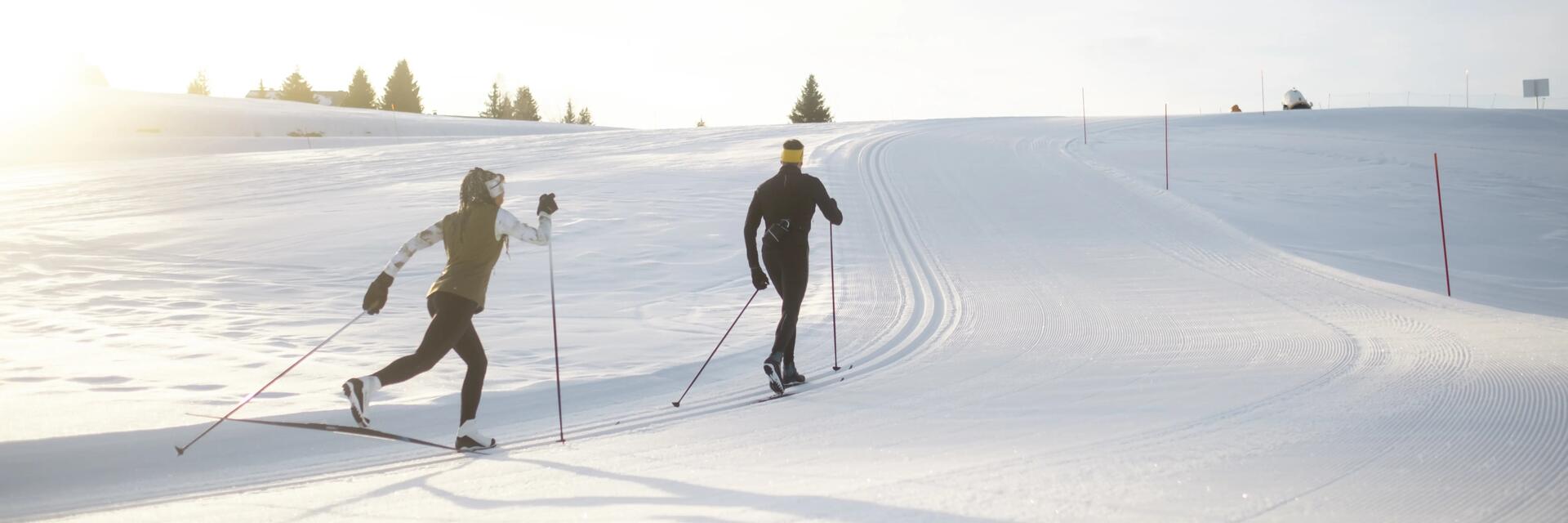
Classic cross-country skiing is generally less physically demanding: it is practised at a more moderate pace, with linear movements. Clothing can therefore be a little more insulating while remaining breathable to manage perspiration.

Skating cross-country skiing, on the other hand, is much more intense and places greater demands on the cardio system and muscles. You sweat more and your body temperature rises quickly. It is therefore essential to wear even more breathable and lightweight clothing that effectively wicks away perspiration while providing good insulation without overheating. Thin, technical layers that fit close to the body are ideal for staying dry and comfortable throughout your workout.

How should you dress for cross-country skiing depending on your level?

Nordic skiing can be practised for leisure, sport or performance, so your needs in terms of warmth, breathability and windproofing will vary. That's why it's important to assess the frequency, intensity and your level of skiing in order to choose equipment that meets your needs while keeping you protected from the elements.

  • You are a beginner or you ski ‘just’ for fun.

    You want to start skiing or you ski occasionally and/or at low intensity, on rare outings and relatively short distances. Choose comfortable clothing that keeps you warm while ensuring you stay dry thanks to components that regulate perspiration.

  • You are trained and have mastered cross-country skiing

    You are athletic, you practise cross-country skiing regularly at medium intensity and have mastered the technique. You can choose comfortable clothing with a good warmth/breathability ratio and offering good freedom of movement, from the jacket to the trousers.

  • expert cross-country skiers

    You are aiming for performance

    You practise cross-country skiing frequently and/or at high intensity during long outings. You will need technical clothing that is lightweight, breathable and offers good freedom of movement. It will guarantee you good protection and will be able to regulate your body temperature by providing perfect breathability.

difference between classic cross-country skiing and skating skiing

Adapt your cross-country skiing clothing to the weather conditions

Windy, snowy or sunny days... Adapt your outfit to the weather conditions, but that's not all! As explained above, your choice of clothing also depends on how intensely you ski. For example, on a cool day, an expert skier will tend to wear just a technical base layer with a light windbreaker, while a beginner cross-country skier skiing at a low intensity will tend to wear a warm jacket.

Be careful, don't forget that you warm up quickly when cross-country skiing: avoid wearing too many layers or you'll end up having to carry your jacket with you throughout your outing. Focus on quality and choosing the right clothing rather than quantity!

The importance of the three-layer system in cross-country skiing

When cross-country skiing, you need to manage the heat and humidity generated by exercise, while ensuring protection from the elements such as wind, cold and snow. By keeping your body dry and warm and offering optimal protection against winter weather conditions, the three-layer system is ideal: it consists of layers that each have a specific function.

  • Layer 1: the breathable layer

    The first layer is very important: in direct contact with your body, it acts as a ‘second skin’. It quickly wicks sweat away from the body to keep you dry and warm. This layer consists of thermal underwear for the upper body and cross-country skiing tights for the lower body, which are close-fitting, stretchy and quick-drying garments.

  • jackets for cross country skiing

    Layer 2: the layer that keeps you warm

    The second layer complements the work of layer 1 by regulating temperature and keeping warm, dry air around the body. Whether it's a sub-jacket or fleece, it acts as insulation by providing warmth and maintaining a constant body temperature. It must also be breathable to allow the liquid vapour produced by the body to escape and reach layer 3.

  • 2- DECIDE ON<br>YOUR LEVEL

    Layer 3: protects you from the elements

    The third layer is not often worn for cross-country skiing, except in bad weather or extremely cold temperatures. Its role is to protect the body from the elements (wind, rain, snow), keeping the body dry and warm. It also offers windproof protection and a water-repellent function, meaning that water droplets will slide off the outer fabric. Be careful not to choose an ultra-waterproof layer, as this will prevent moisture from escaping.

difference between classic cross-country skiing and skating skiing

Don't forget to protect your extremities: gloves, socks and a hat.

80% of body heat escapes through the extremities, so it's important to protect them well.

  • For optimal head protection, choose a hat, headband or neck warmer according to your needs.
  • To protect your hands, choose lightweight, windproof or warm gloves for maximum comfort, depending on the conditions.
  • To keep your feet protected, opt for technical socks or suitable overshoes to insulate you from the cold.

difference between classic cross-country skiing and skating skiing

When cross-country skiing, make sure you have protection from the sun and plenty to drink.

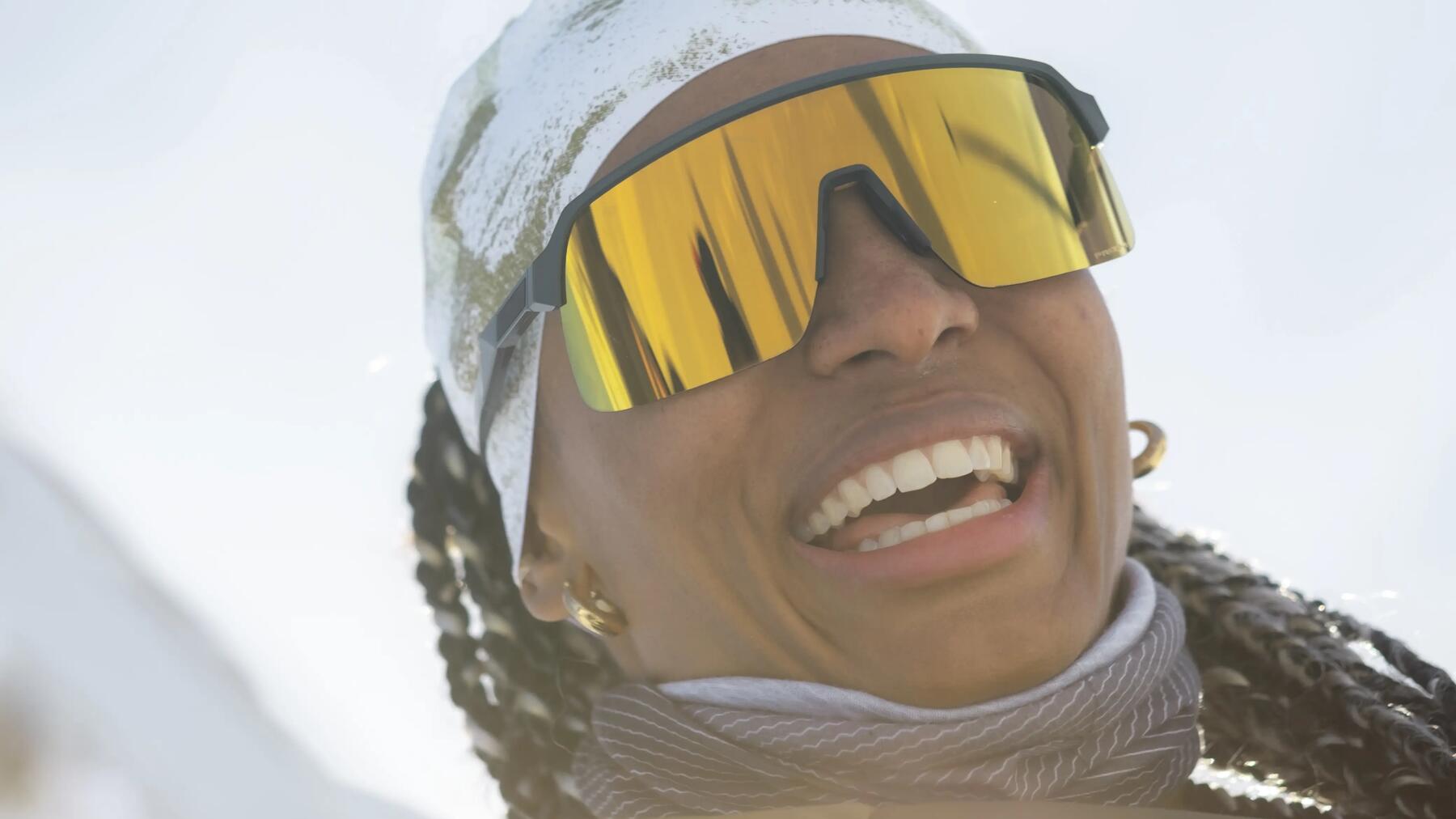
When cross-country skiing, you are a little less covered than when downhill skiing and your skin and eyes may be more exposed. For optimal protection against the sun's glare, remember to bring a pair of sunglasses with type 3 or 4 lenses. Before setting off, apply total sunblock (SPF 50 ideally) to areas exposed to the sun and reapply regularly to maintain its effectiveness.

Finally, to stay well hydrated throughout your outing, equip yourself with a water bottle belt or hydration belt so you can easily carry your drink.

There you go! You now have all the information you need to choose the right cross-country skiing gear. Get ready, the slopes are waiting for you!

Cléo

Hiking in summer, skiing in winter, high altitude all year round

We also recommend our cross-country skiing tips

Choisir ses bâtons de ski de fond

How to choose your cross-country ski poles: What size do you need?

Before choosing your cross-country ski poles, there are a few key factors to consider – your physical fitness and level of skiing, the type of wrist strap and grip you need, the required stiffness of the shaft and your height.