header - choosing your winter hiking boots

How do I choose boots for winter hiking?

We'll help you choose the right hiking boots to tackle rain, mud and even snow, in autumn and winter alike.

The arrival of autumn or winter does not mean you need to stop hiking. If you’re going out in the rain, mud or even snow, you need to choose the right footwear to keep your feet warm and dry. Here are a few tips to help you find the right shoes for the coming seasons.

The fundamentals: waterproof quality and warmth.

Let's start at the beginning! In autumn or winter, it can be damp and cold, and the ground can sometimes be slippery. There are therefore two key factors to consider when choosing your shoes: waterproof quality and warmth.

choosing your winter hiking boots - waterproof quality

Waterproof quality

Your shoes may be very warm, but if they do not protect against external moisture and your feet get wet, you will not be able to feel that warmth. Your socks will get wet, making you feel cold and uncomfortable. 

At Quechua, waterproof tests are carried out while someone is walking in a pair of our shoes: the shoe is immersed in water and flexed so we can identify 3 levels of waterproofing: 2000 flexes (about a 2 hour walk), 4000 flexes (about a 4 hour walk) and 8000 flexes (about an 8 hour walk). You will find this information on the product data sheet so you'll have a good idea of how much your boots can withstand!

choosing your winter hiking boots - thermal comfort and warmth

Comfort also depends on warmth.

As well as being waterproof, it is essential that shoes protect your feet from the cold , especially if you alternate between periods of activity and periods of inactivity during your winter hikes. If you are knowledgeable about materials, you can pay attention to these technical points. Otherwise you can simply refer to the product descriptions, which will give you all the necessary information on recommended comfort temperatures.

For example, all Quechua products are tested in the laboratory and in the field, using thermal feet and tests with volunteer hikers. These various tests enable us to verify a comfort temperature and communicate it to you in-store or online. It is up to you to pay attention to the temperatures indicated and then to make your choice. Please note that "comfort temperatures" vary greatly depending on whether you’re moving or stationary. The differences will be explained to you in detail when you purchase your shoes.
The added bonus Some shoes have built-in gaiters to prevent snow getting in during your outings. If you want to use your boots over several seasons and therefore in varied conditions, you can also purchase separate gaiters, which you can wear only during particularly snowy outings.

The importance of a shoe’s soles. 

Waterproof quality = OK. Warmth = OK. Another essential consideration is the sole of your shoe. Here, we will focus on grip and traction. Make sure you have shoes that will prevent you from slipping and possibly injuring yourself while hiking. 

choosing your winter hiking boots - thermal comfort and warmth

What is the difference between grip and traction?

If you're walking along an icy path or on hard snow with a sole that is too smooth, you're almost guaranteed to fall. That is why you need to pay attention to traction and grip, which have very distinct roles.

  • Grip refers to performance on soft ground, such as snow. 
  • Traction refers to performance on hard ground, such as ice.
To ensure you have a good grip on snow, you need to consider the size of the crampons and the composition of the sole when choosing your winter boots. Well-defined crampons (5 mm approximately) will give the sole better grip. A flexible material will also offer better traction than a rigid material.

Quechua models that have been specifically developed for snowy and slippery terrain feature SnowContact sole technology. The design and component parts have been optimized to ensure good traction and excellent grip. Of course, in extreme conditions, you can add separate crampons that attach to the shoe.

Choose your boots to suit your winter hikes.

Depending on your plans or simply the variations in weather conditions throughout the season, you will ideally need other boots in addition to your everyday pairs. While it is not necessary to have a pair of shoes for every condition, we recommend that you have several pairs available to avoid discomfort or accidental slips.

choosing your winter hiking boots - thermal comfort and warmth

Walking in the city when it is snowing.

Snow has started to fall in the city. This happens so rarely that you should take the time to enjoy it if you can. Although you don't need technical boots, your everyday shoes may not be very reliable on slippery ground. Go for shoes that are warmer than average (and waterproof in sensitive areas), and above all that have a sole that will guarantee good grip. And if you would prefer to stick to a more everyday look, we have developed shoes that look more like a pair of trainers than snow boots.

choosing your winter hiking boots - thermal comfort and warmth

Walking in the mountains in winter.

If you're planning on going walking in the mountains this winter, you will need boots specially designed for this purpose. If you are simply walking around without doing any real hiking, choose winter boots or après-ski shoes that are warm and waterproof where needed. However, if you are planning hikes where you will be walking on snow that has been compacted in some way, opt for a more technical pair of boots that guarantees good warmth and has a larger waterproof area and a high upper to protect your ankles. This will allow you to walk without worrying about getting cold or damp feet.

What if I plan to do a lot of high-intensity hiking?

If your next mountain trip involves going hiking for several hours a day in the snow, then you will need to get yourself a pair of highly technical boots with many specialised features. 

They must be completely waterproof and have a super-grippy sole. Find the right balance between comfort temperature and breathability. As explained above, your boots should keep your feet warm but not too warm, to prevent excessive sweating and moisture build-up, which can cause real discomfort. They should also have high uppers and provide excellent support. Finally, some models have built-in gaiters that will prevent snow from getting in, even if you sink into powder snow.

choosing your winter hiking boots - thermal comfort and warmth

What about for snowshoeing?

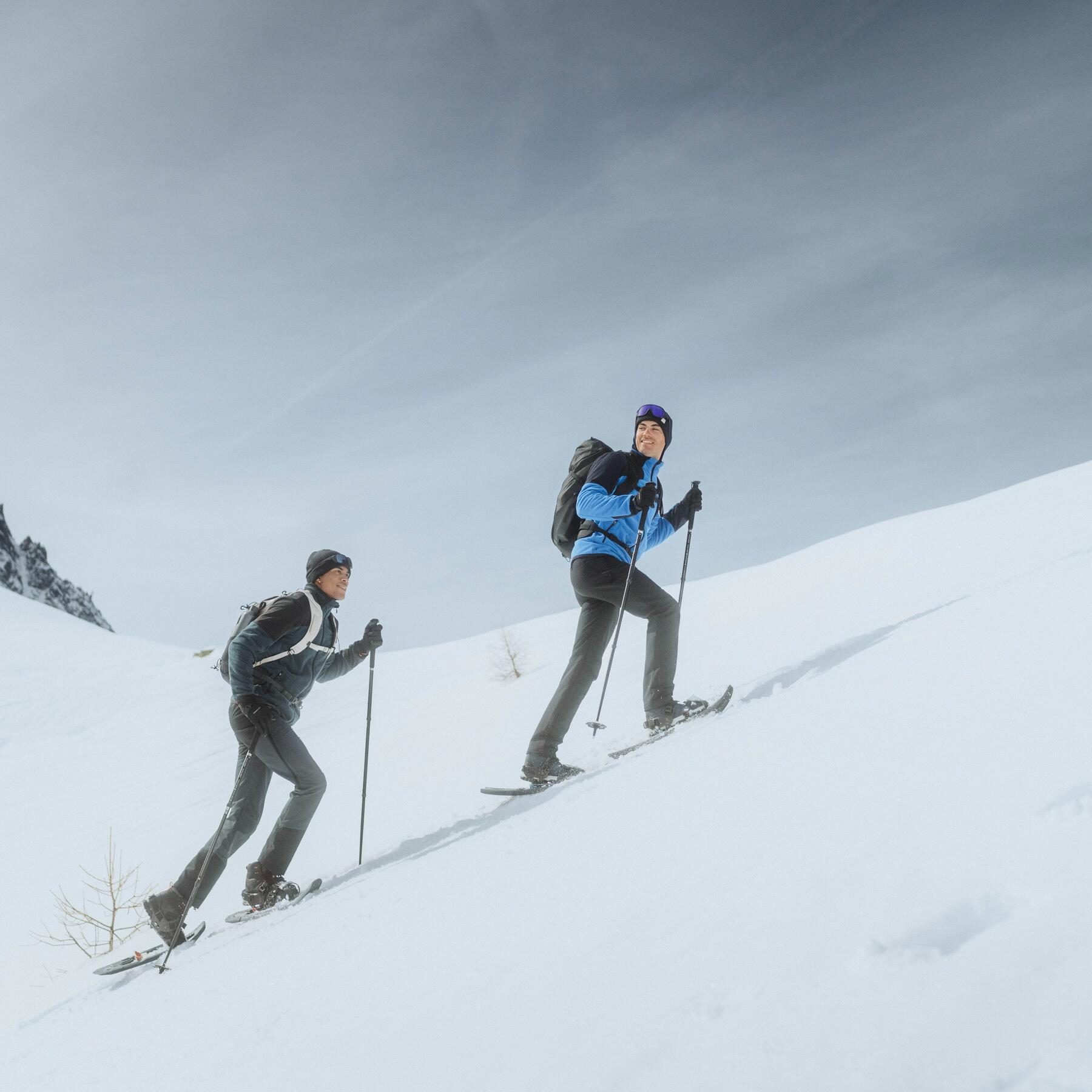
Something we often look forward to when winter and cold weather arrives is going snowshoeing. For snowshoeing, you will need suitable boots to keep your feet warm and dry, but not too warm, as you will be exerting yourself physically and are therefore likely to sweat. As explained above, pay attention to this detail and avoid shoes that are too warm if you are planning on hiking on a route with a steep incline – you will sweat and risk getting cold once you stop. Worse still, you risk being in one of the most uncomfortable situations you can be in while hiking: wet socks lead to blisters on your feet.

If your snowshoeing route takes you on a compressed trail, boots with a medium-sized upper will be very suitable. They're ideal for winter hikes on groomed or slightly snowy terrain as there isn't enough snow to cover the entire boot which will make your feet cold.

However, if you plan to venture off the beaten track during your outing, or if you enjoy walking in fresh powder snow on the side of the trail with snowshoes, choose high-top shoes or even suitable boots. The top of your foot, ankle and calf will be well covered and therefore protected from the cold, and in particular from water that may get in when you sink into powder snow.

What to do if your boots are no longer waterproof

Your shoes now let in a little moisture because their waterproof quality has deteriorated over time. This is not a flaw, but rather a normal thing that happens to a pair of winter hiking boots with time. Don't panic! The waterproof quality can be reactivated using a special spray. Please note that this product will only be effective on boots that were originally waterproof: you cannot turn your canvas trainers into winter shoes.

If you have good hiking boots that are particularly comfortable and warm enough for winter but not waterproof, you can cover them with gaiters. They will act as a sort of waterproof jacket to protect your shoes. And, as they also come up to the calf, they'll prevent snow from getting into your boots.

What about shoes for my children?

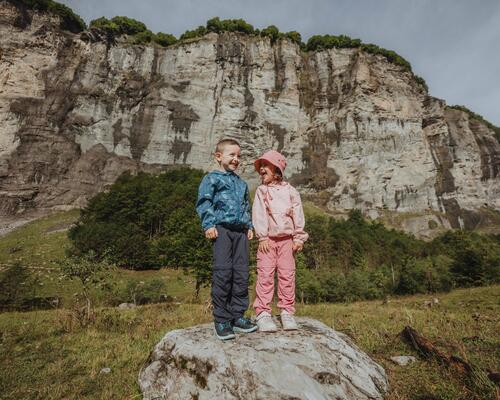
Protecting little ones' feet can sometimes be a challenge. Children don't always say when they're cold or find it difficult to describe how they feel. The good news is that whether we're young or old, the criteria are the same! You just need to pay attention to sizing. In addition to being uncomfortable, feet that are cramped into shoes will get cold more quickly because air is an excellent insulator on its own. Also, an important consideration for children’s shoes if you're walking in snow is that as soon as the snow is a little deep, opt for boots to protect them from the cold and water.

And there you have it! It seems that you now know everything there is to know about choosing a pair of winter hiking boots! Having good boots is key to avoiding slipping on snow, but always be careful on this terrain if you are not used to it. If you have poor balance or are simply afraid of falling, don't hesitate to take a pair of hiking poles with you. You can use the ones you have for summer, but remember to add a snow basket for winter, which will prevent them from sinking into the snow and allow them to fully support you.

Cléo

Hiking in summer, skiing in winter – in the mountains all year round!

CHECK OUT OUR HIKING ADVICE

kids hiking

How to dress your kids for a hike

Children tend to run everywhere and get into everything. Follow our tips for kids' hiking gear to make sure they stay dry and warm while exploring.

trekking boots on a mountain hiking

How to choose the right hiking footwear

Deciding what kind of hiking shoes or boots to get can be tricky—there are so many options! It helps to think about the terrain you are going to explore and the load you plan to carry.

Comment choisir sa tente en fonction de ses besoins?

How to chose a tent for camping?

Planning a camping or hiking trip? Learn how to select the ideal tent that suits your needs. Consider factors like size, weight, weather resistance, ease of setup, and your budget. Prepare for your adventure with confidence and tranquility!

What to pack for a day hike?

Discover the essentials for a safe and enjoyable hiking experience. Complete list for a successful hike.