adjusting a child's helmet

Everything you need to know about a child's bike helmet

You've got the bike. Ready to ride? Not quite... just one last thing to adjust: the helmet.

Our guide answers it all: how to choose, adjust, and maintain your helmet. Essential answers for safe riding!

Advice for correctly adjusting a child's bike helmet

1. Adjust the head size

Most children's bike helmets are equipped with a head size adjustment system. It's very easy to adjust the helmet to fit the head of your young cyclist!

To adjust the head size of the helmet:
– loosen the adjustment wheel as far as possible and position the helmet on your child's head,
– slowly turn the wheel until the helmet stays stable and firmly in place. Be careful not to tighten it too far! Wearing the helmet might become very uncomfortable for your young cyclist.
To ensure the helmet is fitted correctly, gently wobble the helmet on the child's head: the helmet shouldn't move.

2. Easily adjust the chin strap

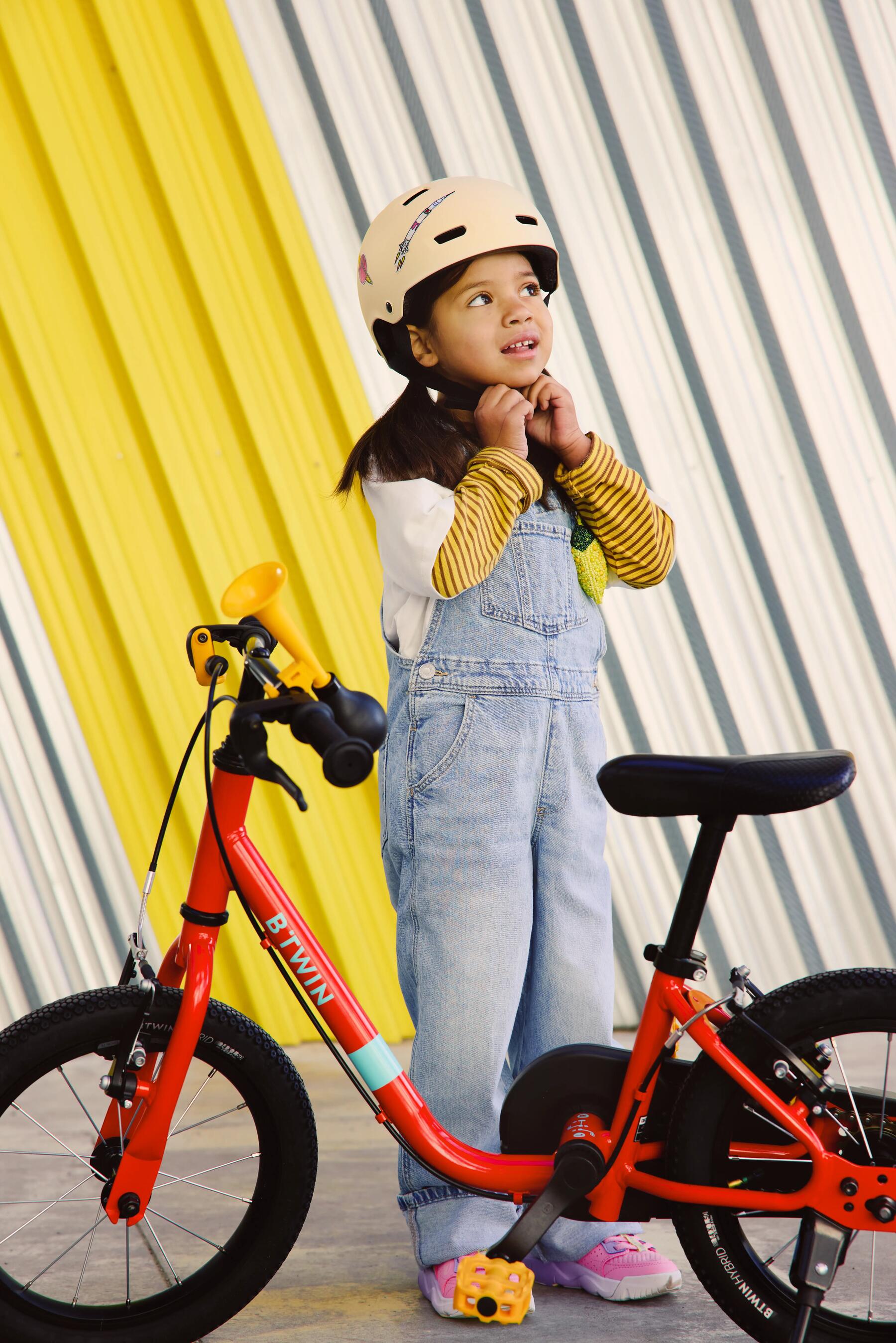
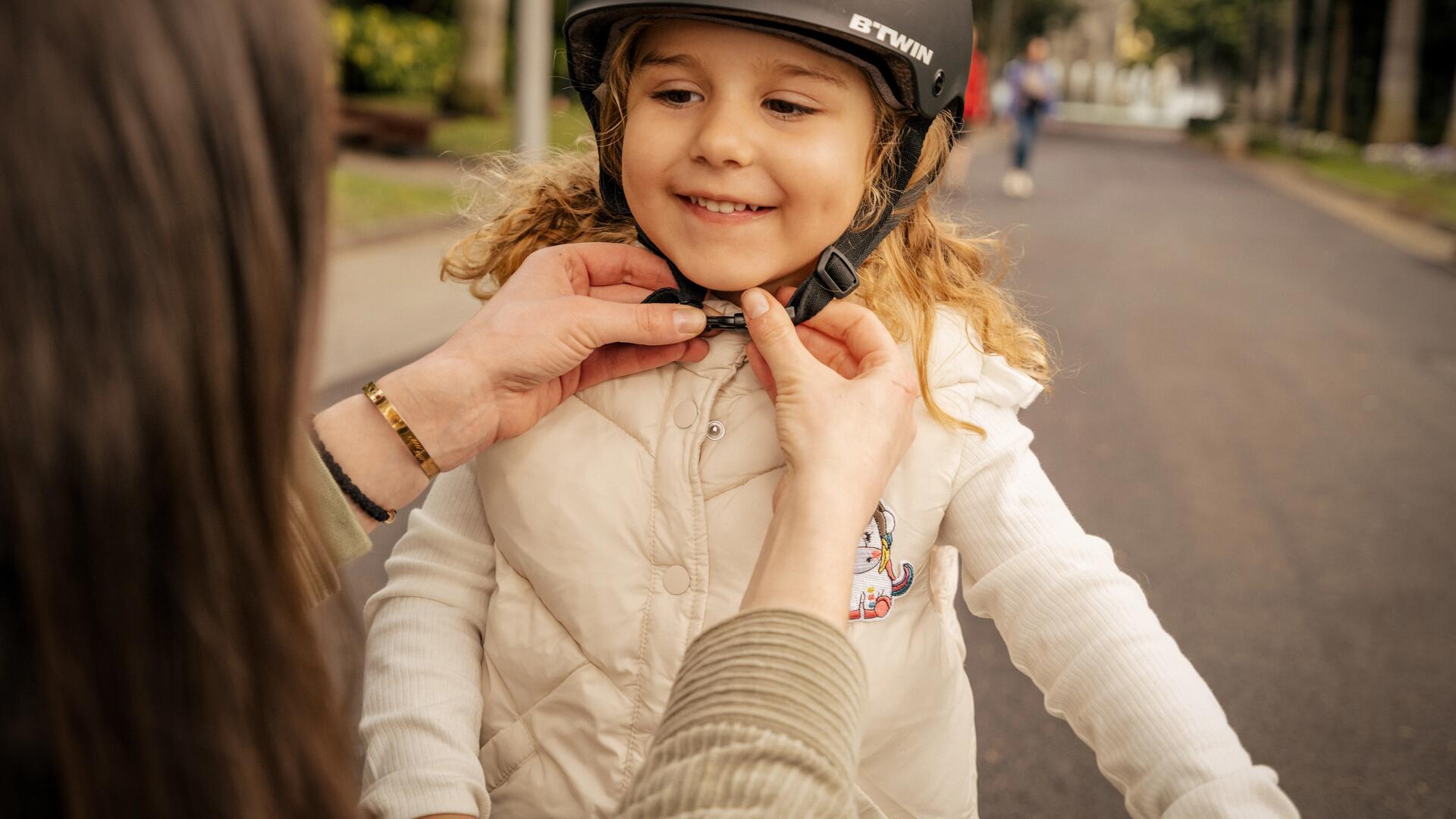
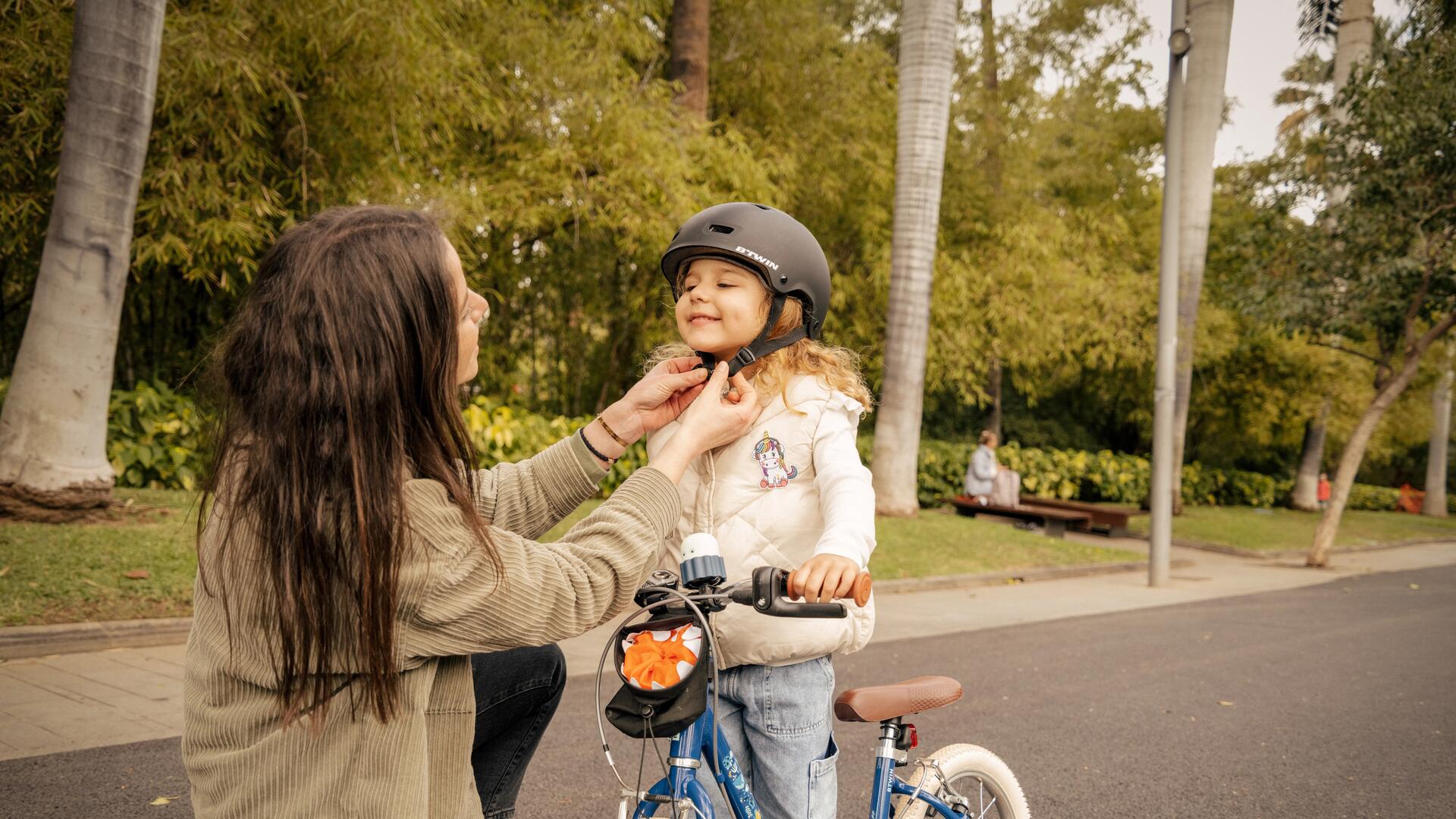
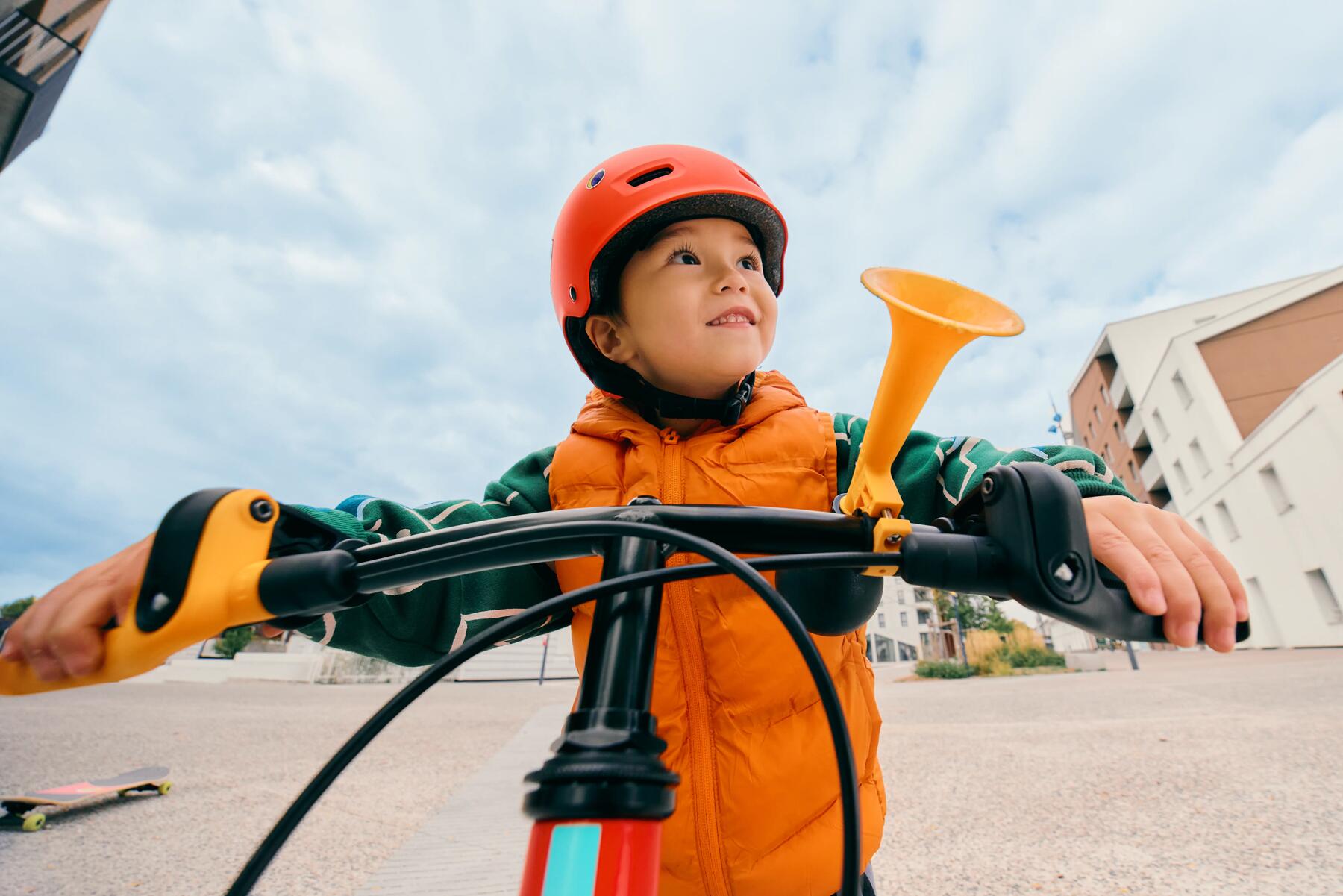
The chin strap is key to keeping the helmet stable and firmly in place. It should be neither too tight nor too loose, and stay comfortable while providing suitable protection! The strap should go under the chin, against the throat. The buckle should not rest on the jaw.

Adjusting the strap is simple: clip the fastening system closed. You should be able to slide two fingers between the strap and your chin. If not, readjust the strap until it fits comfortably.

1. How to adjust a child's bike helmet

A properly adjusted helmet offers guaranteed protection for your little ones.

A child's bike helmet must be correctly adjusted in order to provide effective protection. It should move with their head and stay firmly in place. A correctly adjusted helmet is also a comfortable helmet: your child should feel as if they're not wearing it.

What are the consequences of a poorly-adjusted helmet? A helmet which moves backwards and forwards, or sideways will not protect the head of the cyclist in the event of an impact. Not to mention the risk of not being able to see!

EVERYTHING YOU NEED TO KNOW ABOUT CHILDREN'S HELMETS

Advice for correctly adjusting a child's bike helmet

Most children's bike helmets are equipped with a head size adjustment system. There's no easier way to adjust your budding cyclist's helmet.

Here's how to fit the helmet properly using this system: 
– loosen the adjustment wheel as far as possible and position the helmet on your child's head,
– slowly turn the wheel until the helmet stays stable and firmly in place. Be careful not to tighten it too much! It might be uncomfortable for your little rider. To check if the helmet fits properly, give your child's head a little shake: the helmet shouldn't move.
EVERYTHING YOU NEED TO KNOW ABOUT CHILDREN'S HELMETS

Easily adjust the chin strap

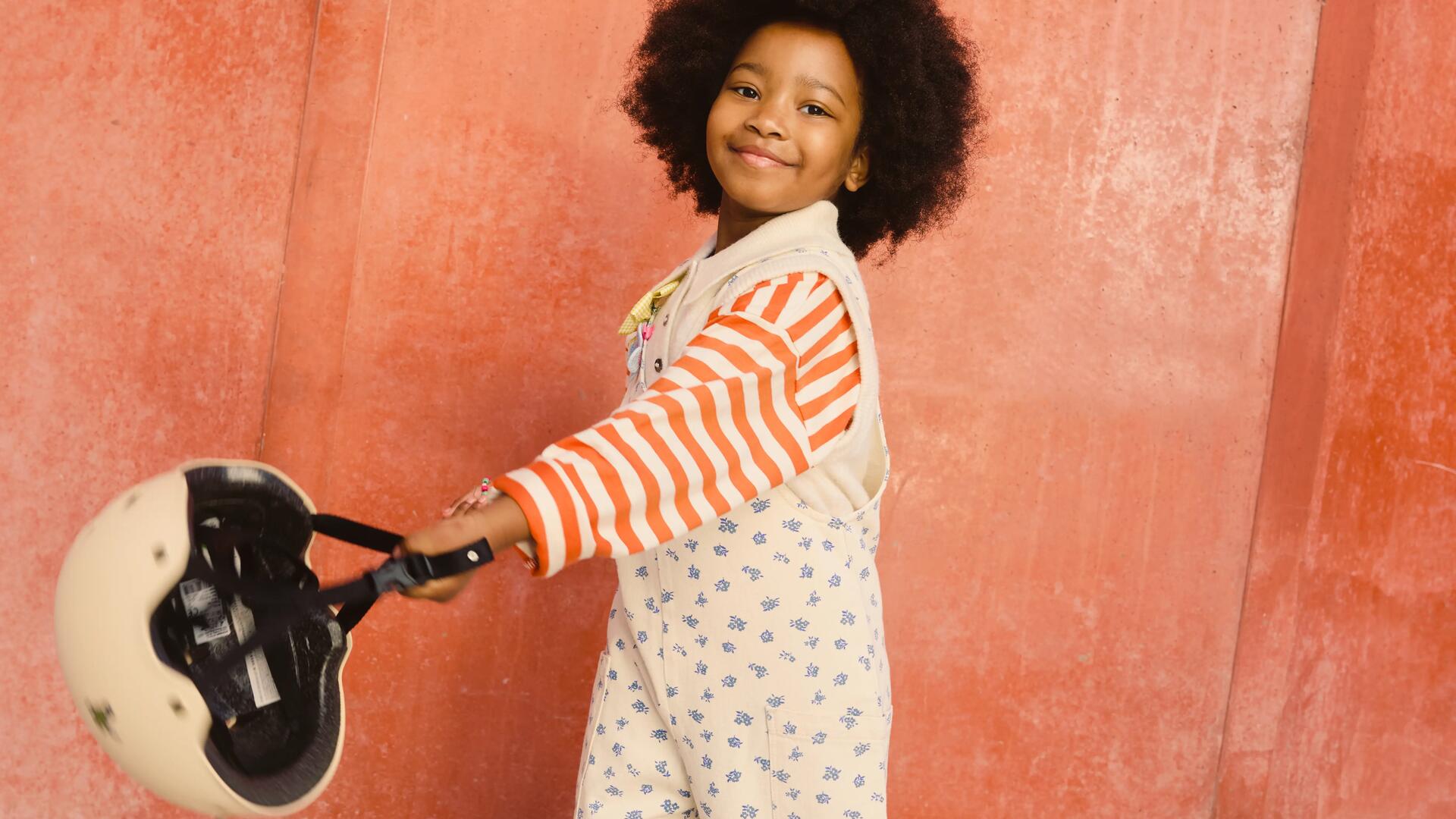
The chin strap is key to keeping the helmet stable and firmly in place. It should be neither too tight nor too loose, and stay comfortable while providing suitable protection! The strap should go under the chin, against the throat. The buckle shouldn't rest on the jaw.

Adjusting the strap is simple: clip the fastening system closed. You should be able to slide two fingers between the strap and your chin. If not, readjust the strap until it fits comfortably.

How to choose a children's bike helmet

Kids' bike helmets: they can't ride without one

Do you carry your child in a child seat? Or does your young athlete travel on their own two wheeler? Bike helmets are a must for both passengers and drivers!

2. When should you change your child's bike helmet?

We're going to tell you what to look out for so that you know when to make the change.

Is your child's bike helmet a few years old? Is it showing signs of wear and tear? Here's some info on the lifespan of a bike helmet. A vital piece of equipment when it comes to ensuring little ones stay safe on their bikes (and not so little ones), a bike helmet needs to be maintained and changed every so often.

Why change a child's bike helmet?

Like all cyclists, children should wear a helmet to protect their head in the event of them falling from their bike. But there are a few things you should know to ensure they are properly protected.

EVERYTHING YOU NEED TO KNOW ABOUT CHILDREN'S HELMETS

What if my child falls and hits their head? That's an easy question to answer: you need to change their helmet

It's one of the basic rules of cycling: if your child falls and receives a blow to the head you should always change the helmet straightaway.

« A bike helmet is designed to protect a cyclist's head from one blow and one blow only. And don't worry if the helmet cracks on impact: that just means it's done its job. It doesn't mean it's a poor quality helmet," says Angélique Noël, a helmet engineer at B’TWIN.

So even if you're reluctant to dispose of a helmet that's only had a few months' use, don't think twice: get rid of it!

But what should I do if my child's helmet has no visible damage to it after a fall or a blow to the head? "You still need to replace it," adds Angélique. "Once a helmet is damaged it's done its job, even if the damage isn't always visible. If it suffers a second blow, it will absorb less of the impact."

EVERYTHING YOU NEED TO KNOW ABOUT CHILDREN'S HELMETS

Changing your child's helmet in the event of wear and tear

You might need to change the helmet before it's even suffered a blow. As soon as you see the first signs of wear and tear then get a new one. It's better to be safe than sorry. You should check the helmet regularly:

– The fastening system

Is the system that fastens the helmet around the skull  in good condition? This is important when it comes to the protection, safety and visibility of your child. A helmet that slips over your child's eyes is both uncomfortable and dangerous.

– Chin strap and quick-release clasp

Make sure that the straps and quick-release clasp are in good condition. There's a risk they might break in the event of an accident, causing the helmet to fly off.

– The shell

To find out if your helmet needs to be replaced, check the condition of the inner EPS (expanded polystyrene) lining. If there are cracks or holes in it, then the helmet has to be changed.

Replace your child's helmet when it becomes too small

A helmet should fit the size of the head of the person wearing it.~ Don't buy a helmet that's too big for your child, thinking that they'll soon grow into it. If you want to protect them, then buy them a helmet that fits.

5 years

On average, a bike helmet should be changed every five years provided that it has been well stored and looked after. "EPS is a sensitive material," explains Angélique. "That's why a helmet doesn't have an unlimited lifespan, even if it's never suffered a blow." ~If you can't remember when you bought the helmet, then don't worry. Take a look at the inside of it or under the foam padding to find the date of manufacture. 

3. How to store your child's bike helmet

Storing a helmet properly and looking after it means that it will retain its ability to absorb blows as the months and years pass.


Here's some advice on storing your child's bike helmet:


1. CHOOSE A PLACE THAT'S SHELTERED FROM THE SUN AND WHERE THE TEMPERATURE AND HUMIDITY IS FAIRLY CONSTANT.

Get into the habit of putting the helmet away as soon as you come back home from a ride. That'll stop you from leaving it lying around outside, where it will be exposed to the sun and rain. You shouldn't store the helmet in a place where it will be exposed to variations in temperature and humidity, such as a garden shed or the parcel shelf at the back of your car: "Bike helmets are tested and approved for use in temperatures ranging between -20°C and +50°C. Outside that temperature range, the quality of the materials and their ability to absorb shock may change," explains Angélique Noël, a helmet engineer for B’TWIN.


2. A SAFE AND EASY-TO-ACCESS PLACE

When storing a child's bike helmet, make sure it is lodged securely in place to prevent any risk of it falling. It should be easy to access so there's no chance of you dropping it when you go to fetch it.

4. How to look after a bike helmet

We tell you all you need to know to become an expert in helmet care.

All you need to clean and wash your child's bike helmet is a soft sponge and some water.Don't use detergent or other solvents as they could cause a chemical reaction and weaken the material the helmet is made of," explained the engineer.

After washing, leave the helmet outside to dry or wipe it down with a cloth. Do not be tempted to dry it more quickly by leaving it near a radiator or other heat source.

The foam inserts can be machine-washed at a temperature of 30°C. They're usually attached to the helmet shell with rip-tabs and are very easy to remove. Don't dry the foam inserts in a tumble dryer as this could damage them.

5. Kids' bike helmet: top 5 misconceptions

Does an entry-price helmet really offer protection?

Kids' bike helmet: pros and cons and the top 5 misconceptions

Despite their safety benefits, children's bike helmets still suffer from certain prejudices. So to help change your habits and persuade you, here are a few welcome pointers!

“Entry-price helmets offer less protection than more expensive ones.”

All bike helmets must comply with European standard EN 1078. The standard defines the "test requirements and methods for helmets to be worn by users of bicycles, skateboards and roller skates”.

This also governs specific properties: shock absorption, fastening devices, etc. ~One helmet might be more expensive than another because it has a more elaborate design, has more air vents or a visor, etc.~~Safety should not come down to a question of price: if you should check anything before buying a bike helmet for yourself or your child, it should be this: that it complies with European standard EN 1078.

“Might as well get an adult helmet right away if the standards are the same anyway.”

Yes, the standards are the same, but not the sizes. A helmet should be a good fit to provide the best protection. If the chin straps work loose as a result of the clasp being opened and closed over and over again, they need to be readjusted.

“I bought a helmet for skiing, so i might as well use it for cycling too."

No, you can't. The regulations are designed to provide a maximum level of safety when helmets are in use. And the requirements for ski slopes and cycling are quite different.

The EN 1078 standard, which covers bike helmets, allows for air vents to be added for rider comfort.

“Helmets need to be changed when they no longer fit.”

Yes, but that's not the only circumstance in which they need to be changed.
~ A helmet is designed to protect the head from an impact. ONE impact. In the event of a fall, the helmet should be replaced even if it doesn't appear to be damaged: it may be weakened or cracked in places that can't be seen and it may not offer the same level of protection.
~ The helmet should also be changed if it is quite old. After five years, some materials start to age, especially if the helmet is stored in a cool and/or damp place.

EVERYTHING YOU NEED TO KNOW ABOUT CHILDREN'S HELMETS

See you outside?

Want to get some fresh air? Whether you live in the city, in the mountains, the countryside or by the sea, Decathlon Outdoor has countless suggestions for you so you can get out in the countryside and the great outdoors on two feet and two wheels. You won't be lacking in inspiration, no matter whether you're out and about with a guide, on your own or with family and friends.

berangere Deschamps signature

Berangere

Experienced bike commuter. Improving runner. Cyclo-touring enthusiast who's hanging in there.~ Silver-level French billiards player.~Kids friendly.

#TeamDecath

You might find this advice useful

Comment apprendre à son enfant à faire du vélo?

Teaching your kids how to ride a bike

Apprendre à son enfant à faire du vélo, c’est lui apprendre à contrôler ses gestes tout en tenant compte des éléments extérieurs. Voici nos conseils.

Quelle taille de vélo choisir pour vos enfants?

How to choose the right bike size for your kids?

Parce que pour faciliter l'apprentissage et l'épanouissement lors de vos balades en famille, il est essentiel de trouver la bonne taille de vélo!