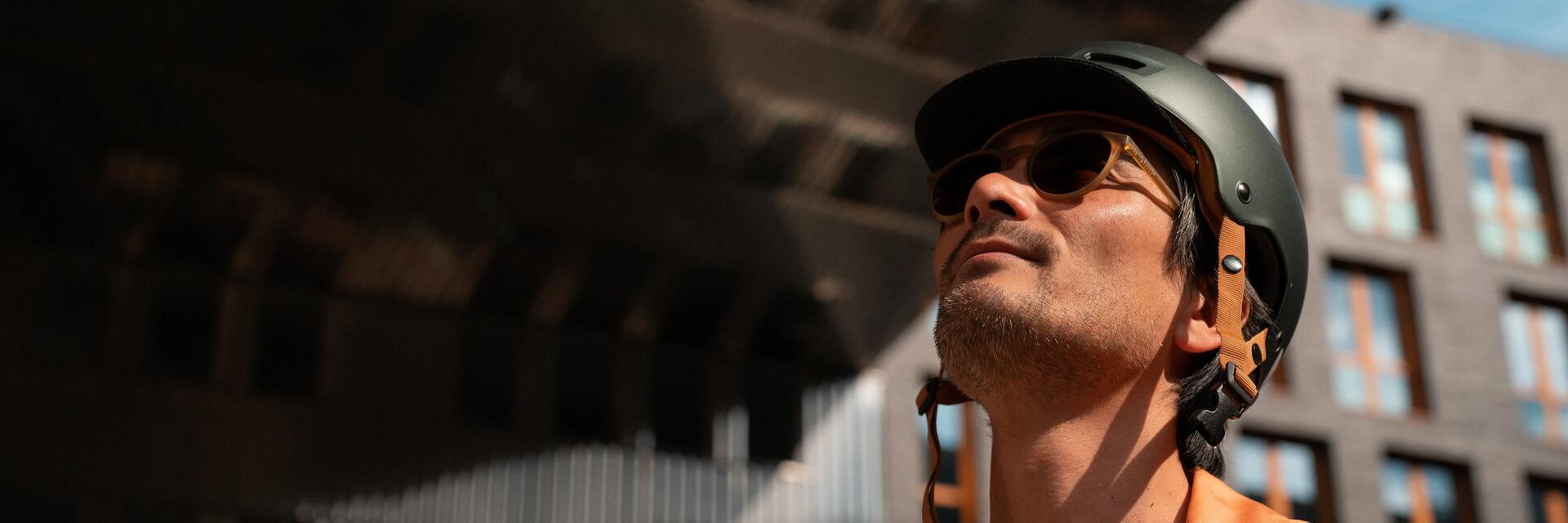
city bike bowl helmet

Bike helmet: my new habit!

There are currently many different bicycle helmets to choose from. Check out our advice to find the right one for your needs.

Cycling helmets are essential accessories for all cyclists, from 9 months to 99 years of age!Aside from the obvious impact protection in the event of a fall or accident, it also helps make you more visible on the road. How to choose a helmet for cycling safely

Helmet: impact protection

Bike helmets provide real protection in the event of falls and collisions.This protection does not happen by accident. It is regulated by an approved moulding standard: the CE marking you'll find on your helmet certifies that it is of a high standard. Our helmets comply with the European standard EN 1078 for bike helmets (a standard that also applies to rollerskating, scooters and skateboards).

Prior to the mandatory certification tests conducted by an independent body, our helmets are approved by our in-house laboratory in accordance with criteria that are more demanding than the European standards. In order to ensure that a helmet model meets the required safety standards, we test the durability of the entire helmet as well as the structural strength of its component parts, and we conduct over 150 impact tests. This goes far beyond what is required by the baseline standards.
How to choose the size of your bicycle helmet

Just like for hats, helmets come in different sizes. In order to ensure that your helmet protects you properly and causes no discomfort, make sure that you choose the right size for you. Nothing could be easier: just grab a tape measure and wrap it around your head starting at the top of your forehead.

Ideally, you should go to a store to try on the helmet, and make sure it fits the shape of your head and feels comfortable! The inner foam adds an extra touch of comfort.

city bike helmets

Final tweaks!

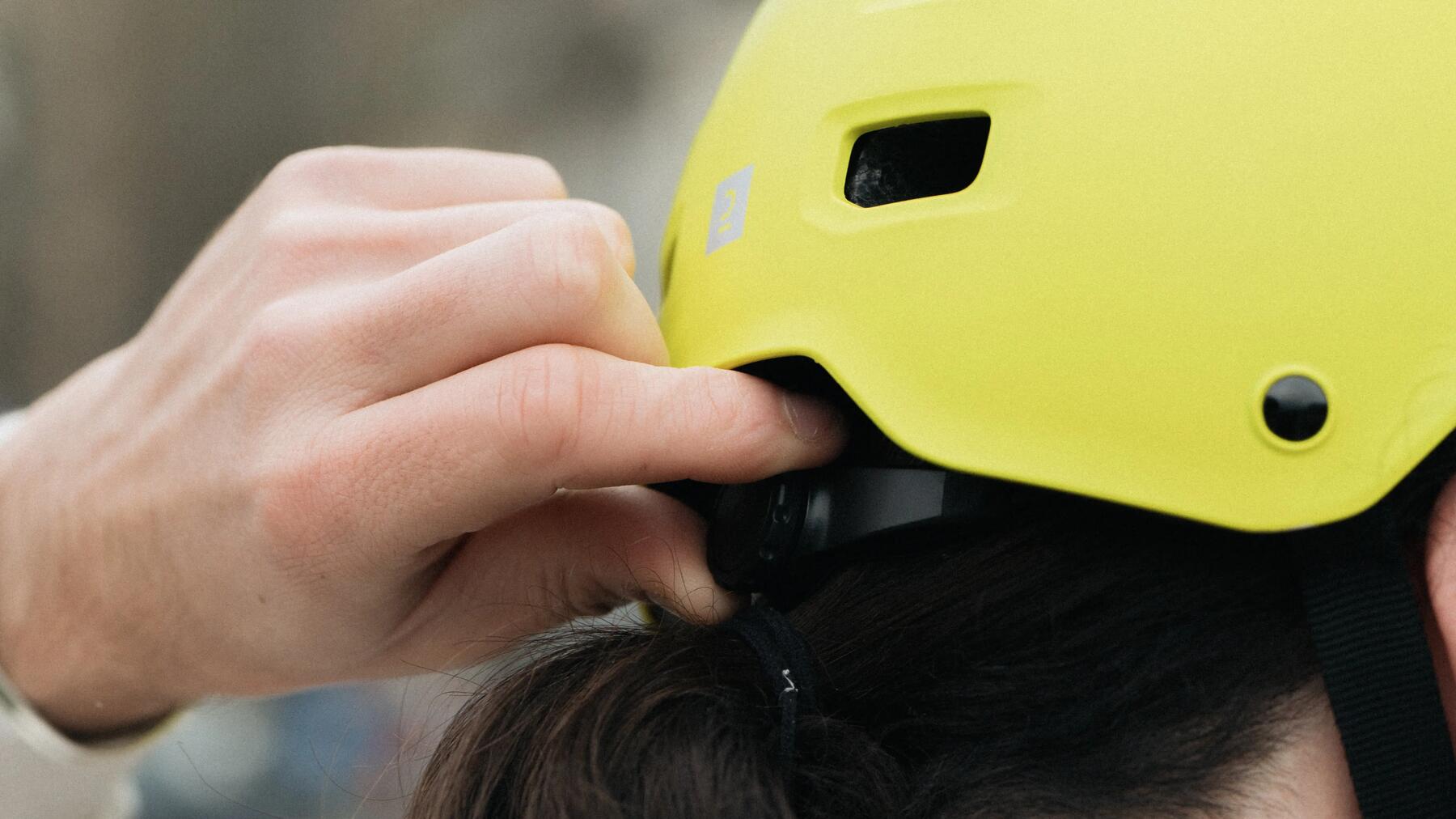
In order to provide effective protection, your helmet should sit straight on your head and not tip forwards or backwards.
To secure it nicely to your head, the helmet has adjustable straps: it is properly adjusted when it stops moving about!

Good to know: depending on the model of bicycle helmet, there will be various systems for adjusting the head size. These may or may not include an adjustment dial (at the back of the helmet).

Systems for adjusting the head size without a dial are pre-adjusted (the helmet adjusts itself according to the circumference of the head: the tension is applied automatically when the user closes the buckle of the helmet). 

How to choose a bicycle helmet for an adult

It's important to choose a bicycle helmet that is suited to your activity. Depending on whether you love mountain biking, road cycling or riding in the city, your needs won't be the same. Let's take a look at the different disciplines.

Choosing your city bike helmet

Which helmet should you wear for the city?

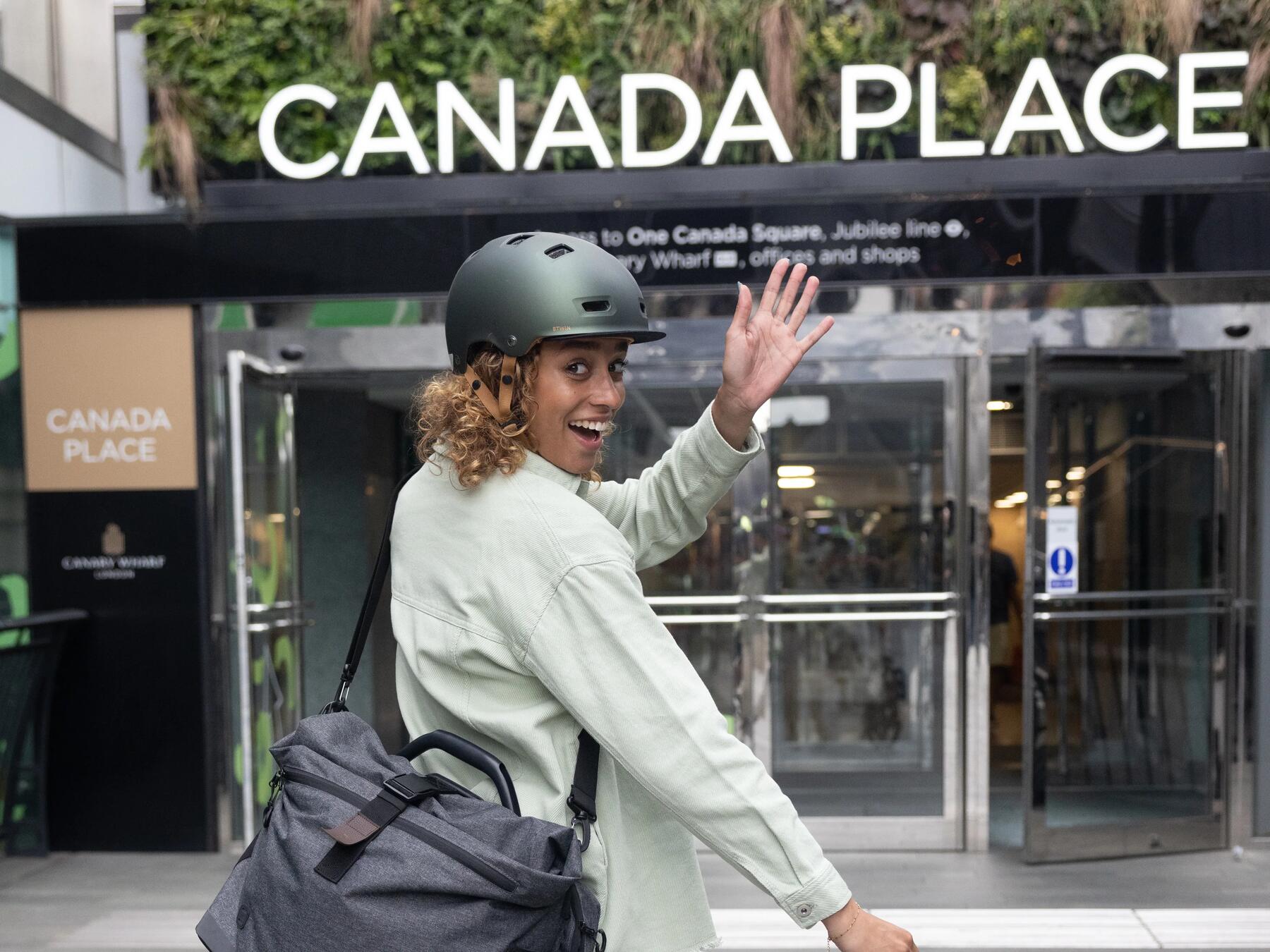
Everyone has a different way of getting about and needs a solution that meets their particular needs. If you ride predominantly in urban environments to get to work or just for recreation, a bowl helmet for the city is perfect.

Apart from the urban looks, it has more coverage and offers superior comfort thanks to the visor (convenient in the rain) and removable ear flaps (protection from the cold). The air vents will eliminate perspiration.

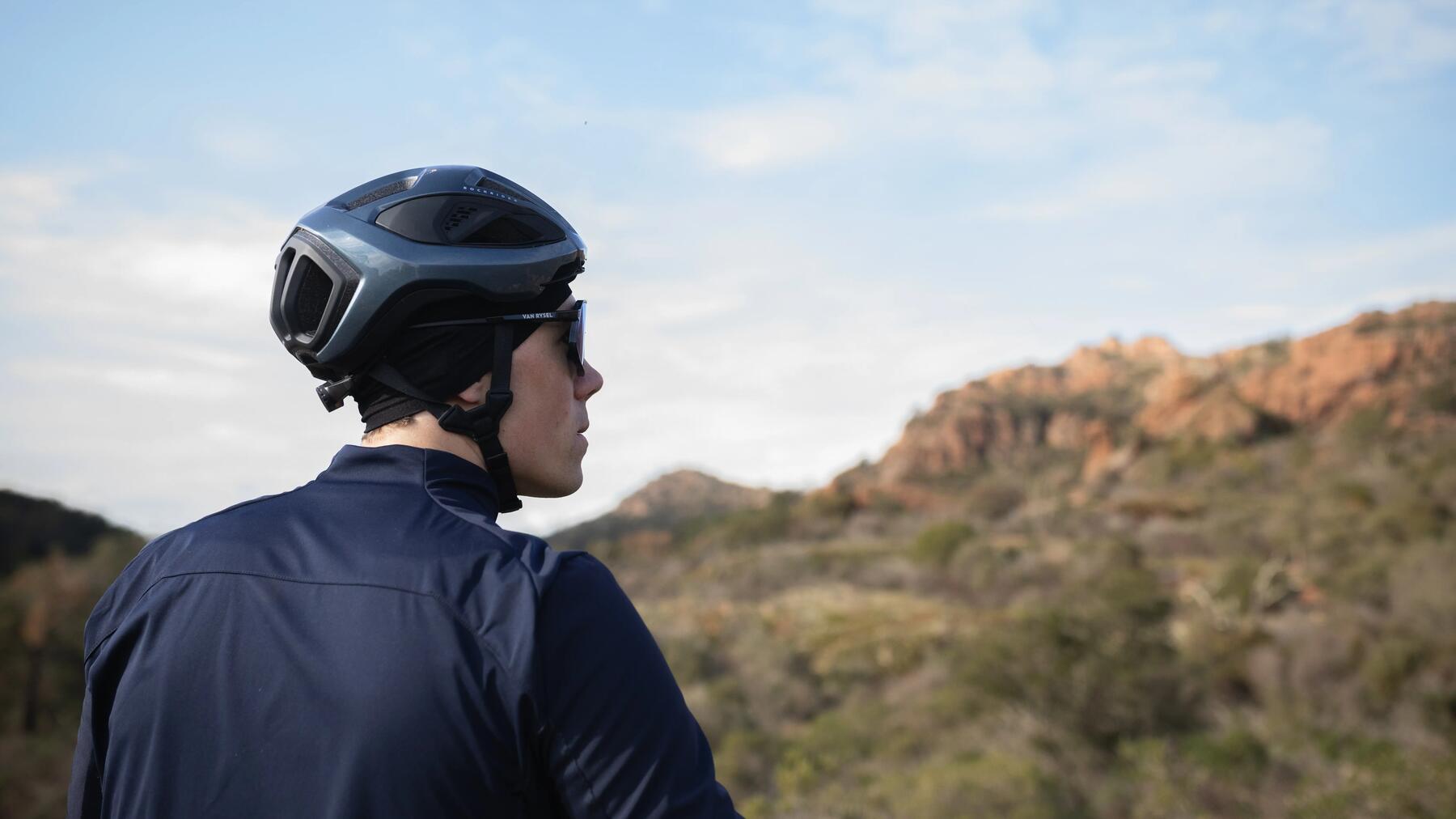
Our other helmets will be more suited to those who are looking for a product with less coverage that is lighter and delivers more air flow and ventilation, particularly when it's hot.

Are our helmets compatible with electrically assisted bicycles?

The answer is yes, our helmets are compatible with e-bikes limited to a top speed of 25km/h. Please note, we are not referring here to speed bikes (or "speed pedelecs") which are a type of electrically motorised bicycle that can go up to 45km/h). For this type of bicycle, our helmets cannot protect from the specific risks associated with speed biking.

bicycle helmet

A helmet is also made to be seen!

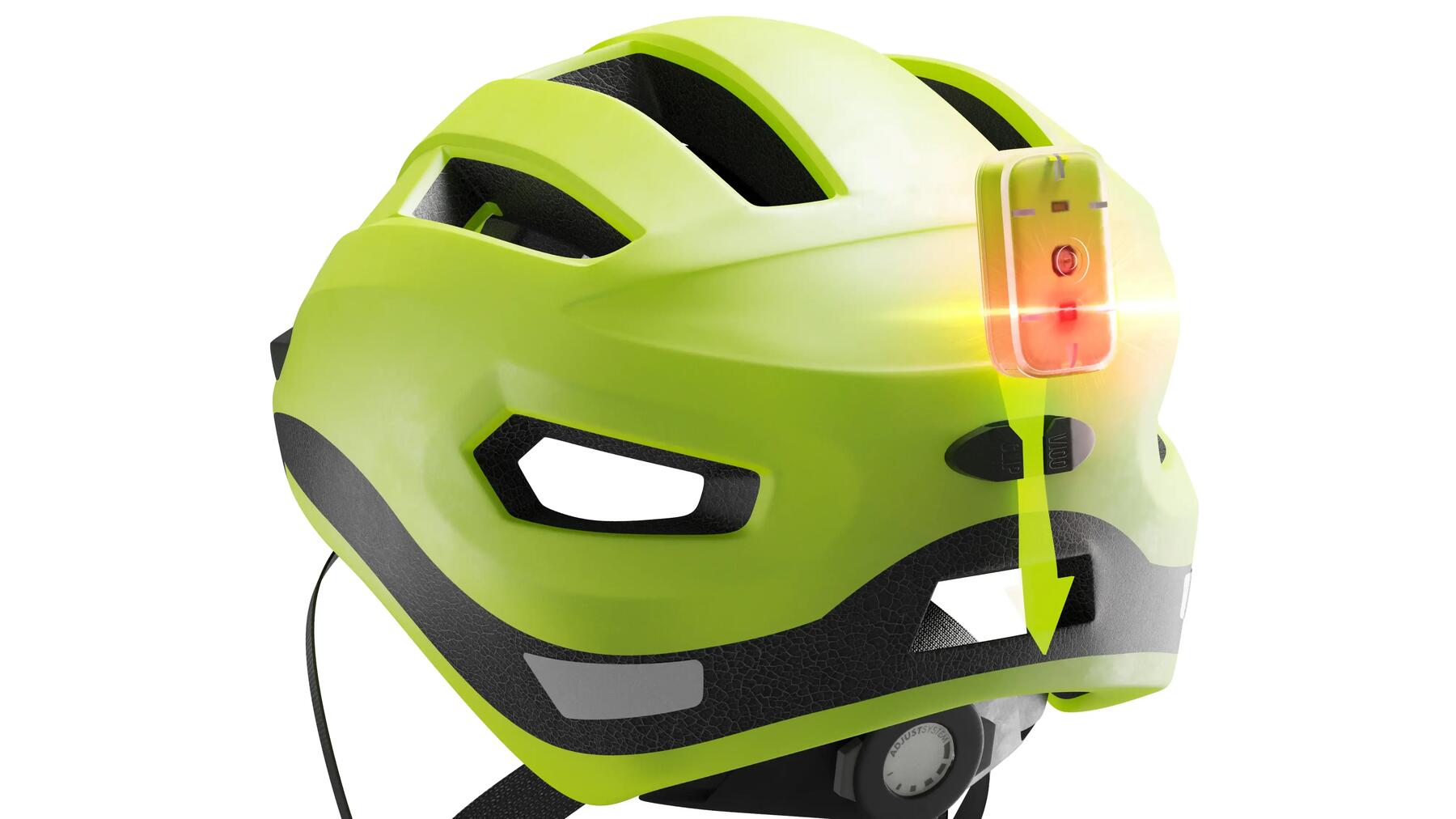
These days, bike helmets are as stylish as they are visible! From dusk to dawn, the reflective strips and the option to clip on an LED light (Vioo Clip CL500) to the rear of the helmet will make you visible to other road users. This extra layer of protection is useful in urban and rural areas alike.

To choose the right helmet, remember to consider the following features:

1. Comfort
The helmet should be adjusted to fit perfectly around your head using the straps on each side and the adjustment dial at the rear (entry-price helmets do not have a dial and the adjustment is done using the straps only). The foam pads inside the helmet provide even more comfort and, sometimes, they are removable for cleaning by simply giving them a rinse with water.

2. Ventilation
The air holes made in the shell of the helmet allow air to flow over your head and prevent discomfort from overheating or itching. There's no secret: the more air vents a helmet has and the bigger they are, the lighter it will be and the cooler you will feel.

3. Protection from the cold, rain, dust or spattering
To protect you from the cold, some helmets offer greater coverage and have removable ear flaps (bowl helmets). These will keep your ears warm in winter and open them up to the fresh air in the summer.
To protect the eyes and face from the cold, rain, dust and pollen, some helmets have a visor (or protective screen).

4. Shock protection
No matter their price, helmets must be approved in accordance with the EN 1078 standard. So they all provide the same level of protection required for your safety. Note that you need to replace your helmet after an impact or a fall.

5. Lightness
The lighter a helmet is, the more comfortable it will be if you ride for a very long time. In town, the impact will not be as noticeable compared with a road cycling outing.

Choosing your city bike helmet

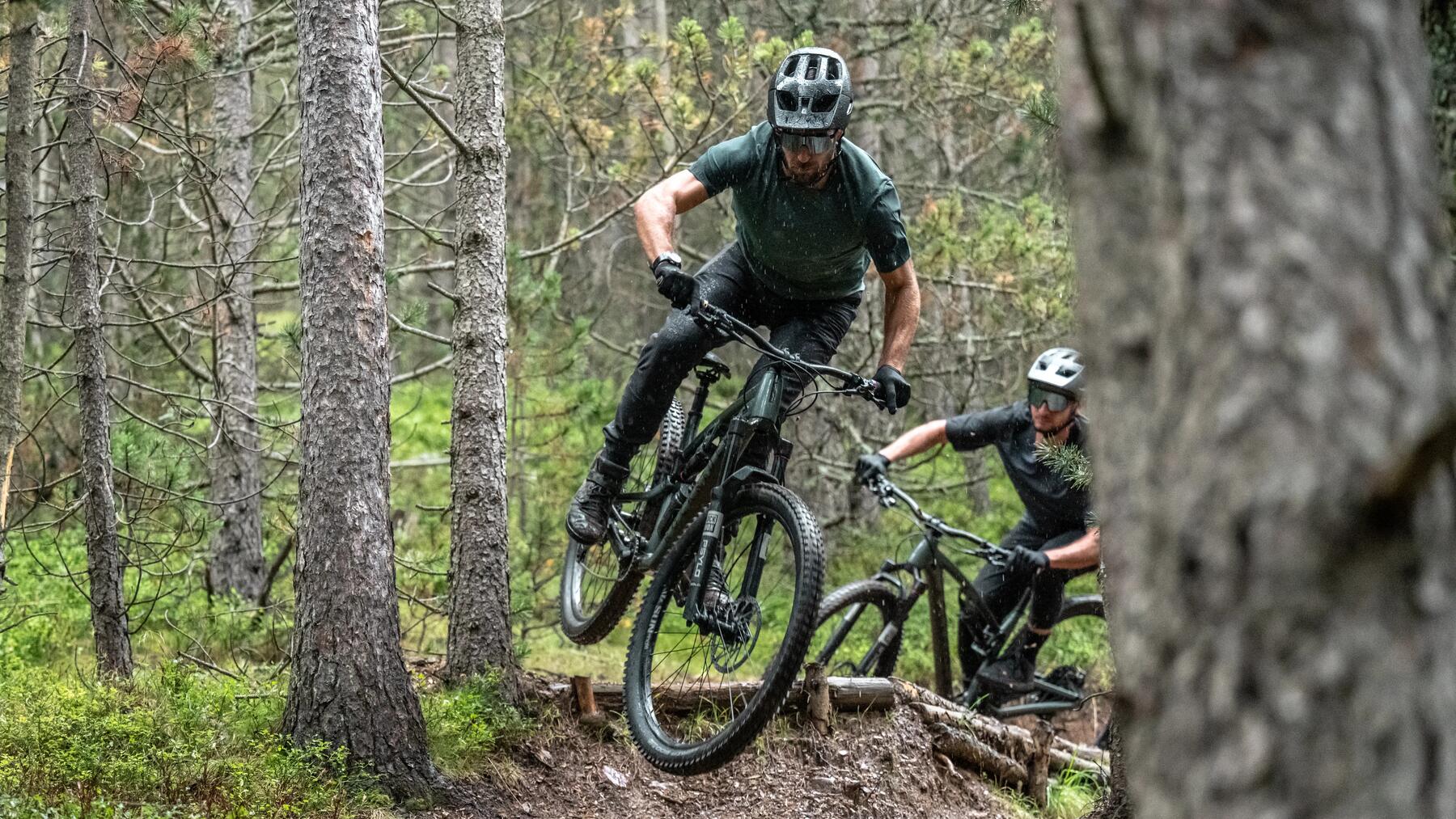
All MTB helmets have a sporty look. 

However, there is a range of different types:

-Mixed-terrain MTB helmets are particularly comfortable and very easy to adjust so that you can make the most of your MTB outings.

-Cross-Country MTB helmets have a more aerodynamic shape. Similar to road cycling helmets, they are designed not to slow you down during MTB training or competitions: wind direction related to the speed, ventilation, helmet weight, helmet size, etc.

-The All-Mountain Biking helmets (like the helmets for enduro riding, DH and other high mountain biking activities) have superior head protection with a range of different coverage.

Should you wear a full-face helmet for mountain biking?

A full-face helmet is not essential for mountain biking. It is recommended for certain challenging disciplines involving significant changes in elevation.

Wearing a bicycle helmet is compulsory for children up to the age of 12

Since March 2017, all children under the age of 12 must wear a helmet when cycling. Whether they are a passenger in a baby seat or steering the bicycle at the handlebar, they must get used to putting on their helmet before each ride: “Never without my helmet!”
It should be said that wearing a helmet is strongly recommended for adults. What's more, as a parent, what better way to set a good example? ;-)

Do you carry your child in a baby seat? Or does your young athlete get about on their own bicycle?Bike helmets are a must for both passengers and riders!

How to choose a bicycle helmet for a baby

The heads of our youngsters, whether passengers or young riders, must be protected. 

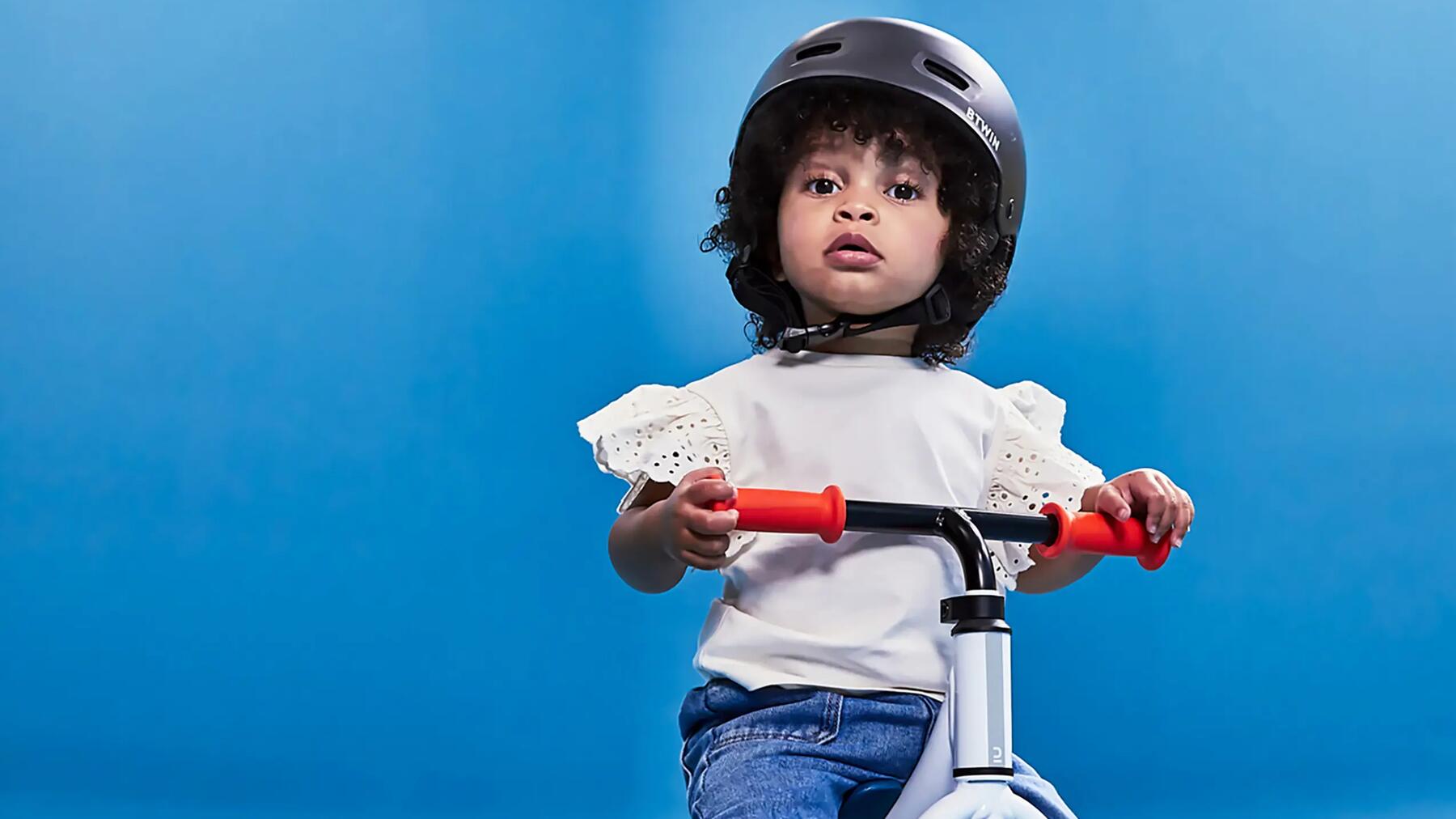
That's why the B'TWIN team created a helmet that is specifically tailored to small heads from the age of one.
Babies enjoying the fine weather in a baby seat on a bicycle or mini-adventurers can have a helmet that fits their head size perfectly.

Having the right size of helmet and making sure it is properly adjusted are the keys to really protecting the heads of our little darlings. This new 2XS size corresponds to a head circumference between 44cm and 49cm (about 1 to 3 years old).

Above the age of 3 years, there are more helmet models:
Standard models like the 500 bicycle helmet which is available in two sizes for children from 3 to 10 years (XS from 48 to 52cm or S from 53 to 56cm).
This bicycle helmet is available in various colours so that you can match it with the colour of the bicycle and ride in style: red, neon yellow, turquoise blue, pink or even electric blue. Your young cyclist is sure to find what they are looking for!

New helmet models for children have been developed like the bowl helmets that provide protection with greater head coverage. (size XS: 48-52cm, size S: 52-55cm, size M: 55-59cm).

For young people who like mountain biking or road cycling, we have designed a special helmet with a removable visor (that protects from spattering). This helmet delivers good ventilation to the child through air vents. (size S:51-56cm).

There are various BMX disciplines.
The two most well known are "freestyle" BMX and BMX "racing". BMX racing involves racing on a track while freestyle BMX is a more acrobatic discipline whose goal is to perform tricks, often among friends belonging to the same group.

For BMX racing, we recommend wearing a full-face helmet with a chin guard to protect the whole face.
Regarding freestyle BMX, it's good to know that it is made up of various disciplines like “street”, “flatland”, “dirt” and even “park'' (skate park) BMX.

Street BMX is one of the most challenging disciplines. For this activity, we recommend wearing a bowl helmet. Given the superior coverage of the bowl shape, it protects the neck well. This helmet model provides a good compromise between protection, comfort and air flow (compared with a full-face helmet). It's so comfortable, you can wear it forever...

At DECATHLON, we offer a range of bowl helmets for children who do street BMX. The sizes of helmet range from XS (from a 47cm head size) to M (59cm head size).

In many cases, buying secondhand products can be a good alternative particularly when it comes to children's products.

DID YOU KNOW? It is strictly forbidden to resell a secondhand bicycle helmet whether it is for a child or an adult. As you know, helmets are safety products.
They cannot therefore be resold between two people because it would be difficult to check whether the helmet has already been damaged during its lifetime. Even if certain bicycle helmets are available for purchase on platforms that sell secondhand products, we strongly advise against buying these secondhand products because there is a risk that the EPS of the helmet has already been damaged.

How to look after a bike helmet

To clean or wash your helmet, a soft sponge and some water will suffice.
Do not use detergent or any other solvents because they could cause a chemical reaction that would damage the material of the helmet. What's more, to protect your helmet from scratches, do not use the abrasive side of the sponge.

Once washed, let the helmet air dry or wipe it with a cloth. (Do not put it near to a radiator or any other source of heat…)

Maintaining the foam pads is child's play! The salt in your perspiration can attack the foam of your helmet. To prevent that, you can wash the foam parts in fresh water. This will considerably increase their lifetime.
They're usually attached to the helmet shell with rip-tabs removing them is very easy!
Take care not to leave them in the tumble dryer as this can damage them.

Lastly, store your helmet in a cool, dry place. Avoid excessive heat sources, UV light, and winter cold. Do not leave your bicycle helmet inside a car in direct sunlight for example. This could damage the EPS and polycarbonate on the inside and outside of the helmet. The best is not to leave it lying around in a car and to remember to take it with you if the weather is fine ;)

If however you need to replace the foam padding on the inside of the helmet, we offer spare parts for sale on our website.

When should you change your bike helmet?

YOUR HELMET HAS SUFFERED A SEVERE IMPACT OR IS CRACKED
In this case, there's no question—replace it immediately. A severe impact or a crack will make it much less effective or even completely useless.

YOU'VE HAD YOUR HELMET FOR A WHILE
As a general rule, we recommend replacing your helmet every three to five years. Everything depends on how much you've used it. 
An intensively-used helmet needs replacing every three years.
A helmet used occasionally for touring use needs replacing every five years. 

Replacing a bicycle helmet after an impact

More info:

The outer shell of your helmet is made from polycarbonate, and the inner shell from expanded polystyrene (EPS). The polycarbonate creates a stiff layer of protection to block against impacts and prevent jolts, while the EPS absorbs the force of a violent impact by deforming. This deformation is what will provide good shock absorption and reduce the rebound effect. Bear in mind that helmets are designed to protect your head from a single violent impact.

Indeed, after a violent impact (fall with head impact or hard drop on the ground), the helmet loses all of its shock-absorbing capabilities. Microcracks appear that aren't necessarily visible and will make your helmet more fragile. As for the EPS, it is irreversibly deformed and the helmet will no longer protect the cranium from future impacts. This is why a damaged helmet must be replaced with a new one.

Why must you replace your helmet every five years?

It's recommended that you replace your helmet every five years. After that, depending on how it is used and looked after, the shock-absorbing material can age and lose some of its original absorption properties.

To find out the age of your helmet, just look at the production date displayed inside the helmet (often underneath the foam pads).

Indeed, after a violent impact (fall with a knock to the head), the helmet loses all of its shock-absorbing capabilitiesMicrocracks appear that aren't necessarily visible and will make your helmet more fragile. As for the EPS, it is irreversibly deformed and the helmet will no longer protect the cranium from future impacts. This is why a damaged helmet must be replaced with a new one.

Protect your helmet and it'll protect your head!

To ride safely, choose a helmet that is suitable for your type of cycling (city, road, mountain biking) and adjust it perfectly. Comfort and protection come first. Happy travels!

Cédric, helmet product manager

This article was also co-written with DECATHLON's bike helmet design team, DHP ("Decathlon Head Protection").