How do you measure the waterproofness of a hiking jacket?

How do you measure the waterproofness of a hiking jacket?

A waterproof jacket stops water, but not all waterproof products are created equal. Schmerber rating, seams, layers: here's how to measure a jacket's waterproofness.

jacket waterproofing

How can you tell if a jacket is waterproof?

Even if a hooded jacket looks ideal and its name includes the word "waterproof", it doesn't guarantee you'll stay dry in the rain. To determine if it will, refer to the product's technical description and look for the following:

• waterproofing standards (JIS L 1092)
• laboratory tests, often measured in Schmerber
• mention of taped seams
• a complete description of the type of construction and treatment applied.

Have you got it? To help you make sense of all this information, we'll explain it in detail!
How is a garment’s waterproofing measured?

Between two waterproof jacket models, the difference can be significant: some keep you dry for hours in heavy rain, while others let in water after an hour in moderate rain. To assess the waterproof rating of a hiking jacket, the Schmerber index is often used as a reference. This rating is named after textile manufacturer Charles Edouard Schmerber, its inventor.

What is the Schmerber coefficient?

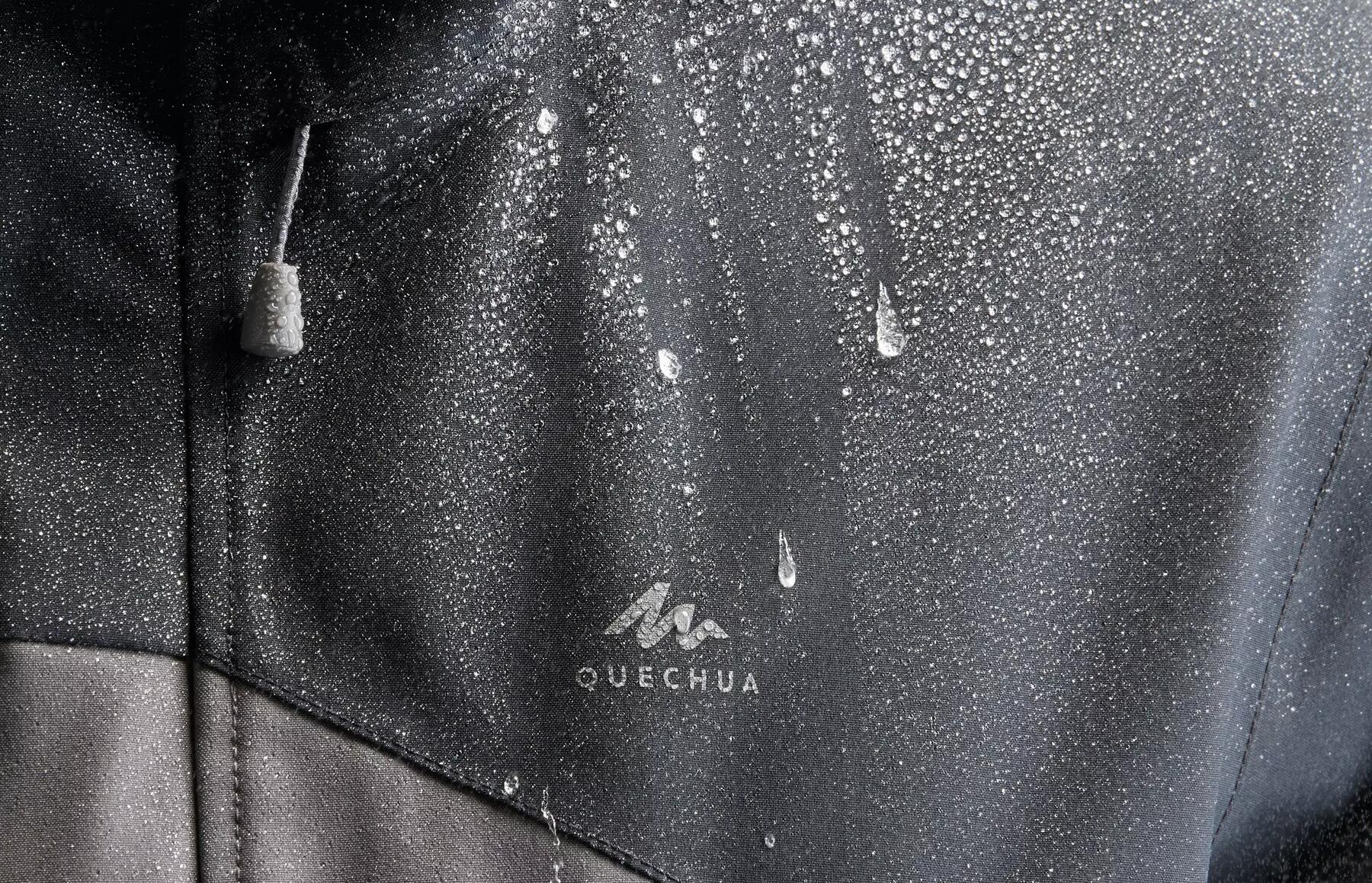
The Schmerber index measures a surface's ability to resist the intrusion of a certain amount of water. 1 Schmerber corresponds to the equivalent of a column of water, expressed in millimetres. The higher the Schmerber number, the more effectively a garment blocks out water. To give you an idea of what this means: a 10,000 mm H2O jacket can withstand the pressure exerted by a 10,000 mm (10-metre) column of water, without water entering the fabric.

How do you measure the waterproofness of a hiking jacket?

Evaluating the Schmerber rating of a rain jacket

To determine a jacket's Schmerber rating, Decathlon has used the JIS L 1092 standard for our hiking jackets since 2021. Here's the test: on each model, a column of water exerts a rapid pressure increase of 1,000 mbar/min. The test stops when the pressure of the water rips the fabric. Following testing, our engineers measure the water column height and obtain a waterproof rating for the component. Since average rain pressure is between 1,000 and 2,000 Schmerber, a garment resistant to the pressure of a 1,300 mm water column is considered waterproof.

⚠️ Please note: A jacket made with a 2,000 mm Schmerber waterproof fabric will protect you from a shower or dampness, but may not protect you from heavy rain or a prolonged thunderstorm.

How do you measure the waterproofness of a hiking jacket?

Checking the water resistance of the jacket's seams

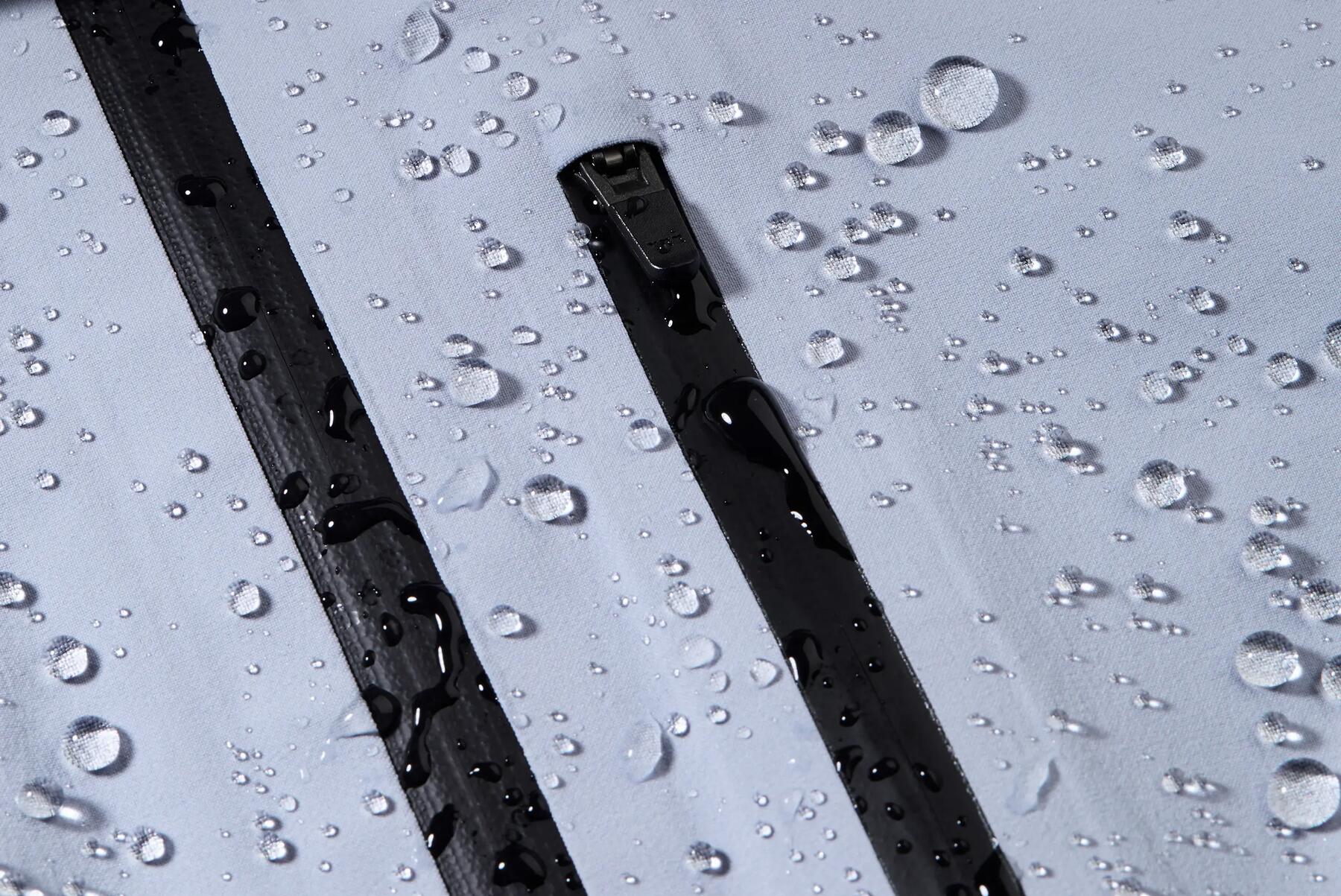
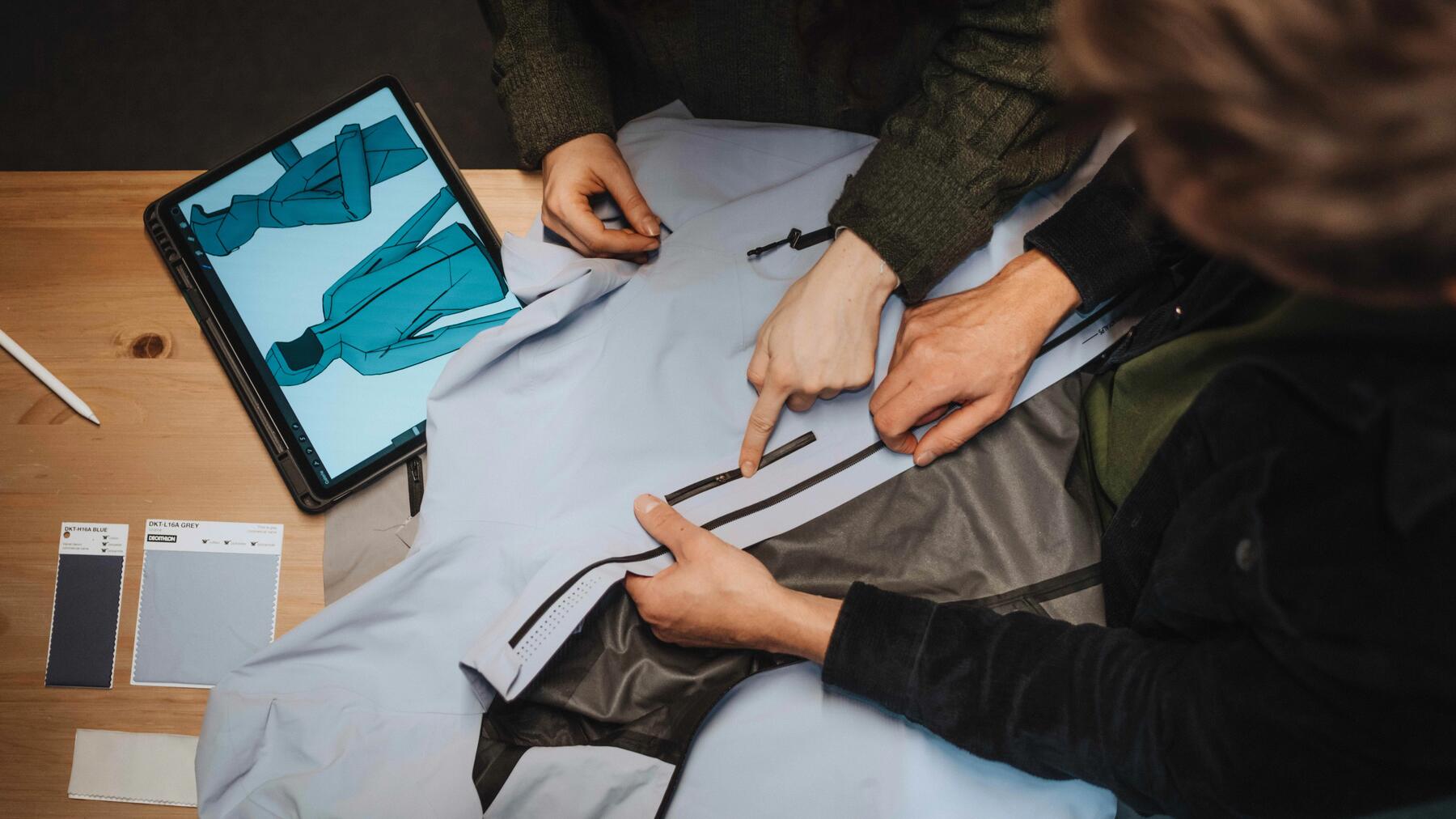
Even if your rain jacket's fabric is waterproof and has a high Schmerber rating, that's not all there is to it! Water can also seep in through seams, the collar-hood connection, storm flaps and zips, eventually getting you wet. So, to prevent any gaps from letting water in, it's essential that the seams and zips are waterproof. On our Decathlon jackets, a statement along the lines of "100% sealed seams" in the product description assures you that water won't get in through these areas.

Understanding waterproofing treatments

Two different techniques are most commonly used to make a garment waterproof: the coating and the membrane. The membrane can be made up of 2 layers, 2.5 layers or 3 layers, which impacts its resistance to rain and affects its characteristics (breathability, lightness, durability...).

Coating treatment

A coating is a waterproofing material (a type of paste) applied to the inside of the fabric. It prevents water from penetrating the garment, but allows perspiration to escape from the inside to the outside. The result? Good protection and breathability, for hiking or moving around in your garment.

How do you measure the waterproofness of a hiking jacket?

The 2, 2.5 or 3-layer membrane

Are you already familiar with the Gore-Tex® membrane? Many other high-performance membranes are also available on the market. A membrane is a film applied to the inner surface of the fabric. Hydrophilic, it blocks water coming from the outside while wicking away perspiration produced by the body during activity (like a coating). The membrane is laminated to the inside of the fabric, making it more flexible and durable than a coating. Its construction is evaluated according to its "layers", whose number affects the garment's level of comfort, breathability and weight.

• 2 layers: the membrane is bonded to the outer fabric, while the inner protective lining is free. This provides breathability in case of perspiration and a good level of comfort.

• 2.5 layers:  The membrane is glued under the outer fabric and protected inside by a fine film. This construction results in a lightweight, durable jacket.

• 3 layers: the membrane is bonded between the outer and inner fabrics. This design guarantees robustness and performance.

Choose a jacket with a number of layers suited to your priorities and needs for hiking in rainy weather. These highly technical processes justify the price of a good waterproof jacket, which will fully protect you from the rain.

Consider the material the jacket is made of

Finally, there's one last parameter to consider: the quality of the material the waterproof jacket is made of. A new garment made from a low-quality component may have its waterproofness compromised after washing. The membrane could be damaged and the level of protection reduced. You can reactivate the waterproofness using specific techniques (we'll tell you more about them below). But for the membrane, once it's damaged, there's no going back. That's why at Decathlon, when we design a product, we make sure it can claim the same level of waterproofness before and after washing.

How waterproof should a jacket be?

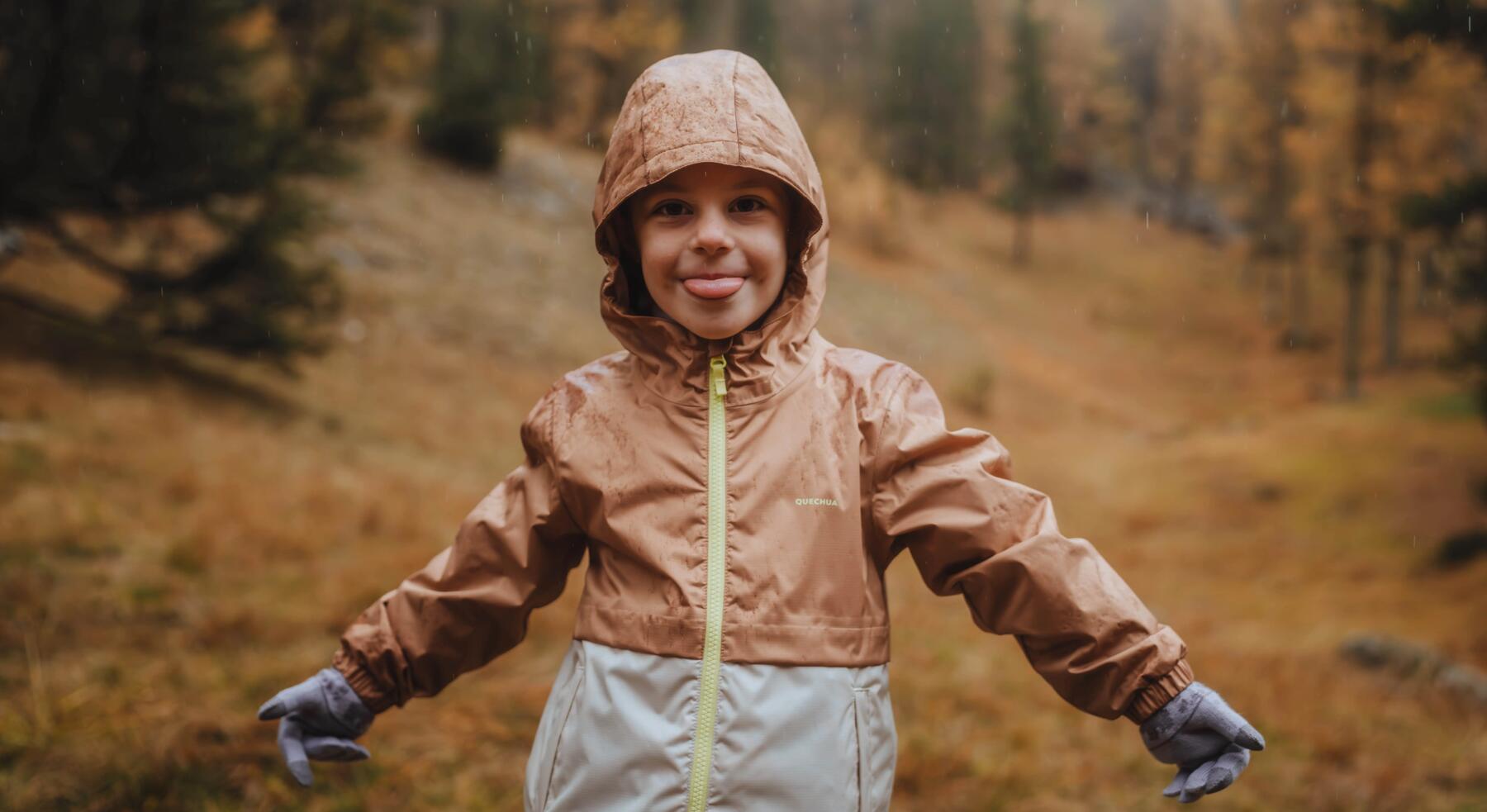
It all depends on how you use it and the conditions you encounter. Do you enjoy hiking for long periods, regardless of the weather? A highly waterproof, high-performance model is ideal, such as the MH900 jacket for men or women. Its features: 25,000 mm H2O (Schmerber rating), 3-layer construction and waterproof zips. For kids, the MH900 model, available in pink or black, features a waterproof coating (10,000 Schmerber) and waterproof zips, keeping youngsters dry for up to 3 hours.

If you're only using your jacket for a short walk and are worried about a light shower, you can choose a less waterproof option. The MH100 and MH150 jackets offer an estimated 15,000 mm H2O protection, suitable for moderate showers. The MH100 has a 2-layer membrane, and the MH150 a 2.5-layer membrane.

Finally, for quick outings in cold weather, you can go for a warm hiking jacket with minimal waterproofing. The NH500 jacket, available in women's and men's versions, with 5,000 mm H2O and waterproof zips, is particularly suitable.

How to re-waterproof your jacket?

The waterproofing properties of a hiking jacket can diminish after several trips out or repeated washing. You take out your jacket after a long period of disuse but are unsure of its waterproofness? Place a drop of water on the fabric: if it rolls off, it's still waterproof. But if the drop is absorbed, it isn’t. Several practical solutions can help you reactivate your jacket's waterproofing. Tumble dryer, specific laundry detergent or a reactivating spray: we explain everything in this feature article!

Waterproofing vs water-repellency what is the difference?

A "water-repellent" jacket has caught your eye, especially since it's cheaper than a "waterproof" model? While the two terms are sometimes thought to be synonymous and imply that water stays on the surface, that's not quite right! These two options offer different technical advantages.

A water-repellent jacket for light showers

A fabric's water-repellent property is simply its ability to let water slide off its surface without absorbing it. In practical terms, with a water-repellent garment, you'll see the raindrops "roll " off the fabric thanks to a treatment applied to the outside. But this only works if it's not raining heavily or for just a short time. It's really a temporary solution that can get you out of trouble if you get caught in a few drops of rain. These products are generally designed for another primary function, such as providing warmth or breathability. They aren't really designed to protect you from the rain while hiking.

A waterproof jacket for proper rain

Unlike water-repellency, waterproofing is a material's ability to prevent water (rain, snow, dew or humidity) from getting inside. A waterproof material has a water-repellent component combined with an additional layer of protection inside the fabric. This layer prevents water from penetrating the material, even if it stagnates or the fabric is under pressure, such as from a backpack. Therefore, in heavy rain, it's better to wear waterproof rather than water-repellent clothing to stay dry.

Does a down jacket protect you against water?

Down jackets are often water-repellent, not waterproof; their primary purpose is to keep you warm. In case of rain, we recommend packing a lightweight, waterproof, compact jacket in your backpack so you don't get caught in a downpour! If the lining of your padded jacket gets wet, it won't keep you warm. You have two options: choose a jacket size large enough to wear over your down jacket, or pack a lighter down jacket in your bag. Alternatively, you can go for a 3-in-1 jacket that combines warmth, comfort, waterproofing and performance. A lighter, more practical choice!

Waterproof rating, seams, material, treatment: you know which factors to consider when measuring the waterproofness of a hiking jacket. Ready to go trekking in the rain?

How do you measure the waterproofness of a hiking jacket?

Marion NICOLAZO

Specialist sports writer and outdoor adventure enthusiast.

Find out all our advice

Hiking or trekking jacket

How to choose a hiking jacket

When hiking, the weather changes quickly, so it's always best to have a hiking jacket that’s suitable for every situation and can protect you in windy or inclement weather.