How to choose your windbreaker

Lightweight, water-repellent, thermal insulation... We take a look at the essential features you need in your windbreaker!

Whether you’re racing, sailing, day-hiking or mountain biking, how do you choose the right windbreaker for your activity, and what criteria should you look for? We’ve put together all our top tips in this guide!

Definition of a windbreaker

The windbreaker is the garment to put on when it’s cool or when the wind chills you, and is particularly popular in mid-season. They can exist in different forms: pullover, softshell, jacket, with or without hood, with or without pockets, it’s important to remember that they aren’t always waterproof. In all cases, it’s from the component (a membrane) that insulates you from the wind that it gets its name: windbreaker.

Most of the major sports brands offer a range of windbreakers, because they are part of the kit that sportsmen and women need for outdoor activities. Often stretchy, they ensure good freedom of movement for your favourite physical activities.

How to wear your windbreaker

The windbreaker is worn either as a second layer, i.e. like a fleece jacket to provide warmth, or as a third layer to protect you from sea spray and cool winds.

Often close-fitting to keep the wind out through the sleeves or waistband, it can be worn under waterproof dungarees if you’re into water sports.

Selection criteria

The first criteria to take into account: use! Sailing, regattas, hiking, trail running, cycling... Each sport has its own specificities. Depending on how you are going to use it, your windbreaker will need to meet certain criteria, such as:

  • Water repellency or waterproofing
  • Breathability, light weight and the speed of drying
  • Thermal insulation

Choosing the right windbreaker for your activity

Here, your windbreaker is much more than just a jacket: it’s a real chameleon for your sporty, urban wardrobe! For your city escapades, the urban windbreaker is a comfortable rain jacket, often waterproof, to protect you from the elements without sacrificing your style. It can take the form of an oilskin, pullover or pea coat inspired by the marine world, offering optimum protection for everyday wear. It’s the perfect ally for coping with a sudden downpour during a city stroll.

What about sports fans? The choice is huge!

For those who love the water, whether for sailing or water sports, look for windbreakers with maximum waterproofing and wind resistance, capable of coping with spray and the sometimes harsh conditions at sea. The finishing touches on the cuffs and waist are essential: they must be adjustable and tightly fastened (with elastic or rip-tabs) to prevent water from invading the party. Some models even have high necks and adjustable hoods for optimum head and neck protection. The windbreaker’s versatility means that it is often used as a crew jacket for regatta sailors, flocked with the team colours and worn at sea as well as on land.

For hiking, you can choose between Softshell jackets, which combine a thermal layer with a water-repellent coating for cool temperatures and light showers, and Hardshell jackets, which are fully waterproof but without insulation, ideal for modulating your layers according to the effort involved.

Runners and trail runners will prefer ultra-light, breathable models with water-repellent fabric for insulation without overheating.

For cycling enthusiasts (mountain biking, road, gravel), special windbreakers offer a close-fitting cut, removable sleeves to adapt to the effort involved, and a hood designed for wearing a helmet.

Every activity has its own windbreaker (even if many are multi-purpose), and the most important thing is to choose the one that perfectly suits your movements and your needs, so that every outing is a pleasure, whatever the terrain or the weather!

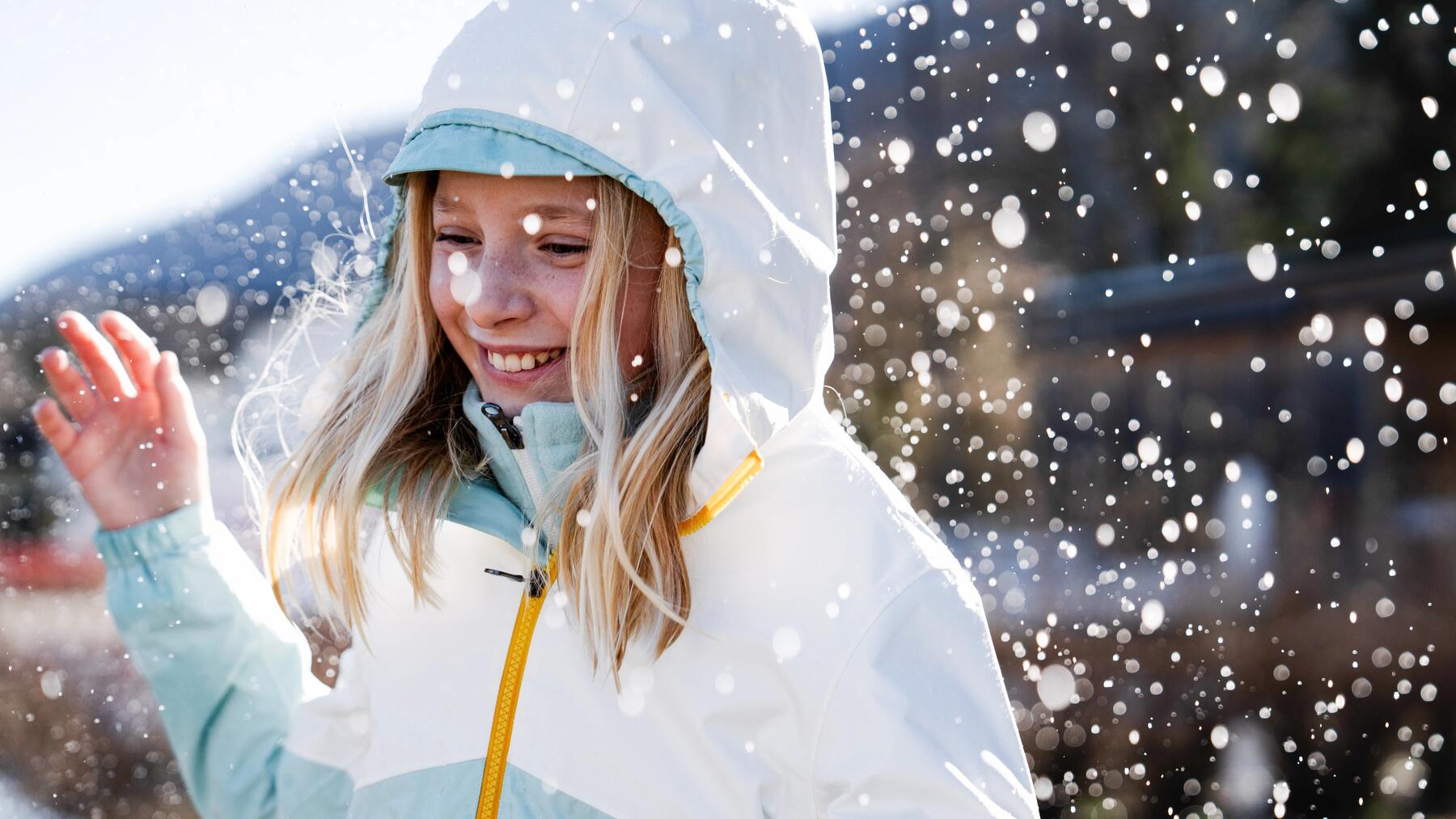
Water-repellent vs. waterproof: is it the same thing?

No, not really. And the difference is significant.

When we talk about water repellency, we’re talking about clothing that’s particularly suitable for light rain or showers, because the fabric doesn’t soak up water and remains lightweight. Imagine tiny droplets of water gliding and trickling over the surface of your jacket, without penetrating the fabric. This feature is often found on windbreakers designed to wick away perspiration, such as those used for running, hiking or mountain biking. However, you should be aware that the water-repellent effect can fade with time and washing, sometimes requiring the fabric to be re-treated.

Waterproofing, on the other hand, goes much further. A waterproof garment is designed to ensure that water does not penetrate completely, even in the event of an intense, prolonged downpour. It is made from a fabric that absorbs water without allowing it to reach the inside of the garment. Well, to a certain extent. That’s why it’s essential to check your garment’s waterproof rating, which is measured in Schmerbers. The higher the number, the greater the water resistance of the garment. Waterproof clothing is the ultimate shield against driving rain or snow, ideal for sailing, trekking or winter activities when staying dry is non-negotiable. The downside? A totally waterproof garment can sometimes be less breathable and heavier than a water-repellent one, because the membrane is denser to block the water. It’s a compromise to be found depending on your activity!

Is a windbreaker waterproof?

Yes and no! We know, you love it when people say that. Let’s just say that windbreakers aren’t always waterproof. Softshell jackets are made up of a water-repellent fabric on the outside, a windproof membrane and a layer of fleece on the inside. This assembly keeps the wearer warm and dry in the event of sea spray! If you want to combine windproofness and waterproofness, you’ll need to look at more technical jackets and check their waterproofness index.

What material should a windbreaker be made of?

Windbreakers are often made from a variety of fabrics, each with its own advantages and disadvantages.

Synthetic fabrics such as polyester or nylon are highly prized for their lightness, breathability and resistance to wear and abrasion, making them ideal for intense sporting activities.

If you’re expecting rain, choose materials with water-repellent or waterproof properties. For example, membranes such as Gore-Tex® or laminated fabrics are renowned for their breathability, allowing moisture to be wicked away while keeping you protected.
Conversely, natural fabrics such as cotton may be more resistant but less breathable.

To guarantee the longevity of your windbreaker, the quality of the fabric itself is of paramount importance: reinforced seams and robust zips are signs of durability.

Thermal insulation: a selection criterion?

It can be! When we think of windbreakers, we often think of protection against wind and rain, but less of thermal comfort. However, some models are made up of two layers: a warm, fleece-type lining and a water-repellent or waterproof outer shell. This is a criterion to check if you want your jacket to protect you from the wind and cool temperatures.

On the other hand, if your aim is to wear insulating layers (such as fleeces or thick jumpers) under your windbreaker, choose a model with a wiser or "loose" cut. A jacket that fits too snugly could restrict your movement and compress the middle layers, reducing their thermal efficiency and your comfort at the same time. The idea is to allow good air circulation between the layers to maintain body heat. That’s what allows you to adapt easily to variations in temperature and effort, without ever sacrificing your comfort or freedom!

Accessories, the little extras that make all the difference

Choosing the perfect windbreaker is a bit like choosing your best sports teammate: the little details make all the difference. Let’s talk about the details!

Never underestimate the importance of finishes, as they have a direct impact on your comfort and protection from the elements.

Think of the hood: is it essential for you? If you’re cycling or trekking with a helmet, a compatible or removable hood is a real plus, so it doesn’t get in the way. On the other hand, if you’re a fan of intense activity, a hood that doesn’t blow away in the wind or inflate like a hot-air balloon is essential. The collar also plays a role: a high neck can replace a scarf and provide effective protection from the cold and bad weather, while avoiding unpleasant skin irritations.

As for pockets, they are real allies: size, location, these details make all the difference during physical effort. Being able to retrieve your keys, your phone or your energy bar without contorting your whole body is better. And make sure their closures are waterproof to keep your essentials dry, come rain, shine or both.

Finally, the cuffs and waistband are the finishing touches that seal in your protection. Tight-fitting cuffs, with elastic or an adjustment system like rip-tabs, will keep the wind and rain out, and fit perfectly over your gloves if you need them to.

Windbreaker or K-way?

The use of the word "K-way" is in fact a drift in usage. K-way is the brand that created the famous nylon K-way, which you put on over your head and ended up folded up in your pocket or tied like a pack around your waist! It was windproof and waterproof. Today’s technologies have evolved to include breathable windbreakers, a feature that is not to be underestimated when it comes to sporting activities.

Is there a difference between a man’s windbreaker and a woman’s windbreaker?

Technically, there is no difference between a men’s windbreaker and a women’s windbreaker. As with textiles in general, the women’s cut will be slim-fitting and pinched at the bust to adapt to the female morphology. Some men’s jackets have a breast pocket, which is not found on women’s models: it’s a question of morphological adaptability.

May the wind blow in your favour, because now you have all the equipment and tips you need to ensure that the wind no longer holds back your desire to get away from it all!

Marie Barreau Decathlon

Marie

Web author

I’m a water lover, a trail runner in training, a gym enthusiast, and a keen dancer. When I’m not moving, I love writing about the incredible powers of sport and the human body!

Other tips for choosing the right outdoor products:

The 3 layer technique to stay warm and dry

How to dress for hiking The 3-layer technique!

How can you stay warm and dry to make the most of your day? Discover the 3-layer technique!

Hiking or trekking jacket

How to choose a hiking jacket

When hiking, the weather changes quickly, so it's always best to have a hiking jacket that’s suitable for every situation and can protect you in windy or inclement weather.