stand-up-paddle-board-how-to-choose

How to choose your stand up paddle (SUP) board

With so many options, and depending on your preferences, choosing a paddleboard can be complex. Follow this guide to choose the right one.

Stand-up paddleboarding is a fantastic sport, but choosing equipment isn’t always easy. Inflatable or rigid board? Excursion or exploration? Here are some criteria to help you decide.

Criterion 1: Your level (beginner, intermediate, advanced)

The most important question when making your choice: how are you on a board? Are you comfortable, or still struggling to stay upright? Your level determines your needs, and therefore the characteristics of your ideal board. 

Beginner:

If you’re a first-time paddler, or if you have prior experience of board sports after trying your hand at surfing or windsurfing, you need stability and ease of use. What you need is a discovery board (all‑round): a wider, thicker model that has more room to stand up on and is less likely to tip over.

Intermediate and Advanced

If standing up is no longer a challenge for you and you’ve mastered the paddling technique, it’s glide performance that matters most. 

Intermediate paddlers generally use boards that are narrower, longer, and thinner. You might also consider a surf SUP if you’re planning to hit the waves. 

For advanced paddlers, we recommend custom-built boards to suit your strengths and weaknesses, and above all your body shape. 

How can you assess your level? Here are a few keys to understanding where you stand and how to adapt your equipment: 

  • You’re a beginner if you’ve never set foot on a board, or only did so once long ago on holiday as a kid, whether it was stand‑up paddling, surfing, or windsurfing. In this case, start from scratch and (re)discover paddleboarding. 
  • You’re a novice once you know a little about gliding on the water. At this point, regardless of discipline: if you can already stand up, that’s a good start. 
  • You’re an improver if you’ve paddled a SUP before, mastered the basics, and have good stability on the board. 
  • You’re intermediate when you’ve mastered the various techniques of the discipline and explored different practices and environments—such as cruising and surfing—and feel at ease on the sea or on a lake. 
  • You’re advanced if you don’t need to ask the question and there’s little we can teach you. SUP is a way of life for you; you practise with rigour and structure, as part of a club or with a view to competing. 

Criterion 2: your activity on the water (excursion or exploration)

While your skill level determines what’s appropriate for you, an experienced stand‑up paddler can still go on a relaxed excursion with family members who are less steady on a board. 

For excursions or cruising

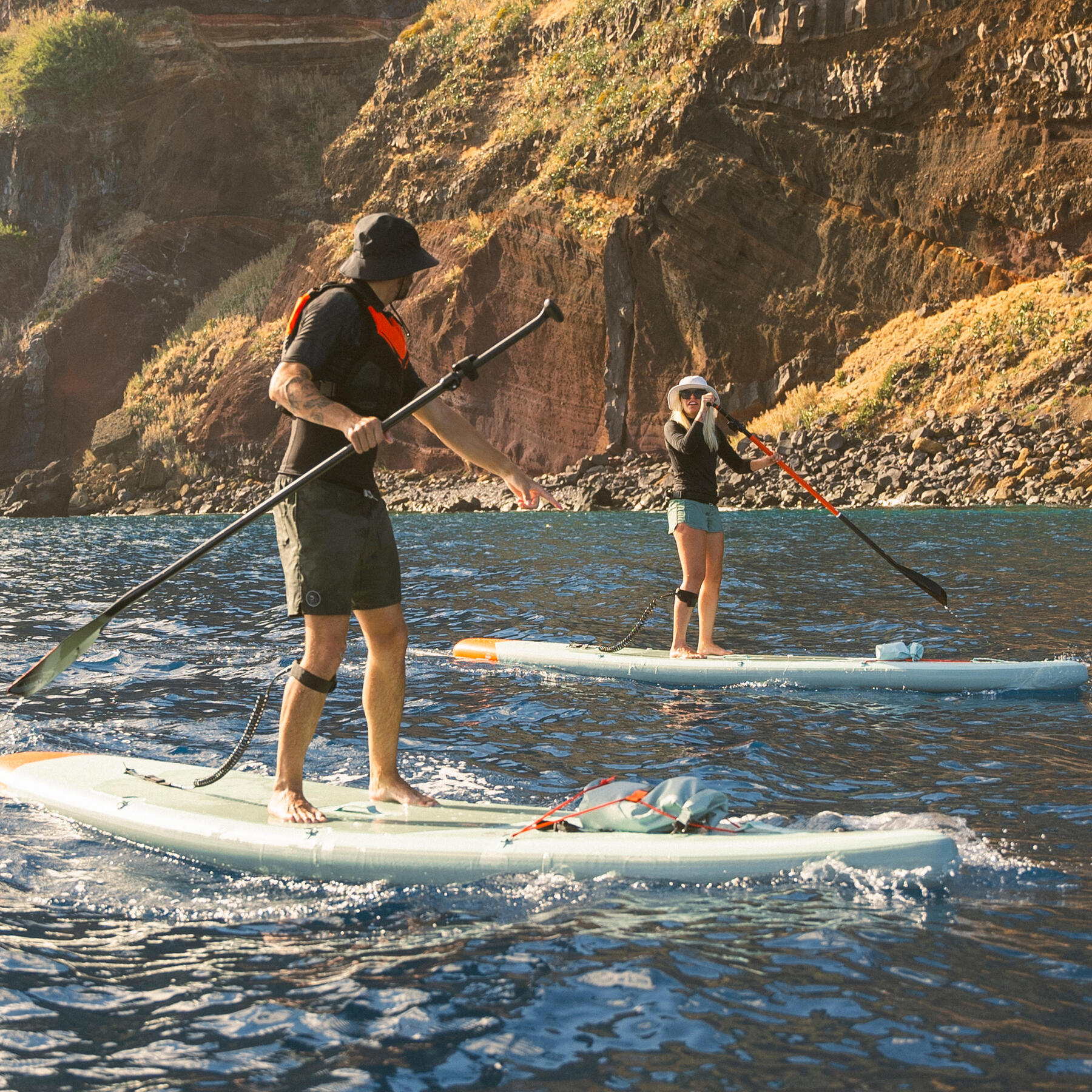
Excursions or recreational cruising refer to outings on calm waters (lakes, sea, ponds). This activity is accessible to a wide range of people: it’s suitable for the whole family, young and old, and especially for beginners who want to get their feet wet and learn to stand up. 

The most suitable boards are discovery and all-round models, which are wider, thicker and more stable. As well as making paddling easier, they can accommodate two people. 

For exploration or touring

If you’ve outgrown short outings and want to venture further, choose a board suited to exploration (touring). These longer, narrower SUPs make it easier to glide and go faster. However, they are less stable.

For surfing and waves

For advanced paddlers, there’s also SUP surfing. Your paddle can get you to where the waves are, but it’s your skill and your board that will make the difference once you’re in the line-up. Choose a shorter, narrower board for better manoeuvrability and speed.

Racing

Also for advanced paddlers, racing requires arm strength and a board that won’t hold you back. Choose a longer, narrower model to reduce drag. The aim is maximum speed, to go faster than others.

Criterion 3: inflatable or rigid board? 

While skill is an important consideration, ease of transport and storage are also key selection criteria to consider. 

The inflatable paddleboard

The obvious choice for beginners and for about 90% of paddleboarders. 

Made from polyester and PVC, inflatable boards are robust and suitable for all levels. A PVC stiffener can be added to the deck to increase rigidity. The most advanced SUP models have two PVC stiffeners integrated with unidirectional fibre. 

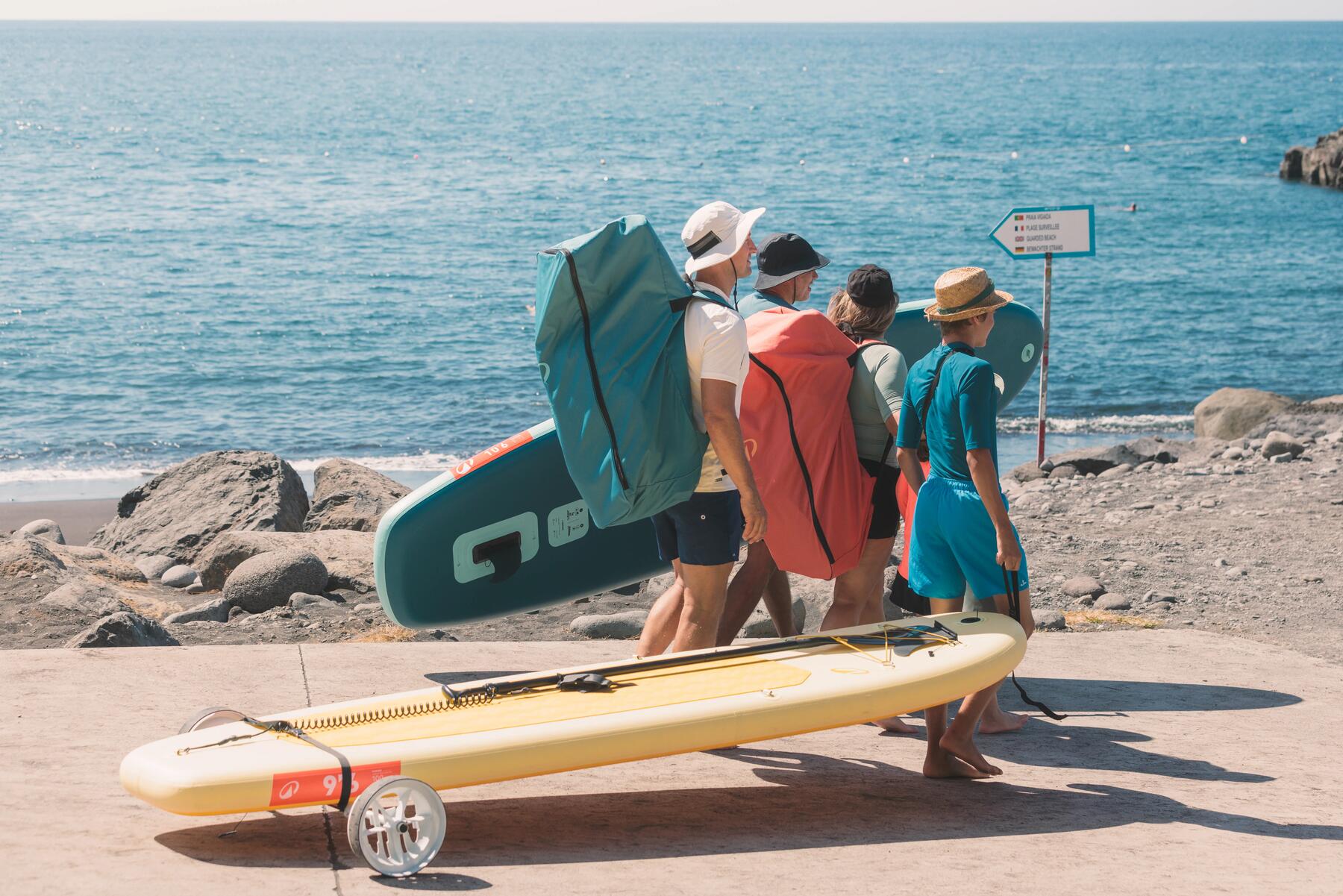
They’re easy to carry, store, and they fit in a backpack. Although highly impact‑resistant, like any inflatable craft, they still carry a puncture risk

The rigid paddleboard:

These SUPs are popular with advanced paddlers. Ideal for surfing, racing or touring, they offer better glide and greater speed. They can be made from foam and resin or carbon fibre, like surfboards. 

However, they are more fragile, more expensive, and harder to transport and store. When you buy a rigid board, it’s because paddleboarding has become part of your lifestyle. 

Criterion 4: your build and the volume of the board

A final consideration, and an important one. Your weight determines the size of your board, in terms of width and thickness, and therefore your stability on the water.

It’s easy to determine the board volume suited to your weight: the heavier you are, the longer, wider and thicker your board needs to be to support you and keep you stable. Your weight pushes the board down into the water from its centre; the water exerts an opposing force that must equal or exceed your weight across the SUP’s surface. Buoyancy is what keeps you afloat. 

If you plan to go two‑up, make sure the board can support your combined weight. 

Bonus question: 1 fin or 3 fins—what difference does it make when paddling? 

  • 1 fin 
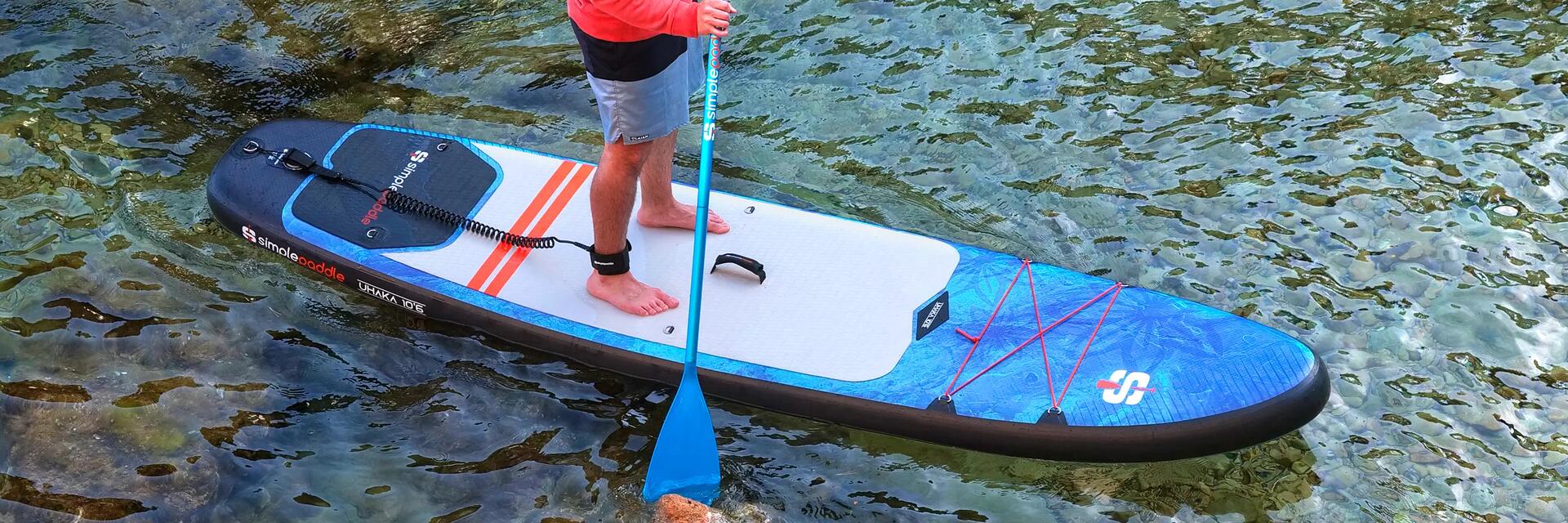
With a larger surface area, a single fin helps the board track straight, even at high speed. Turning is slower, but stability is guaranteed. This set-up is ideal for beginners
  • 3 fins 
This set-up is suitable for surf-oriented activities. Three fins make the board much easier to turn, but significantly reduce stability. 

Note that some boards let you change the number of fins depending on the set-up you need for your activity. 

Frequently asked questions 

What size SUP should you buy to get started?

To get started, choose a board that lets you have fun while making it easy to learn the basics. You’re not looking for performance in terms of speed or manoeuvrability. An inflatable discovery SUP (all-round) is ideal for beginners. It should be wide, thick, with a rounded nose and excellent stability despite your potential lack of balance. You need an all-round SUP. This model is ideal for having fun and for serious learning. You can take your first steps in moving water or waves, then move on to more performance‑oriented models when you’re ready. 

What is the lifespan of a paddleboard?

While not immune to punctures, the lifespan of an inflatable SUP depends on how carefully you treat it—but accidents can still happen. Good maintenance will extend its life; the same applies to rigid SUPs. Decathlon SUPs come with a 2-year guarantee. 

Choosing wisely: SUP hire, second-hand and maintenance

Rental

If you’ve never set foot on a board, it’s better to try one before buying your first model on a whim. Equipment hire is generally available wherever there’s water. It’s also a great way to get some advanced advice. An ideal way to try before you buy. 

Second hand

For beginners and those on a budget, buying a second-hand SUP is an option. It’s also a good way to trial before investing in new, higher‑quality equipment.

Maintenance and repair

Maintaining your SUP after each use is crucial to preserve the quality and properties of its materials for longer. After using it in salt water, rinse your SUP with fresh water. Dry it before folding, and do not leave it in direct sunlight: UV rays damage the materials. 

In the event of a puncture, follow these steps: 

  • Clean the damaged area with warm soapy water. Dry with a clean cloth to remove any traces of detergent. Ensure the damaged area is clean and dry. 
  • Take a patch designed for SUP punctures and remove the protective film. 
  • Apply the patch to the damaged area, centring it so it completely covers the hole or tear. 
  • Remove any air bubbles under the patch using a smooth, flat object such as a spatula or credit card. 
  • Use a hairdryer to warm the patch slightly. This helps the adhesive bond properly. Be careful not to overheat it, as this could damage the SUP or weaken the adhesive. Leave to cool for about 15 minutes. Your SUP is ready to use again.

Paddle, buoyancy aid... the SUP equipment you need

Certain items of equipment are essential for paddleboarding, and others will prove necessary depending on your ability and activity.

  • Naturally, you’ll need a paddle.
  • If you’re planning a trip on the sea or white water, you’ll likely need a buoyancy aid for protection from the water, and also from the sun (remember to apply sun cream). Kids are strongly advised to wear a buoyancy aid.
  • Electric pumps are useful for inflating your SUP.
  • And if you enjoy recreational cruising, you can fit your board with electric assistance.

Choosing the right SUP is your ticket to unforgettable memories on the water. Ready to get started?