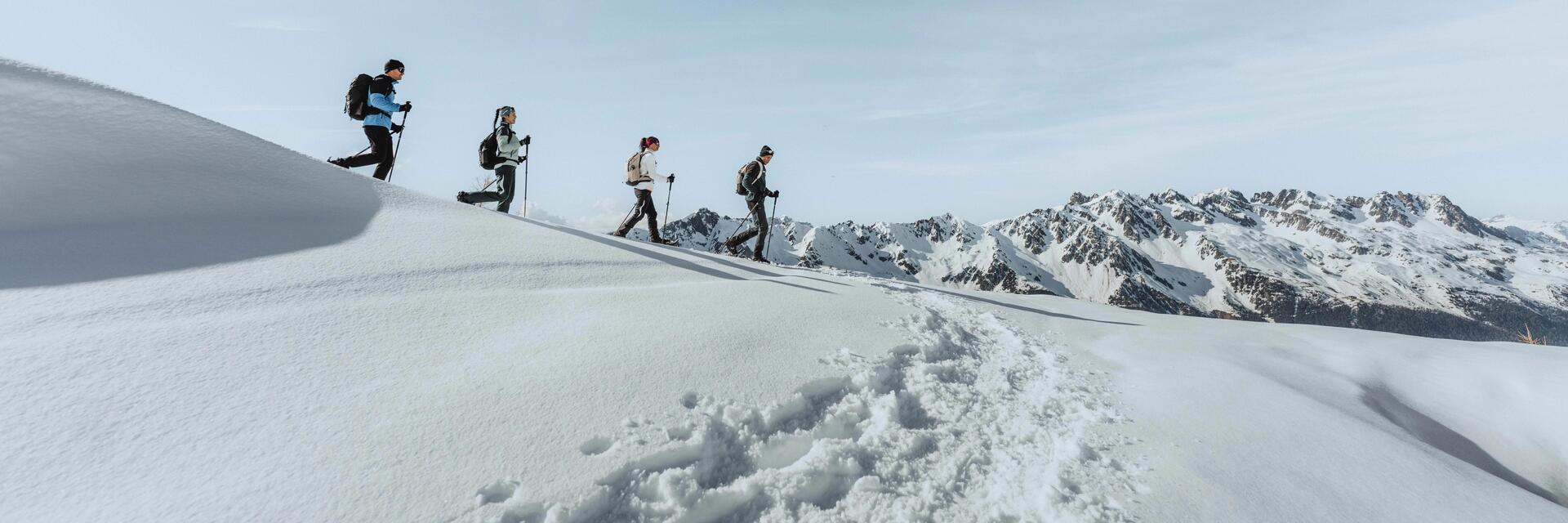
How to choose your snowshoes. Quechua snowshoe advice

How to choose your snowshoes

How to choose the right snowshoes Size, weight, practical advice and equipment - we give you the full lowdown!

Do you enjoy taking in the cool, winter air, feeling the snow underfoot, and setting off on an adventure?
To make the most of your excursions, it’s vital to make the right choice of snowshoe. A suitable snowshoe that allows you to walk comfortably, avoid sinking into the snow and explore the mountains with total peace of mind. Whether you’re a beginner, a hiking enthusiast, or a fan of powder, this guide will help you find the perfect snowshoe for your foot, weight, and activity.

Follow the guide, and get ready to explore the snowy trails in style and comfort this winter!

Understanding what snowshoes are

To ensure you’re properly kitted out in snowshoes, it’s best you know what you’re talking about.

Snowshoes were created from a simple need: to get around more easily on snow, without sinking in with every step. Widely used in frequently snowy areas, snowshoes were traditionally made from wood, the only material able to withstand temperatures of less than 0°. A lot has changed since then. Now you can get aluminium snowshoes, known as "tubular snowshoes". They’re light, perfect for wide, flat spaces and very deep layers of fresh snow. They also come in plastic, more durable, perfect for more rugged terrain, hilly and steep, like the Alps here in France. These are the most widely used.  Snowshoes can be classified according to the following three materials:

  • Wooden snowshoes: solid and durable, they protect against the cold and are still used in Canada
  • Aluminium snowshoes (tubular): lightweight, ideal for being out in nature and deep snow
  • Plastic snowshoes: durable and versatile, they’re ideal on hilly or uneven terrains
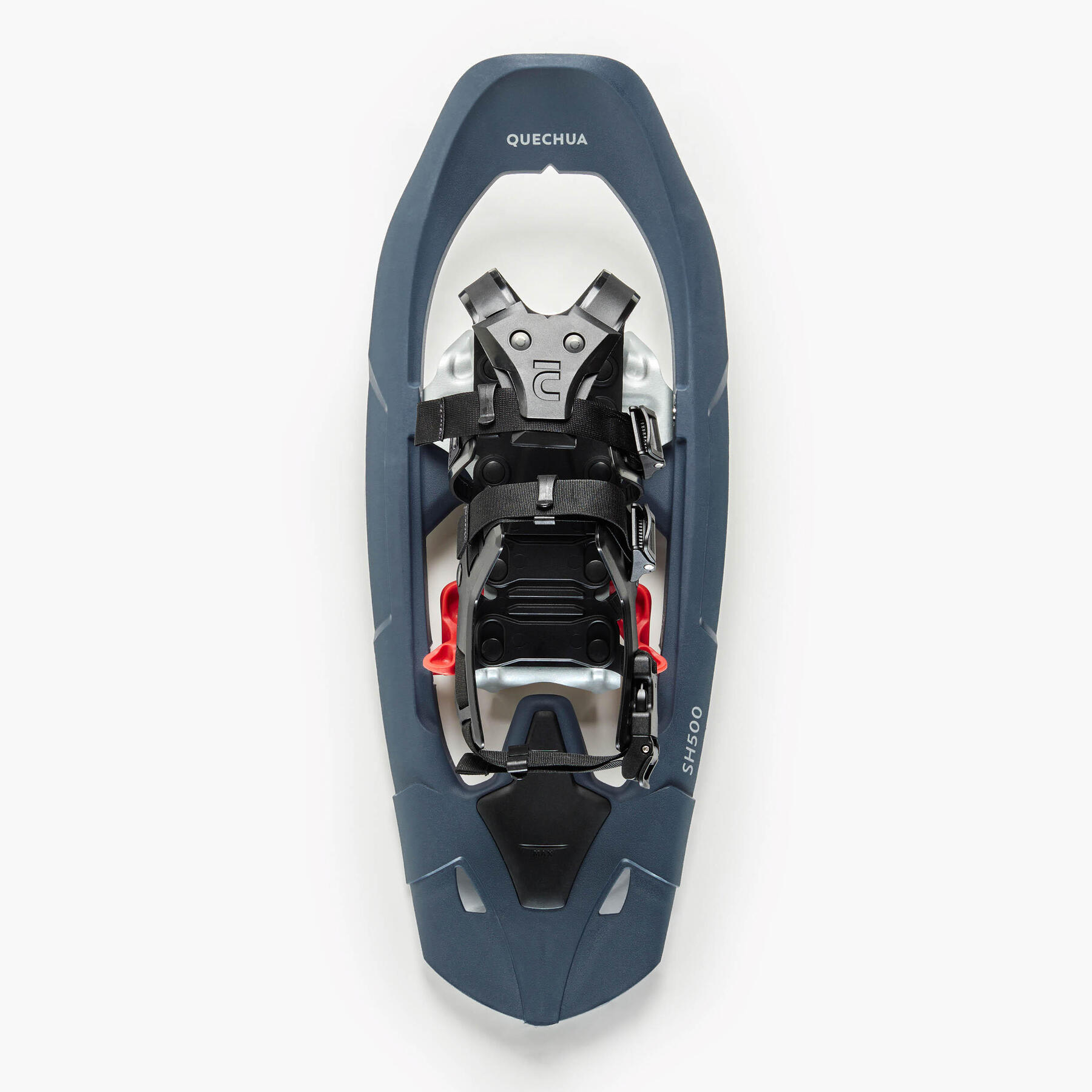
The construction of a snowshoe

The parts of a snowshoe

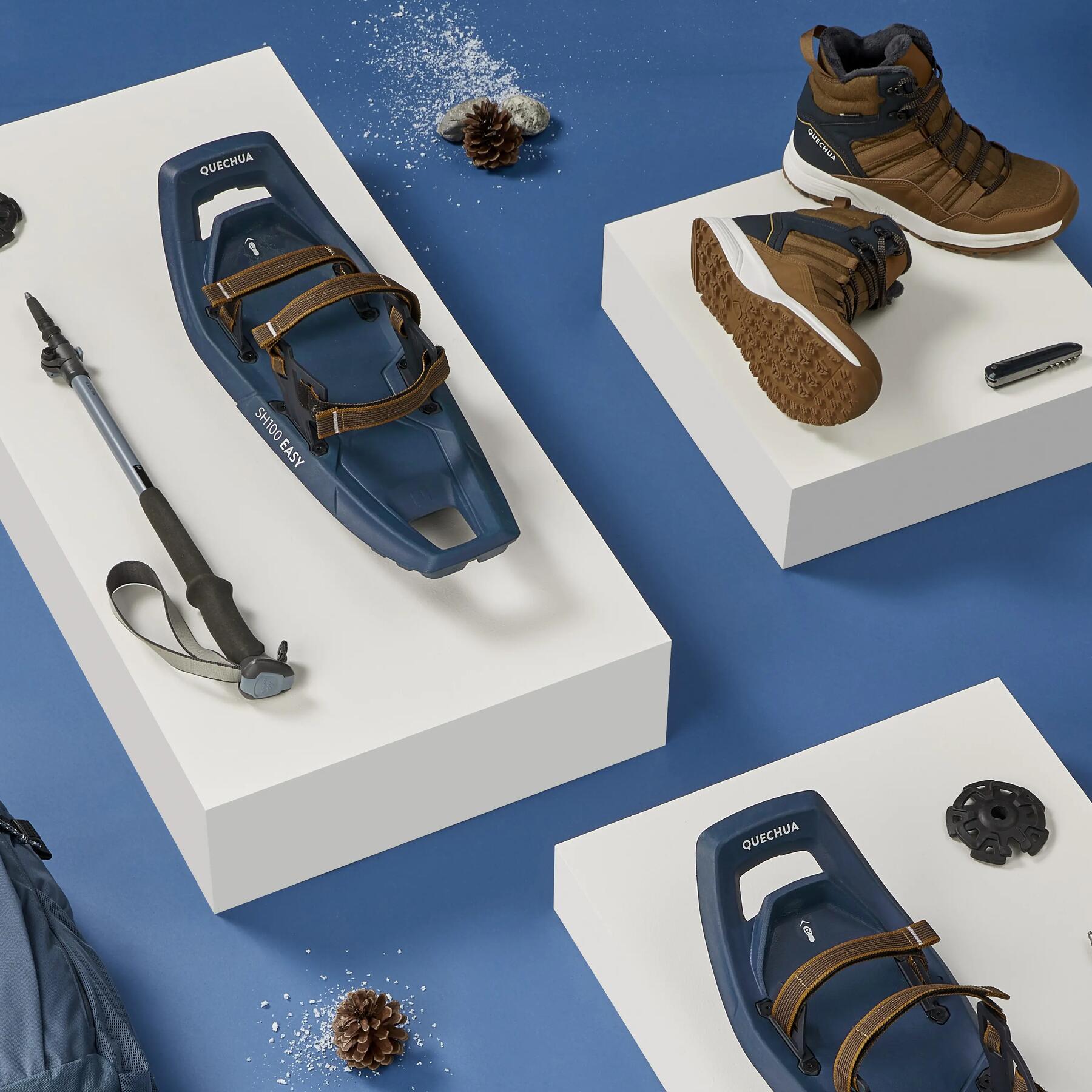
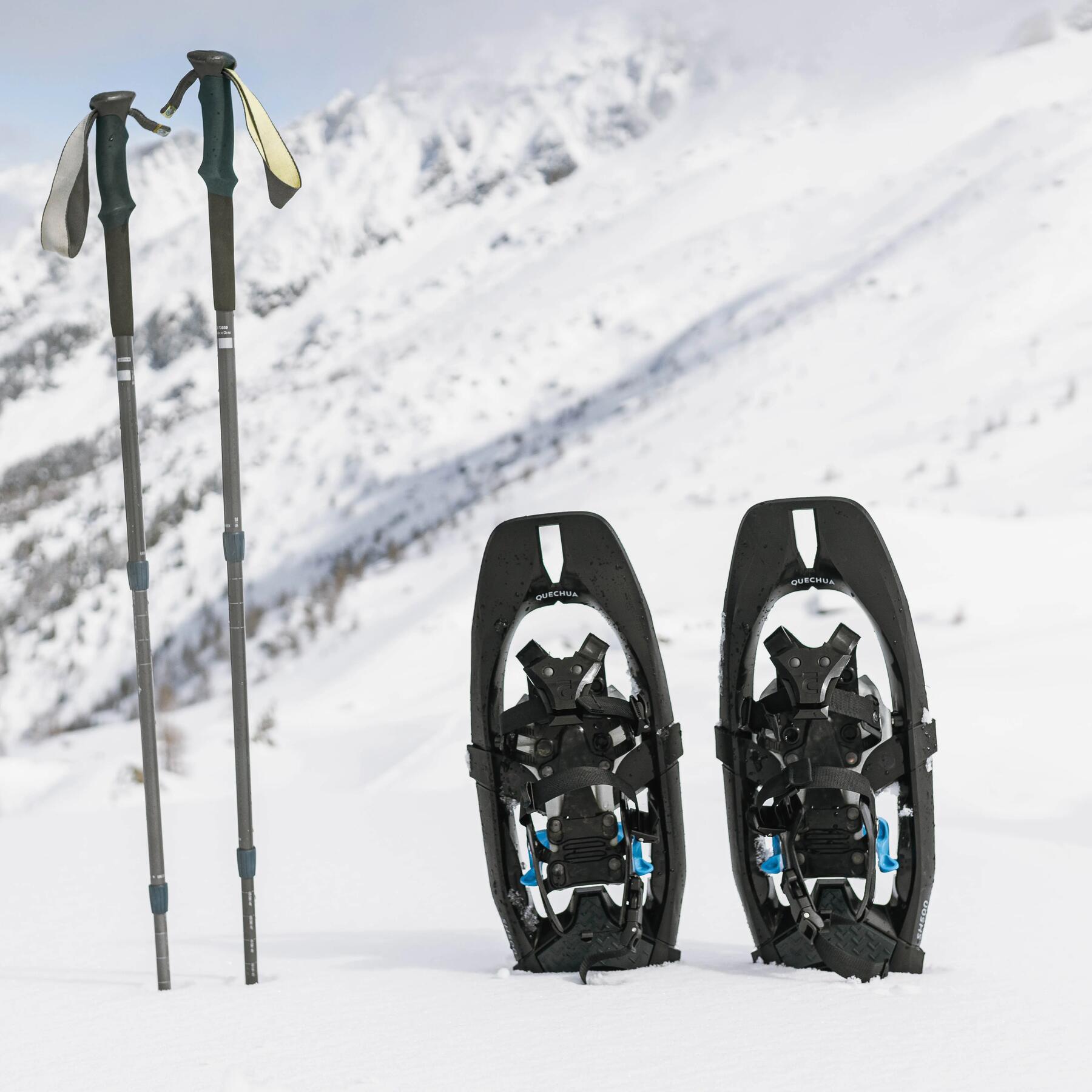
The frame. This sits under the foot and acts like an extension to your shoe. It supports you and is what keeps you on the surface of the snow. The wider the frame, the more distributed the load, which prevents you from sinking in.

The heel lift. This removable piece lifts up the heel during steep climbs, reducing your effort and improving your walking comfort. Absolutely vital if you’re a fan of hilly paths or mountain hiking.

The claws and knives. The claws at the front grip the snow during climbs, while the metal tips under the frame are for steeper slopes, and there are also side knives that serve to secure you on slopes and downhills.

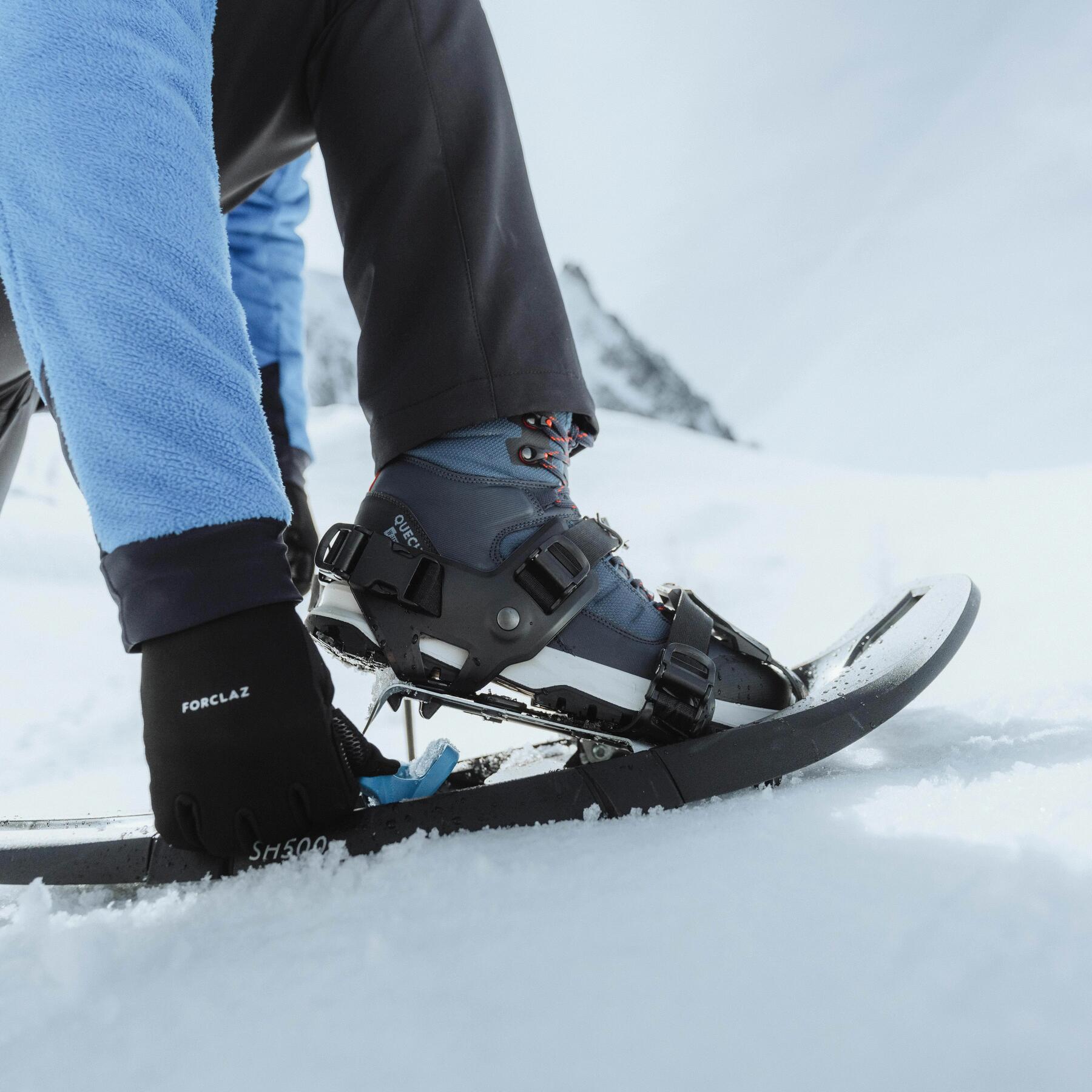
The bindings.These are what connect your boot to the snowshoe. They should be adjustable and comfortable to allow you to walk naturally on fresh or hard snow. A good bindings system allows you to fully enjoy your snowshoe excursion.

Snowshoes - range and price

Price and ranges

Depending on the range and the desired technical features, there’s something to suit every pocket. Beyond the design differences, the basic functions are similar: frame, bindings, grip and comfort. The key thing is to choose your snowshoes according to the use and activity you have in mind. This makes it easier to find the right snowshoe for your foot!

Now you know everything there is to know about snowshoes and how they’re built. Shall we help you find the one that best suits you now?

Choosing snowshoes according to your activity

The choice of snowshoe depends on the terrain, snow and your walking style.

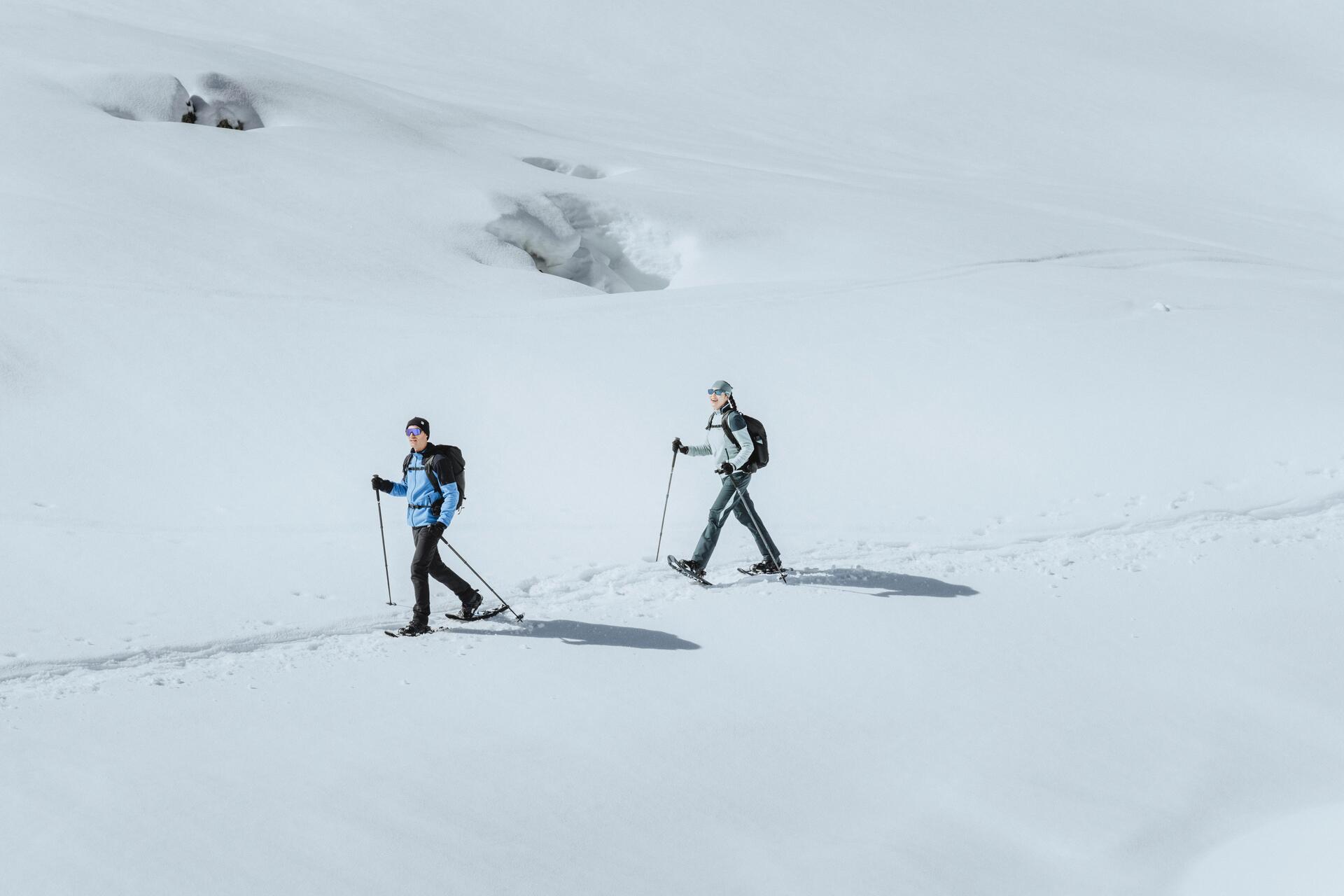
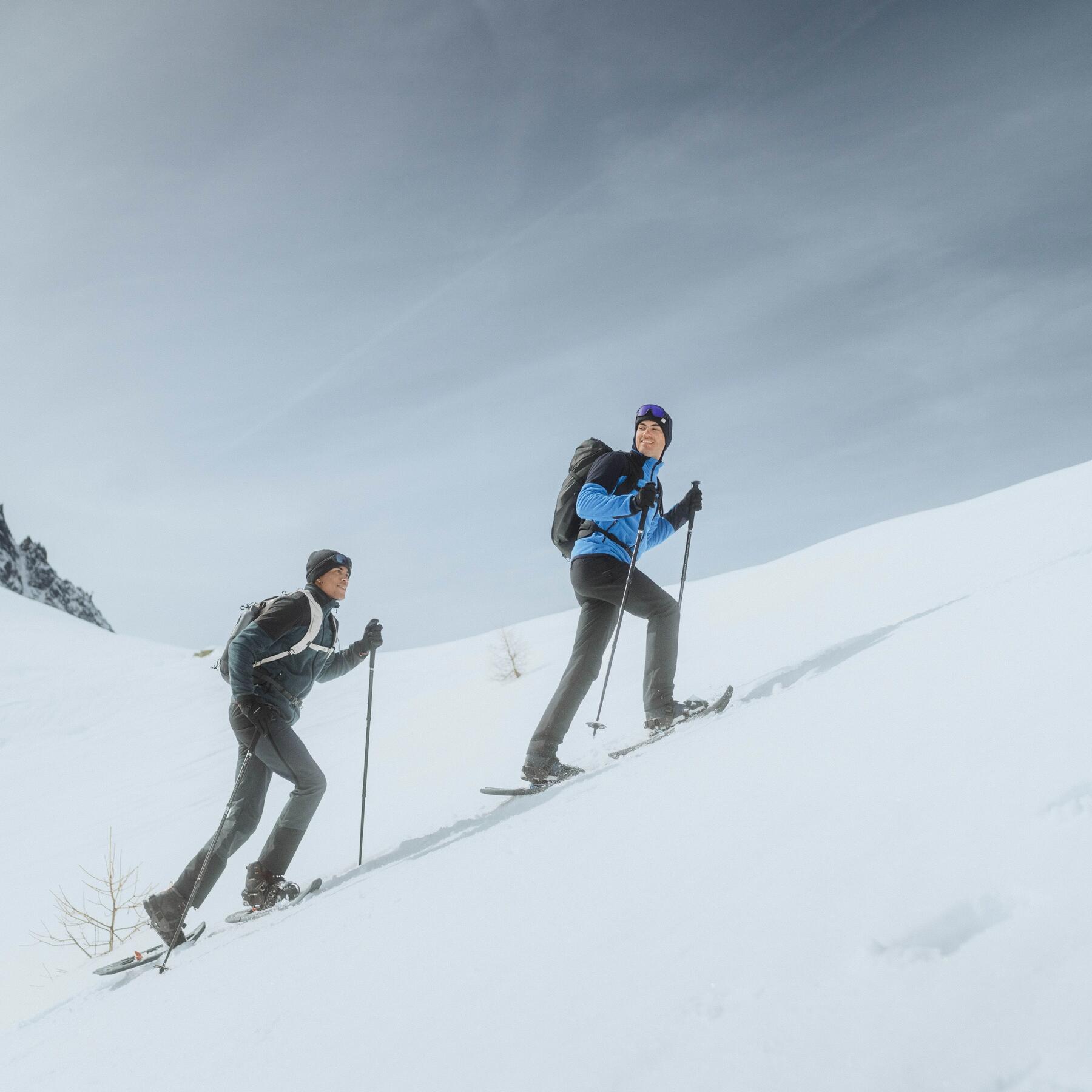
  • Snowshoes for walks and hikes on flat or hilly trails

    For walks and hikes on flat or hilly trails

    • Medium frame for normal support
    • Small claw at the front for some grip
    • Easy-to-use riptab binding
    • No heel lift needed


    These snowshoe models are suitable for beginners and occasional outings. They are easy to use, easy to come to grips with, and suit all budgets.

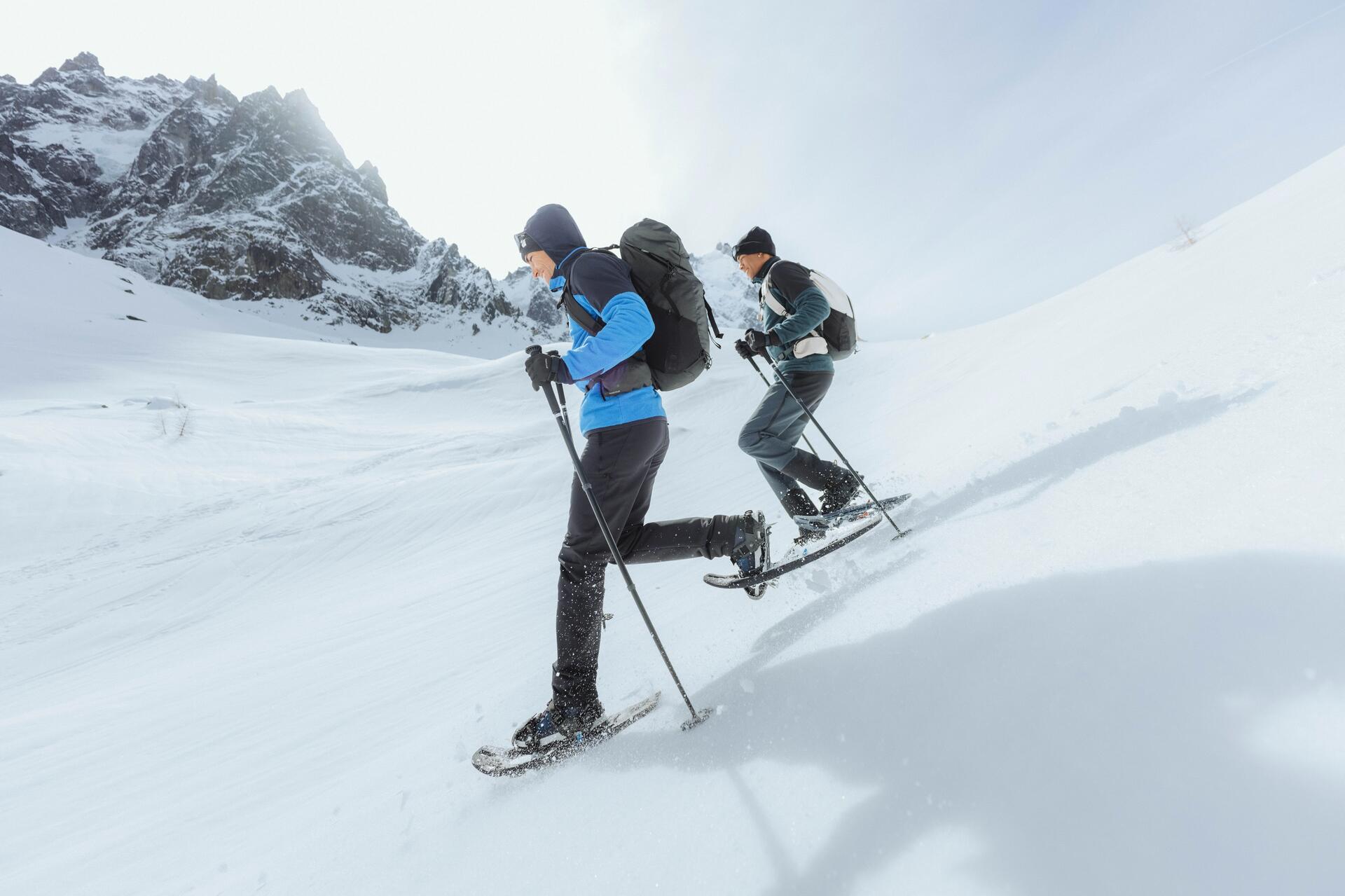
  • Snowshoes in powder in the mountains

    For mountain hiking and powder

    • Wide frame to float on fresh snow
    • Essential heel lift
    • Crampons and knives under the frame for maximum grip
    • Robust, secure bindings


    The wider frames with greater coverage provide more support, but they add a little more weight underfoot. These models are suitable for fans of powder and technical trails. Adventure awaits!

  • Running in snowshoes

    Snowshoes for running (yes, they actually do exist!)

    • Lightweight, short and narrow
    • Designed for packed snow, not for powder
    • They allow a natural and efficient stride on flat terrain


    For competitive sports or for those passionate about light jogging, they’ll be useful on your winter outings, and will make a big difference over time. Isn't that great??

snowshoe size depending on your weight

Choose the right size according to your weight

Just like for skis, weight is vital when choosing snowshoes. The more you and your equipment weighs, the longer the frame must be, to offer you optimal support.

Weight / frame ratio

  • 15–50 kg > Children’s models
    40–80 kg > Small to medium frame
    60–120 kg > Large frame
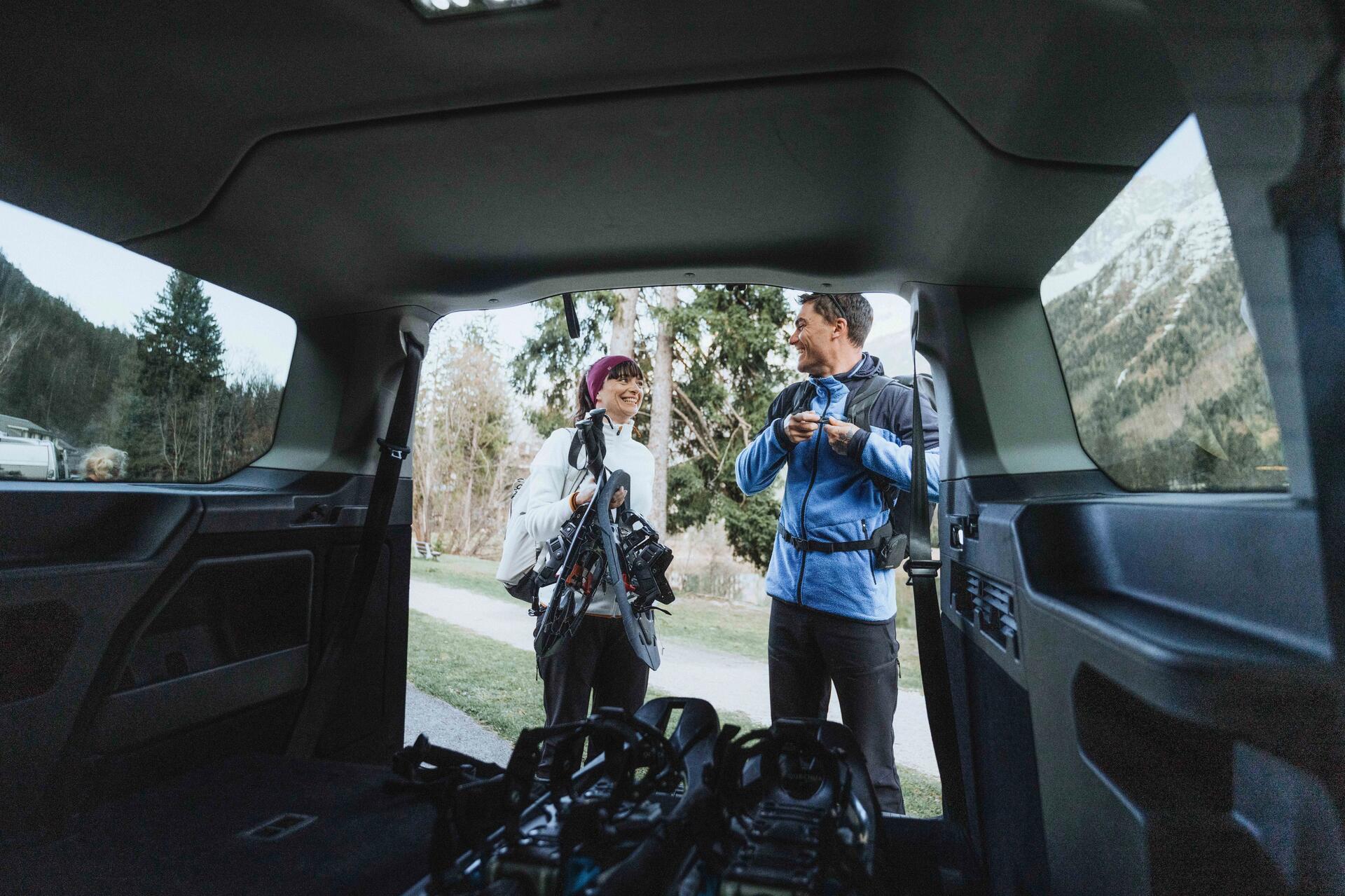
Our advice: don’t forget to add in the weight of the bag filled with equipment. For long hikes, opt for lightweight snowshoes, like those in aluminium. If you’re hiking for a long time or over several days and need to carry them on your bag, consider removable snowshoe carriers that clip onto the top of your usual hiking backpack.

Snowshoe size and fit: snowshoes can be adjusted to different foot sizes, generally fitting a range of between 7 and 11 sizes (for example snowshoes in UK sizes 2.5 to 7) or even UK size 3.5 to 11, depending on the brand). ‘S’, ‘M’ and ‘L’ size models cover most adult sizes, while the junior models can go down to Junior UK size 12 for children around 7 years old.

Adult’s snowshoes, children’s snowshoes - the differences?

Snowshoes are designed for everyone to enjoy, from young to old, beginner adventurer to seasoned hiker.

  • Adults’ snowshoes

    Adult snowshoes, Men’s and Women’s

    Adult models are all available with different technical options in terms of structure, binding, frame and even heel risers and claws. While some brands offer adaptations between women’s and men’s models, with for example wider or narrower and more agile fastening systems, or thinner to thicker sieves, the important thing is to make the right choice based on weight. It’s up to you to determine your characteristics and those of your activity to determine which would be the right pair.

  • Children’s snowshoes

    Junior snowshoes are light, easy to use, with safe, intuitive attachments.

    For example, to walk on snow as well as on solid ground with the strength of a child’s legs, the Quechua Easy Jr snowshoe model has:

    • a sieve made from EVA (flexible and solid, similar to sports shoes),
    • built-in crampons with four metal tips (on this design, no steel claws in the front, so kids can handle them and learn to put them on safely on their own),
    • a simple adjustment system with two riptab straps and a pre-adjusted buckle for better adjustment of the rear strap,
    • marks at the front of the foot to make it easier for even the little ones to slip their foot in, becoming independent and doing the same things the adults do. This system enables young explorers to walk and run naturally on the snow, without tiring out.


    The Adults’ Quechua Easy draws on these innovations for safe, easy use for all.

Poles for snowshoe hiking

Accessories and safety

Often forgotten about by snowshoe hikers starting out, poles nonetheless offer precious help on uneven or sloped terrain.
Besides protecting your knees, they give you greater stability and prevent you from falling downhill and ending up as a snowman at the bottom of the slope.

If you already own a pair of poles for hiking on snow-free terrain, you’ll be able to use them on snow as long as you change the washers for a wider model. Otherwise, you won’t have poles but rather a probe that will cut through the snow until it hits a harder obstacle! And that’s not the goal.

If you haven’t already, take a look at our article:

Our safety basics

Whatever your preferences, whether you prefer leisurely walks or mountain adventures, always remember to stay safe.

The best way to do this is to go with mountain professionals.  For example, hire the services of guides or AMMs (Accompagnateurs de Moyenne Montagne, or mid-mountain guides); you can find them at the guide office or through the tourist office. They will show you incredible routes and give you tips on how to improve. Some are true storytellers, a wealth of knowledge about the surrounding nature, who can explain the subtleties of snow and snowshoeing, and take you on the trail of mountain animals in winter...

Use and care

Tips on use

  • Putting on and adjusting your snowshoes properly. Take a few minutes to adjust your bindings. Properly tightened straps ensure hold, comfort, and a fluid walk, without the risk of losing your snowshoes along the way.

  • Choosing warm and waterproof snowshoes. Opt for high-rise mountain snowshoes that are warm and waterproof, to protect your feet from the cold and moisture. A good pair of technical socks can also make all the difference in keeping your feet warm and dry.
    Learn how to choose your snowshoes.

  • Adjust your clothing according to the weather and your level of physical exertion.Layer up: a first breathable layer, one that’s insulating, and a windproof, waterproof jacket. Add gloves, hat and sunglasses to face the winter conditions with total peace of mind.
    Find out all of our tips to know how to kit yourself out on your next snowshoe excursions!

And in terms of care?

With a few simple gestures, your snowshoes will remain effective, season after season:

  • Rinse them in clean water after each outing to remove the snow, salt or any impurities that could damage the material.
  • Leave them to dry in a dry, ventilated place, at room temperature. Absolutely avoid direct heat sources (radiators, fireplaces, stoves) which could deform the plastic or damage the fasteners.
  • Regularly check the bindings and the crampons: checking before each hike ensures your comfort, protection and the lifespan of your equipment.

Choosing the right snowshoes

In short, how to choose the right snowshoes

  • Choose the right size and support according to your weight (including equipment)
  • Select a model that’s suitable for the specific activity you’re practising, and the terrain
  • Don’t forget about poles: essential for improved stability

Whether it’s the case of a leisurely stroll or a mountain hike, wearing suitable snowshoes guarantees your safety, comfort and enjoyment. So, ready to explore some snowy trails this winter? Don’t forget to make the right choice of clothing, and get some ideas about destinations for your next adventures!

Melanie

Fan of snowy landscapes