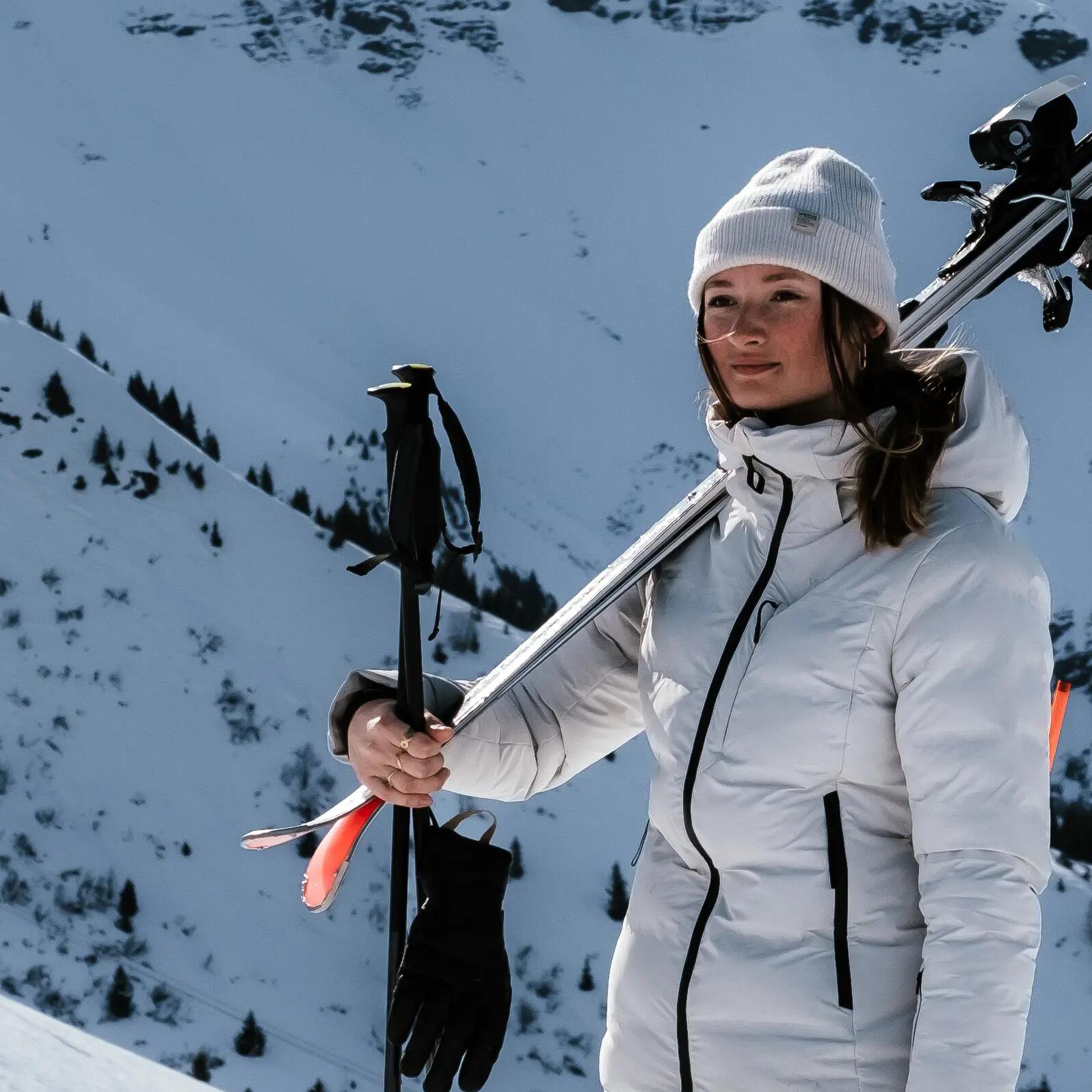
How do you choose ski poles?

How to choose poles for alpine, freeride and cross-country skiing

The famous pole plant is very important when it comes to skiing, and some types of ski poles are more suitable than others, depending on the type of skiing you’re doing.

As with all ski equipment, there are several factors to consider when choosing ski poles, such as size, straps, aluminium or carbon poles, your winter sport... So how do you choose? And what length pole should you go for? We tell you all!

Which poles are suitable for my type of skiing?

Apart from design considerations, ski poles are unisex! However, depending on the sport, it is recommended that you choose a product that is suitable for your needs as not all poles are designed in the same way, and they offer different options to best suit the skier.

  • Woman downhill skiing in Decathlon skiwear

    Alpine ski poles

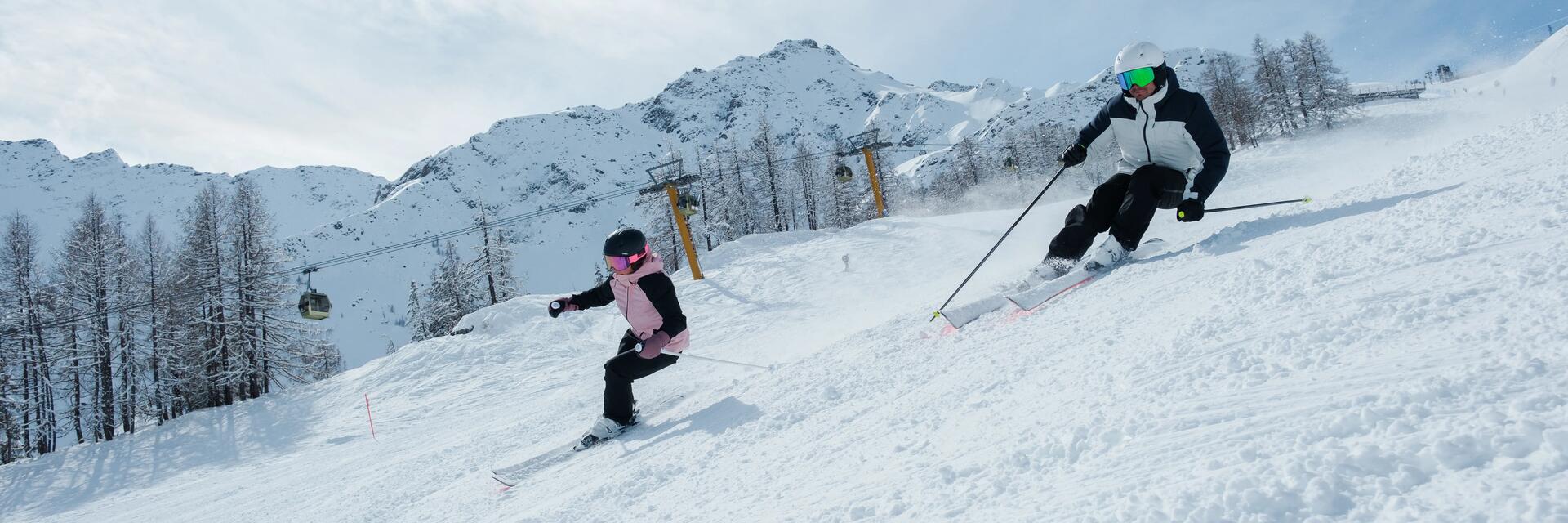
    Alpine ski poles are strong enough to help you get up if you fall and give you the right momentum for each turn by pushing with your arms. Their tapered shape improves aerodynamics, even if they are less technical than racing ski poles.

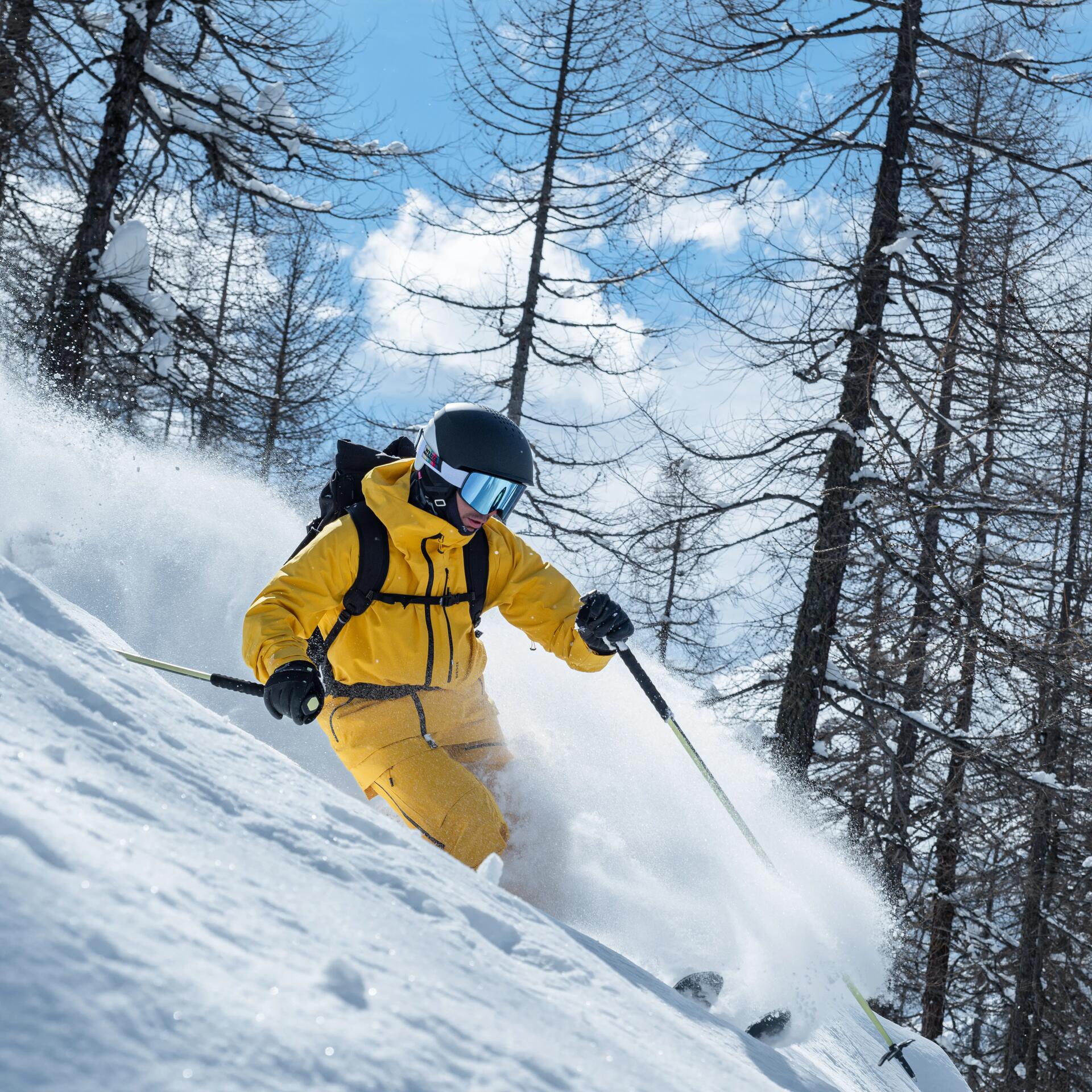
  • Man freeride skiing in a yellow Decathlon skiing outfit

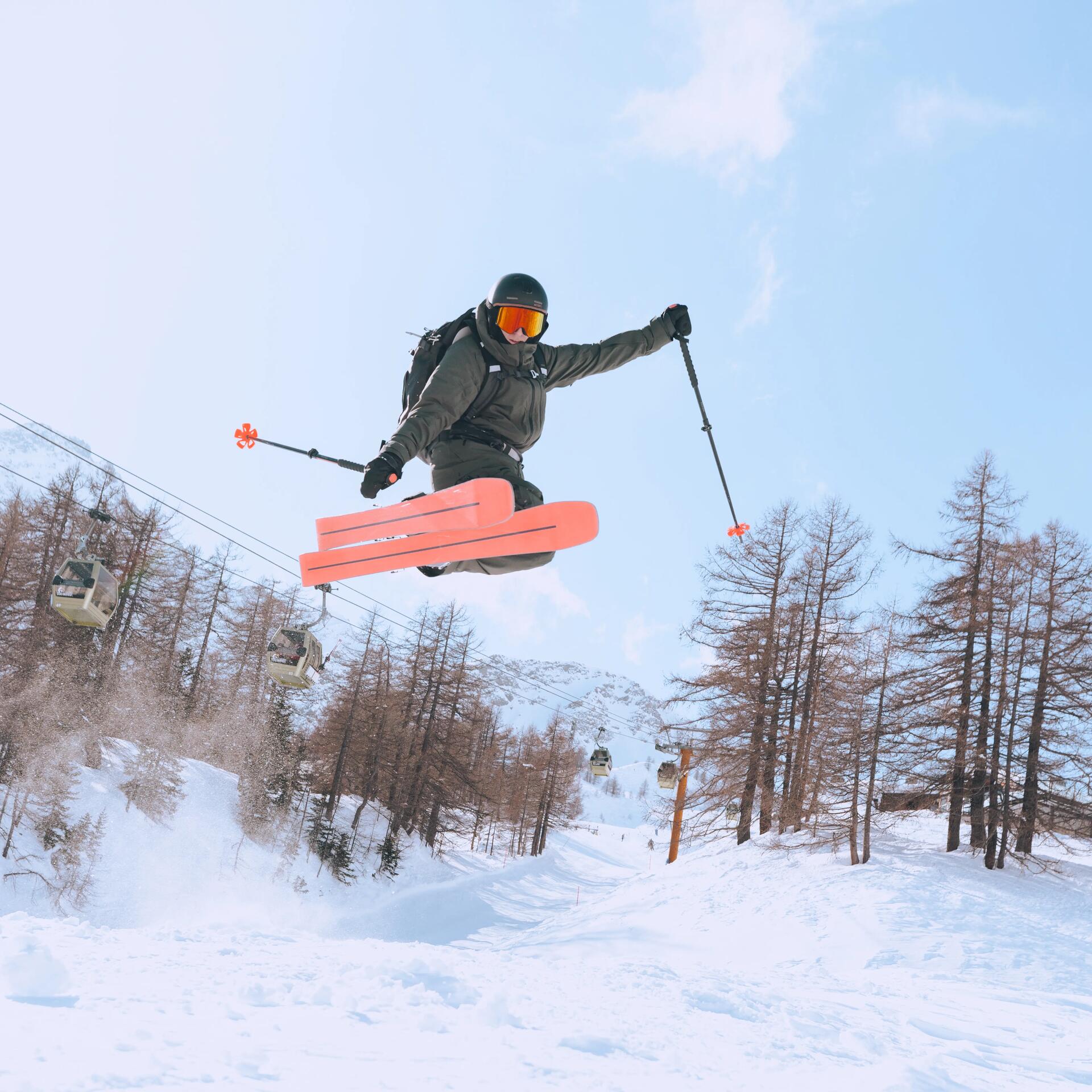
    Freestyle ski poles

    In freestyle skiing, skiers perform a series of tricks and need to pick up speed. These poles, designed on the model of alpine skiing, are lighter for easy handling, while remaining strong enough to provide support.

  • men's freeride skiing snow khaki ski outfit

    Freeride and cross-country ski poles

    For freeride and cross-country skiing, opt for adjustable ski poles. You can adjust them so that your poles are fairly short ascents and longer for descents. You can also shorten them and put them on your rucksack if you're walking up, with your skis on your back, before using them for the descent.

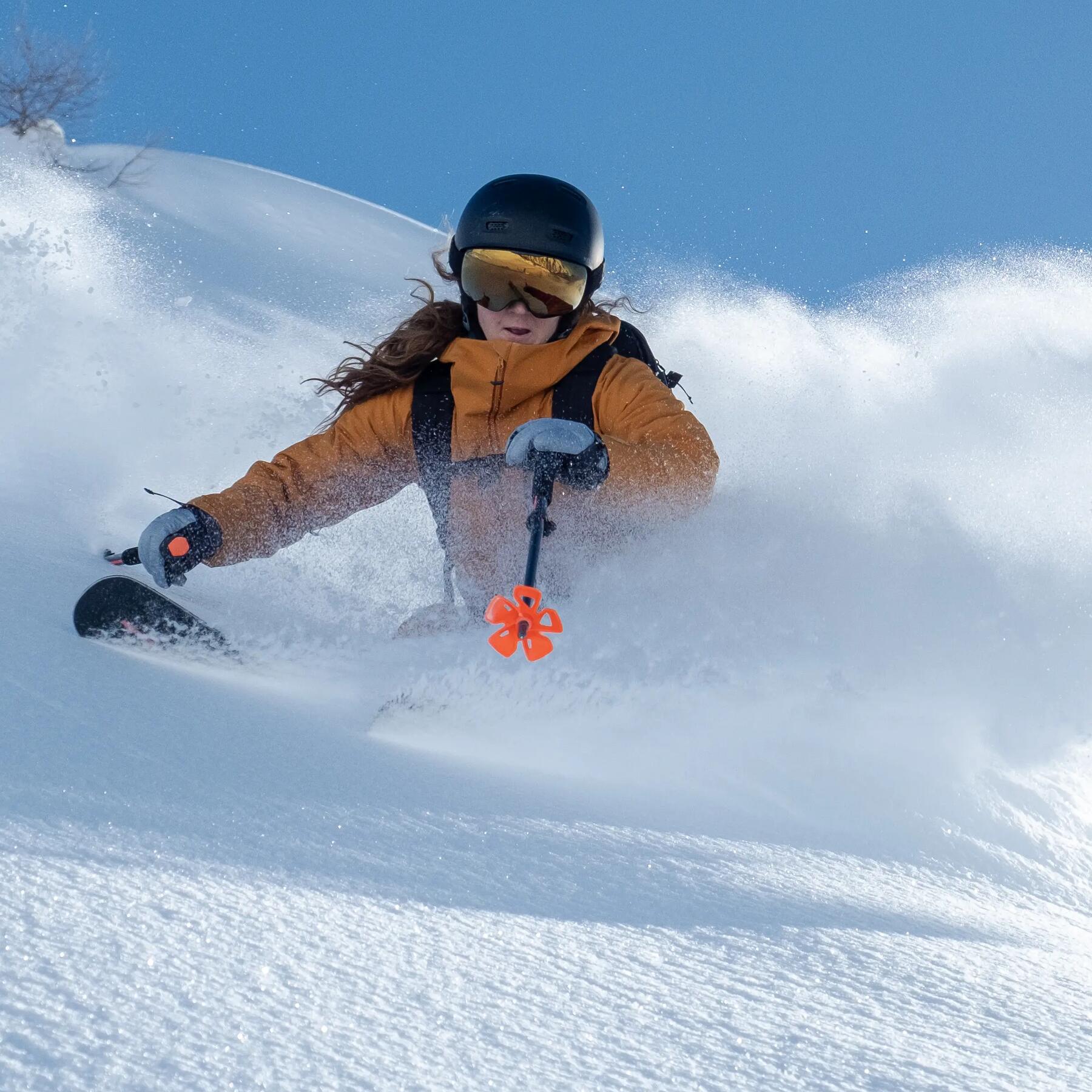
Woman freeride skiing with Decathlon freeride ski pole

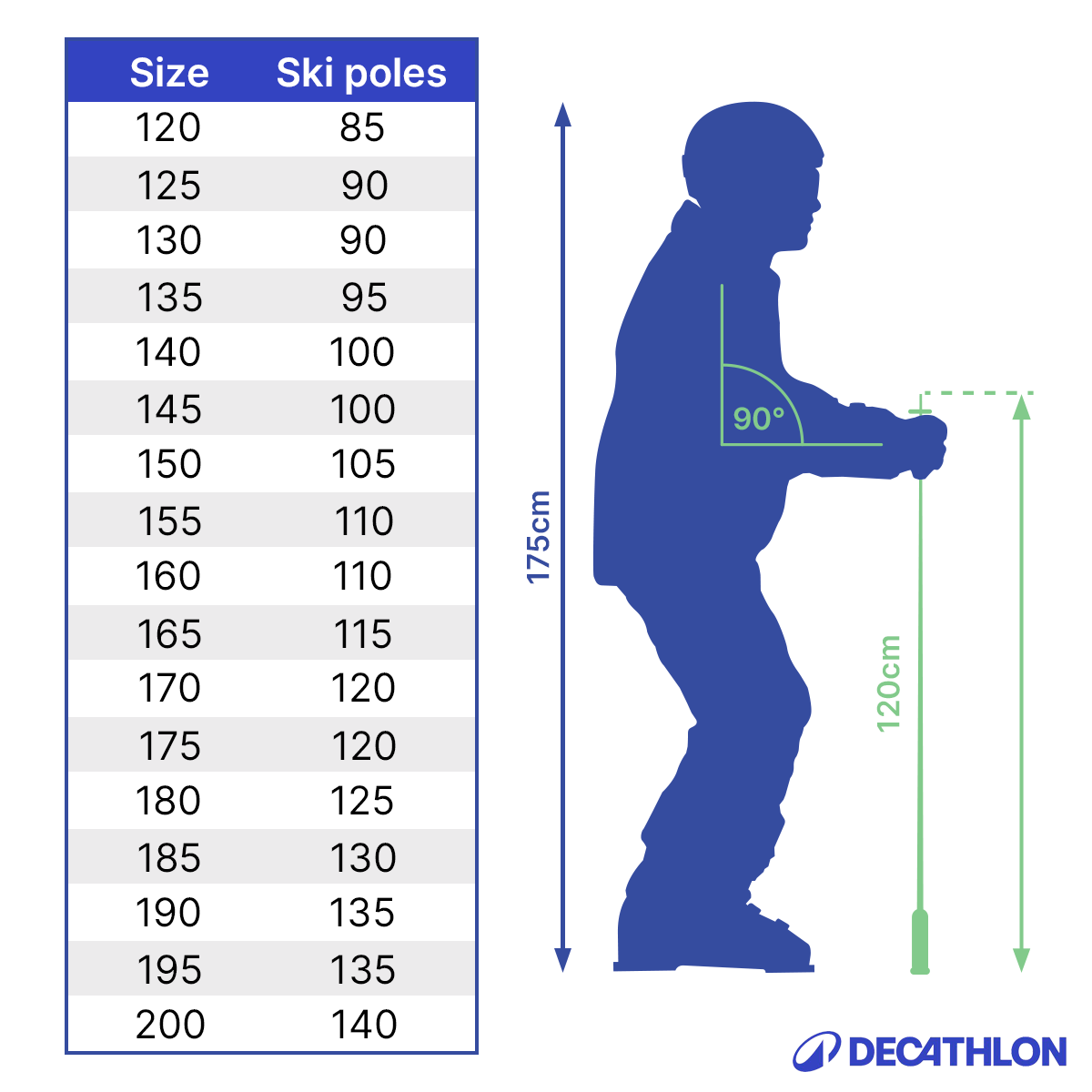
How do you choose the right ski pole length? 

To find out which size you need, hold the pole upside down and vertically, with your hand under the basket. Your arm should be at a 90° angle with your body.

If you are purchasing your poles online and don't have the opportunity to try them out, measure your height in centimetres and multiply it by 0.7. The result will give you an approximate of the ski pole length you need in centimetres. if you're 1.80 m tall (i.e. 180 cm), they should be approximately 126 cm long (180x0.7).

Note that when ski touring, pole length varies: you will appreciate having longer poles to help you on the ascent. Telescopic ski poles are a good solution for varying their size when climbing or descending.
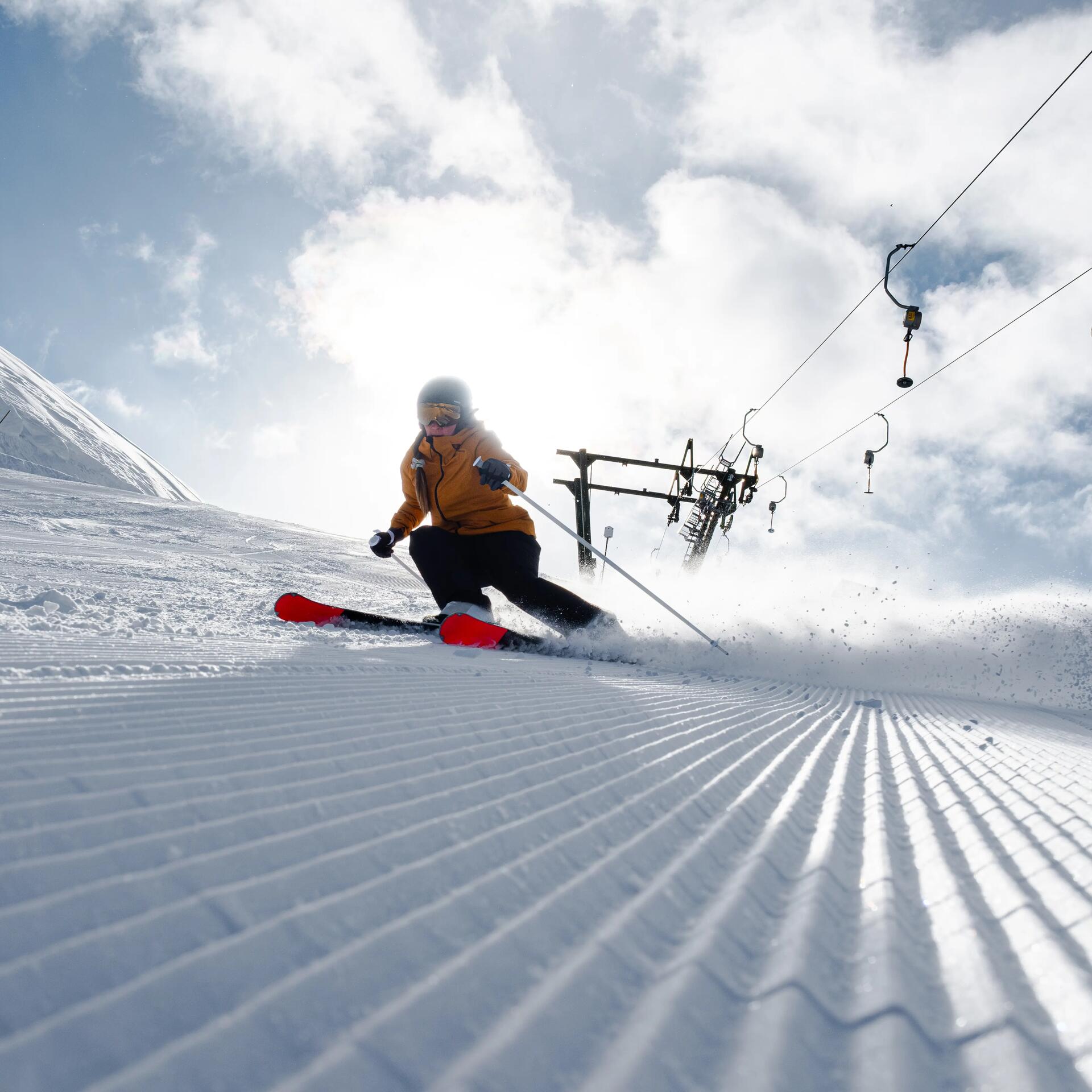
Pole accessories: baskets, wrist straps, handle... What are the differences?

Different sized baskets, different pole materials... As well as the type of skiing you do, there are several other criteria that can help you choose between pole models.

Woman freeride skiing with Decathlon freeride ski pole

Ski pole baskets 

Ski pole baskets are not different sizes for aesthetic reasons but for practical purposes.

  • Smaller baskets are designed for downhill skiers. They are lightweight and give you greater precision.
  • Medium-sized baskets are perfect for skiing on "all sorts of terrain", whether that be on the piste, the edges of the piste or light powdery snow.
  • Large baskets are designed for outings in fresh, powdery (ungroomed) snow since they prevent you from sinking into the snow.
  • The half-round shaped baskets are particularly suited to hiking because they make it easier to , climb uphill. The poles can be planted effectively on the slope if the gradient is steep. The half basket will help you to not sink into the snow.
If you need to replace your baskets, you can do it yourself thanks to our spare parts catalogue.

Woman freeride skiing with Decathlon freeride ski pole

Ski pole handles 

There are different types of handles too. 

  • Single material handles: These are very hard-wearing, but not necessarily very comfortable.
  • Foam handles: These are lightweight and comfortable to use.
  • Bi-material handles: With two different materials, the grip is better and has the benefits of each material.
  • Handles with long grips: As the name suggests, the grip covers a larger part of the pole. This type of grip is often found on cross-country ski poles as it's particularly well suited to both ascents and descents because you can grip the pole at different heights.

Woman freeride skiing with Decathlon freeride ski pole

Which strap should I choose? 

At Decathlon, we offer three types of strap, depending on your skiing level.

  • Simple straps: These are the most standard type of straps and are generally used for alpine skiing.
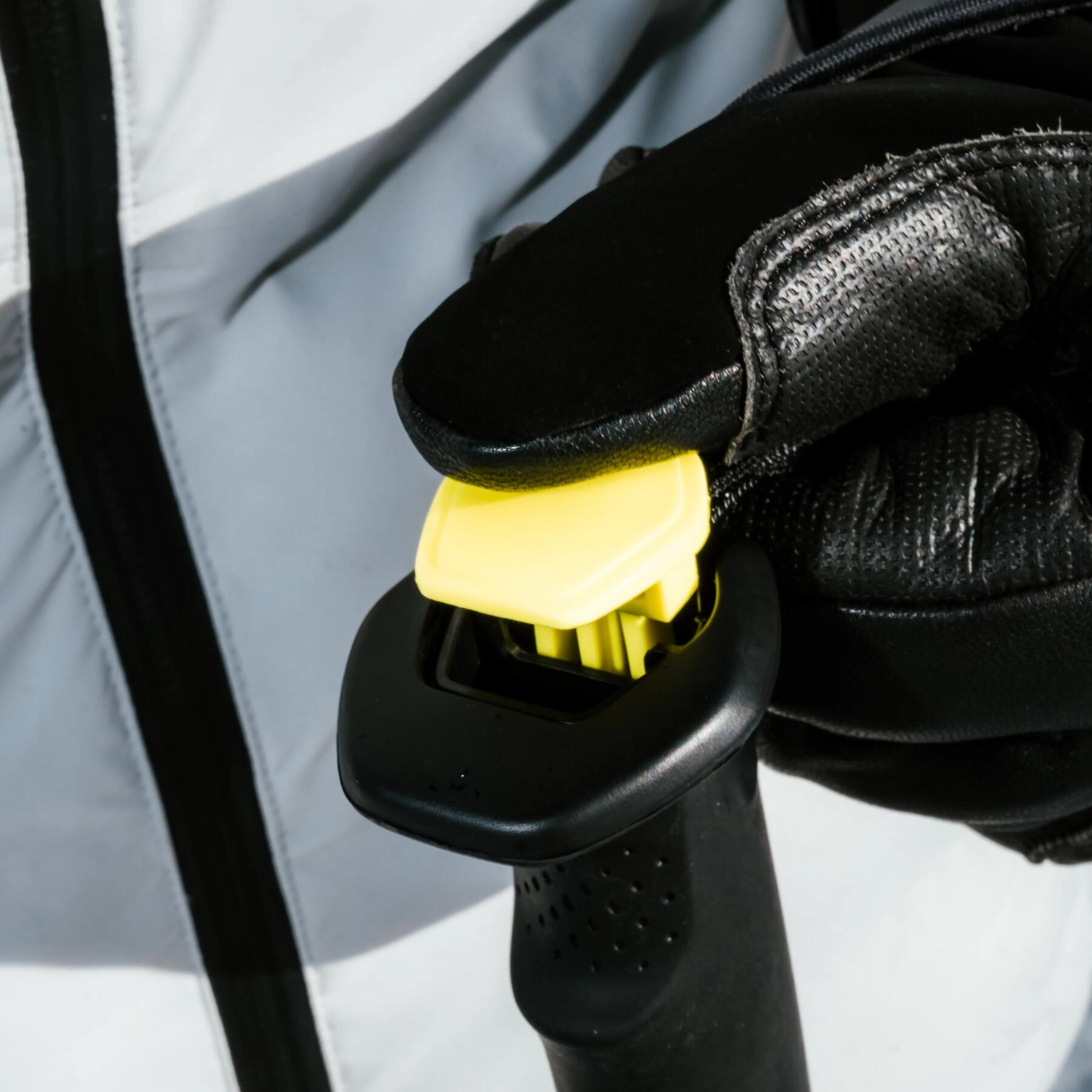
  • Detachable straps: Recommended for off-piste skiing, these straps can be unclipped in the event of a fall, preventing wrist sprains.
  • Integrated plastic wrist strap: it envelopes and provides support for your hand while remaining unrestrictive in the event of a fall.

Decathlon ski poles

The ski pole material

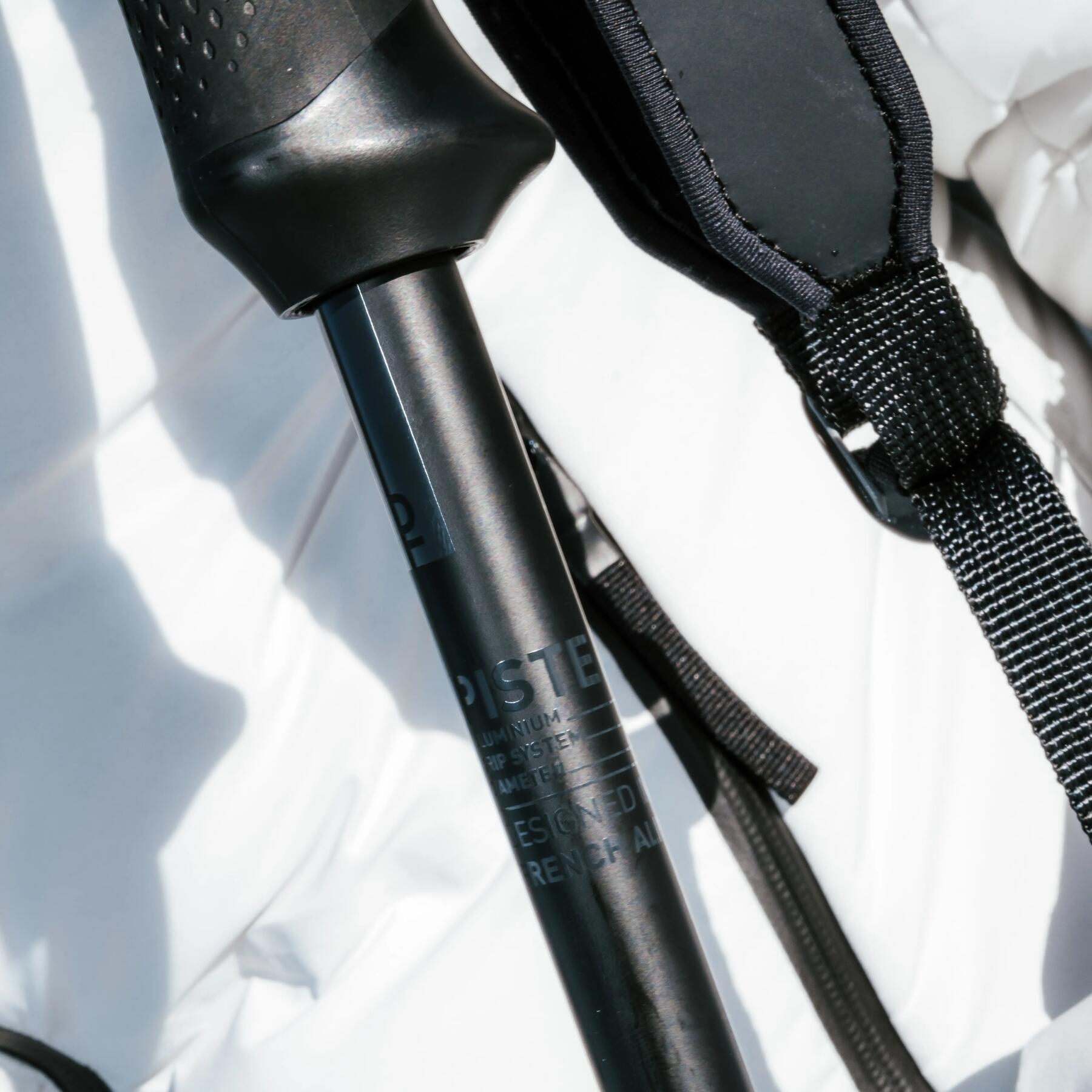
The material of the pole is also an important consideration when making your choice because it influences the weight and strength of your ski poles. Aluminium is currently the most common material on the market, but components made of titanium, fibreglass or carbon are being developed more and more because of their lightweight and flexible properties. There are also lighter carbon ski pole models, which are often used for ski touring.

How to maintain and repair my ski poles

Like all your equipment, your poles are used for a few months of the year before being stored away until the snow returns, so they deserve to be stored in a way that will keep them in good condition. We offer several spare parts to repair them, whether they are telescopic (adjustable) ski poles or simple ski poles.

Decathlon ski poles

The ski pole material

The material of the pole is also an important consideration when making your choice because it influences the weight and strength of your ski poles. Aluminium is currently the most common material on the market, but components made of titanium, fibreglass or carbon are being developed more and more because of their lightweight and flexible properties.

cléo

Cléo

Hiking in summer, skiing in winter, at altitude all year round