How to choose junior hiking footwear?

How to choose junior hiking footwear?

We detail the important elements so that your child can explore without any discomfort.

Getting children the gear they need for hiking mainly means choosing the best footwear for them (or with them). It is essential to take into account certain criteria. We detail the important factors, so that your child can explore while being absolutely safe!

What age do they start hiking?

In principle, your child can go hiking with you from an early age, carried in a baby carrier. Then, as soon as they are able to walk, your child can start to follow you on short hikes! Being able to walk is therefore the most important criteria, and will vary slightly from one child to the next.

The criteria you should consider for properly choosing children’s hiking shoes

It’s not always easy finding a hiking shoe that fits small feet. The main criteria to take into account include: the sole, the closure system, the height of the upper and waterproofing capacity (or lack thereof) for the shoe in question. We unpack the details below.

  • Crossrock children’s hiking shoe sole

    1. Sole

    When learning to walk, it is recommended that the child's foot can feel the ground and establish balance. For this, 2 characteristics are to be taken into consideration:

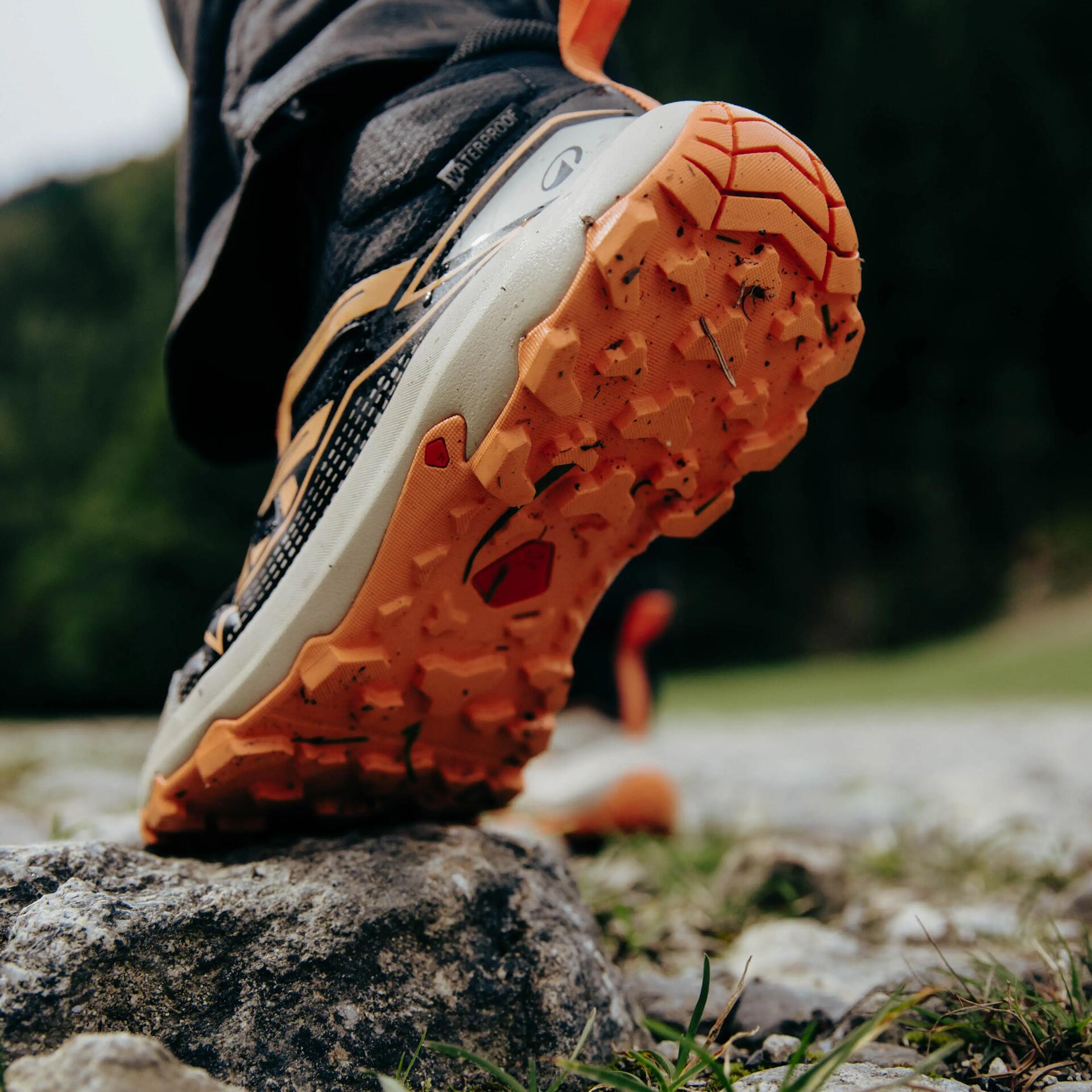
    • Grip: this is defined by the size of the crampons. The deeper and more sculpted they are, the more they will be able to withstand varied ground conditions (mud, sand, snow, etc.).
    • Traction: can be explained by the material used. If the material is softer with a slightly shallower depth, it will have a "greater suction effect" on the terrain (rocky, for example). For children, it is better to favour a rather flexible sole, not very thick and slightly serrated.

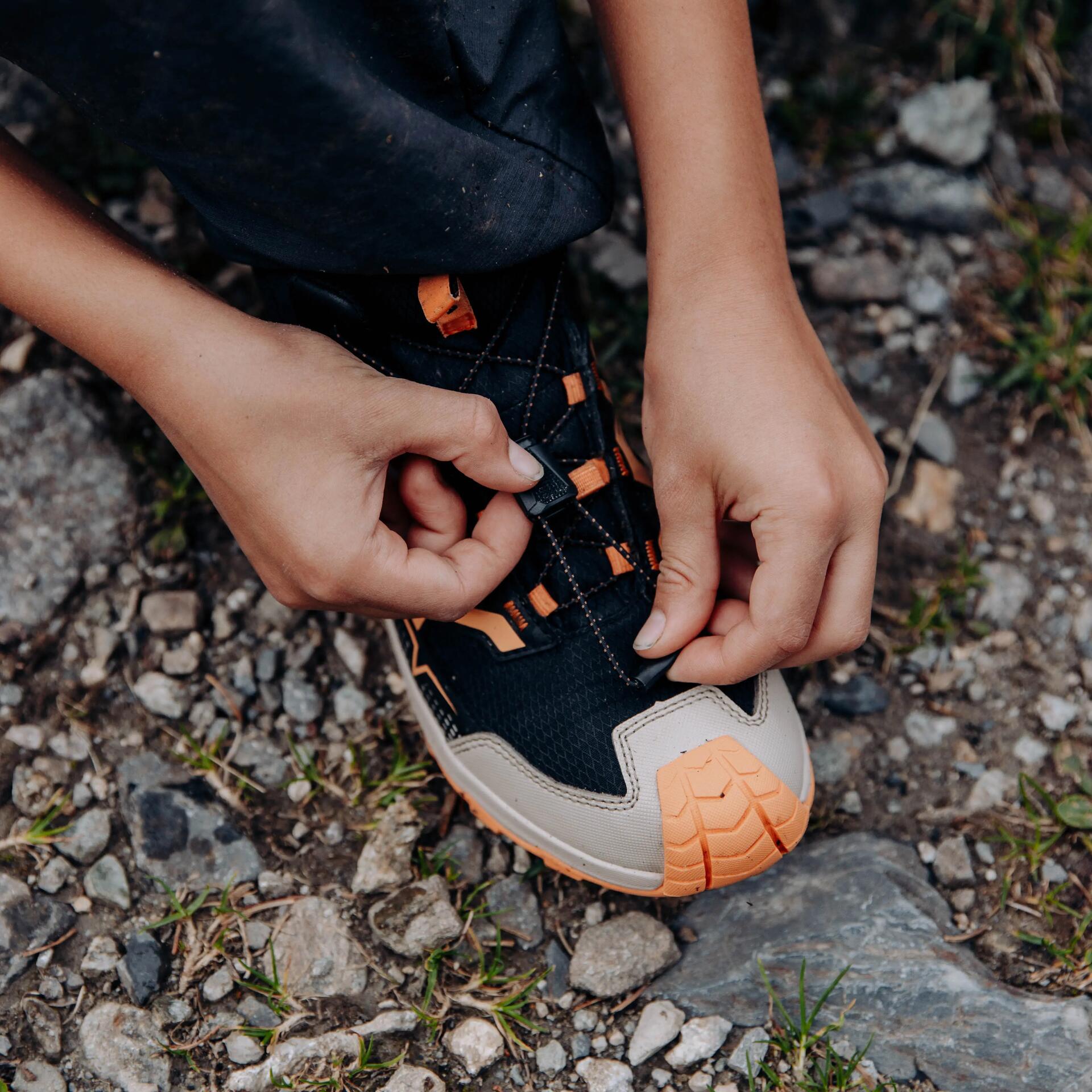
  • Children’s Crossrock quick-lace laces for hiking shoes

    2. Closure system

    Foot support can be optimised using the adjustment system:

    • The riptab: this system is simple and practical for everyday use. It allows children to gradually become more independent when putting on and taking off their hiking shoes.
    • Laces: the most customisable element. The longer and higher the lacing, the more the boot can be adjusted, which improves ankle support. Some models are equipped with a "Quick lace"system, such as Crossrock shoes, which makes lacing quick and intuitive, so they are easier for children to use and guarantee a good fit.

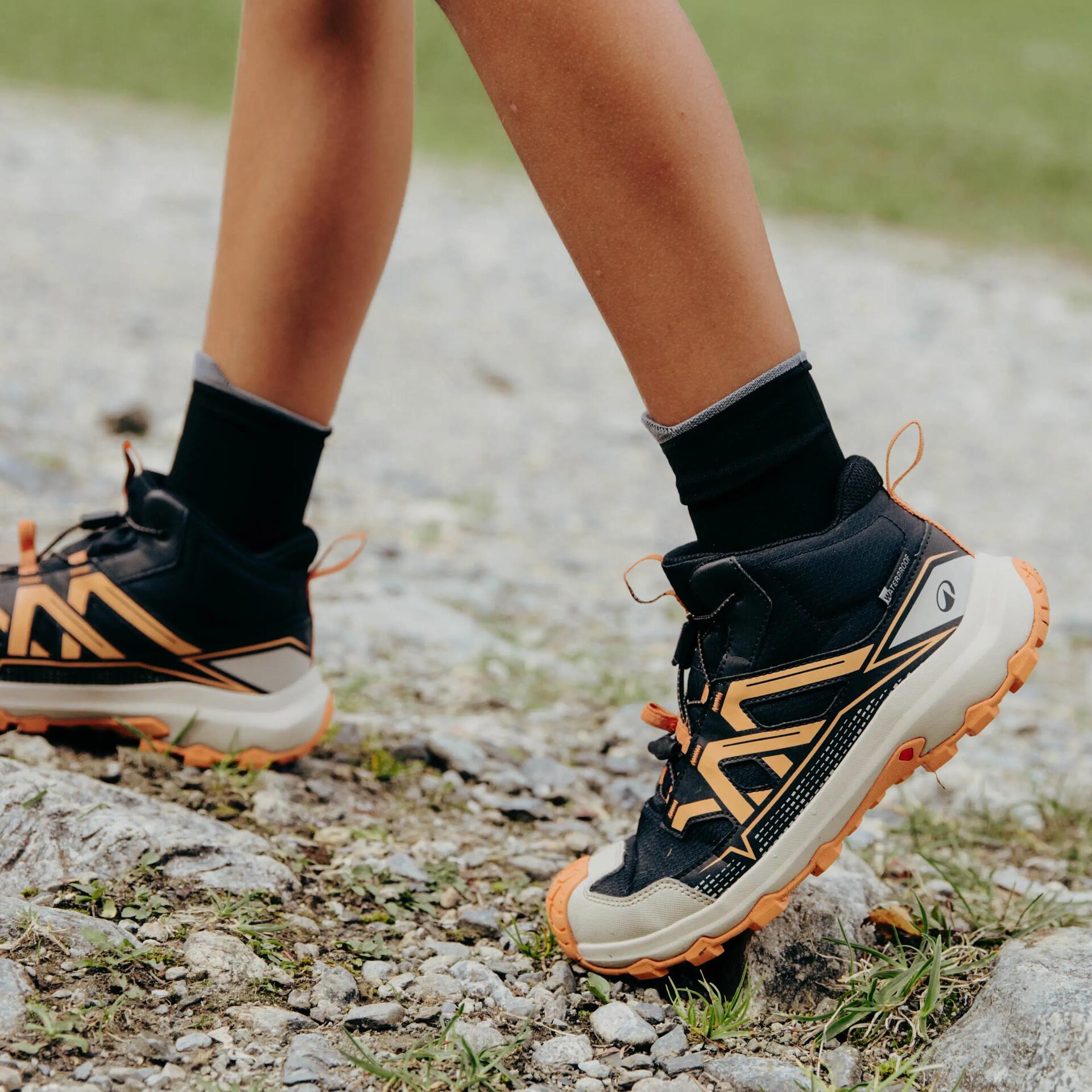
  • Children’s mid-rise hiking shoes

    3. Height of the upper: low or mid/high?

    Different shoe models exist, according to the size of the upper:

    • Low-rise shoes"" are lighter and more flexible, which offers better comfort. They are ideal for using on paths that are not too demanding as children can run, jump and climb with great freedom of movement.
    • Mid-rise shoes "" provide greater support for walking on more committed paths. The higher height will protect the ankle from a variety of terrains, as well as changing weather conditions.

  • 4. Waterproof, watertight or water-repellent?

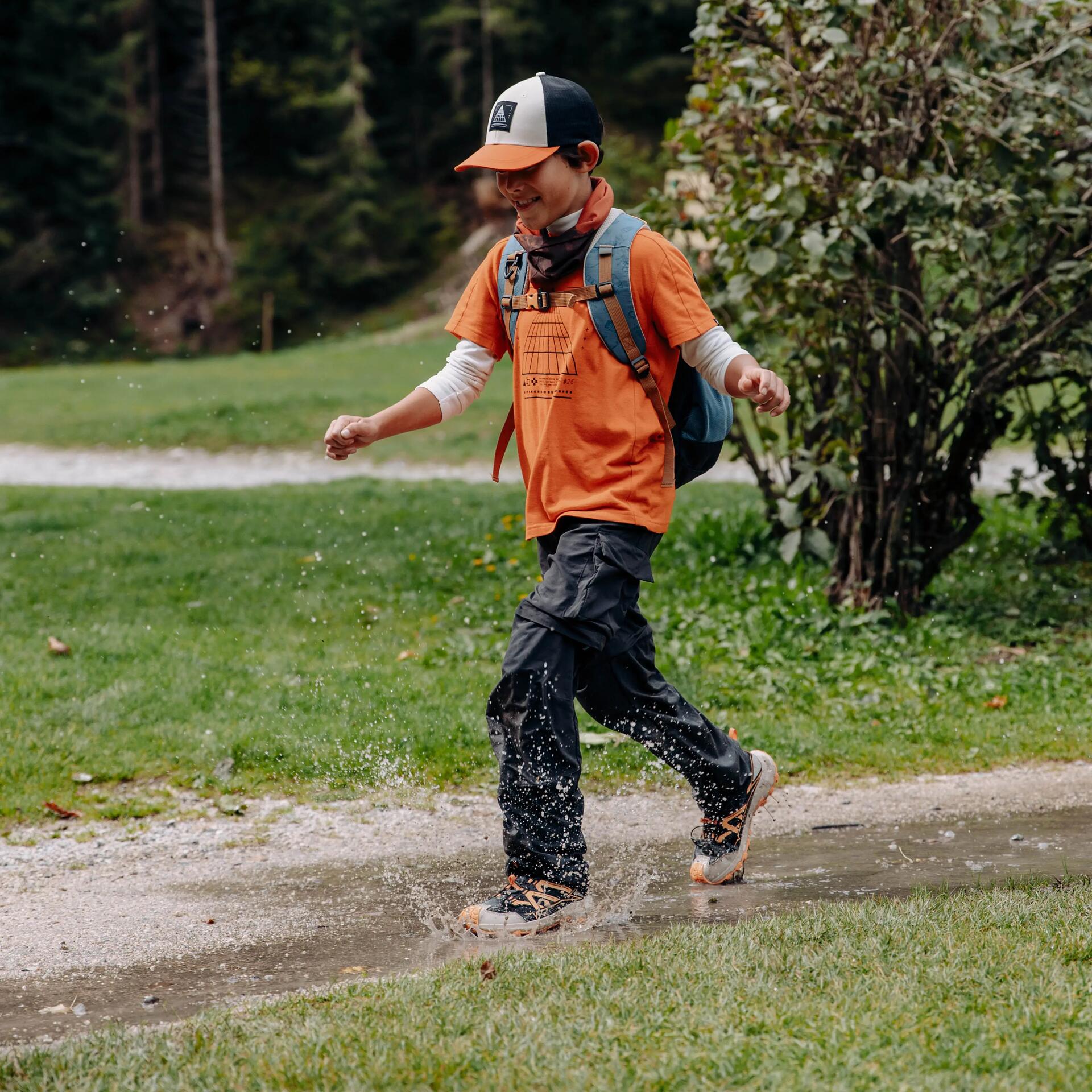
    Another big question concerns water resistance properties. Especially given that children are always thrilled to jump into puddles if the opportunity arises! Most leathers and other synthetic components used on hiking boots are already treated to be water-repellent, i.e. they repel water, or are even equipped with a waterproof-breathable membrane.

    It’s best to ensure that your children’s hiking boots are waterproof at the very least so that you can take your child out in all weathers. If you regularly go on longer hikes, waterproof shoes will probably simplify your daily routine and make it easier to organise yourself because they will keep your child’s feet dry!

What shoes are best according to the season?

  • In summer:we recommend open-toe footwear models, such as sandals or shoes made from breathable materials such as micro-perforated synthetic materials. This makes it possible to wick away perspiration so that the foot does not “macerate” during your summer hikes.
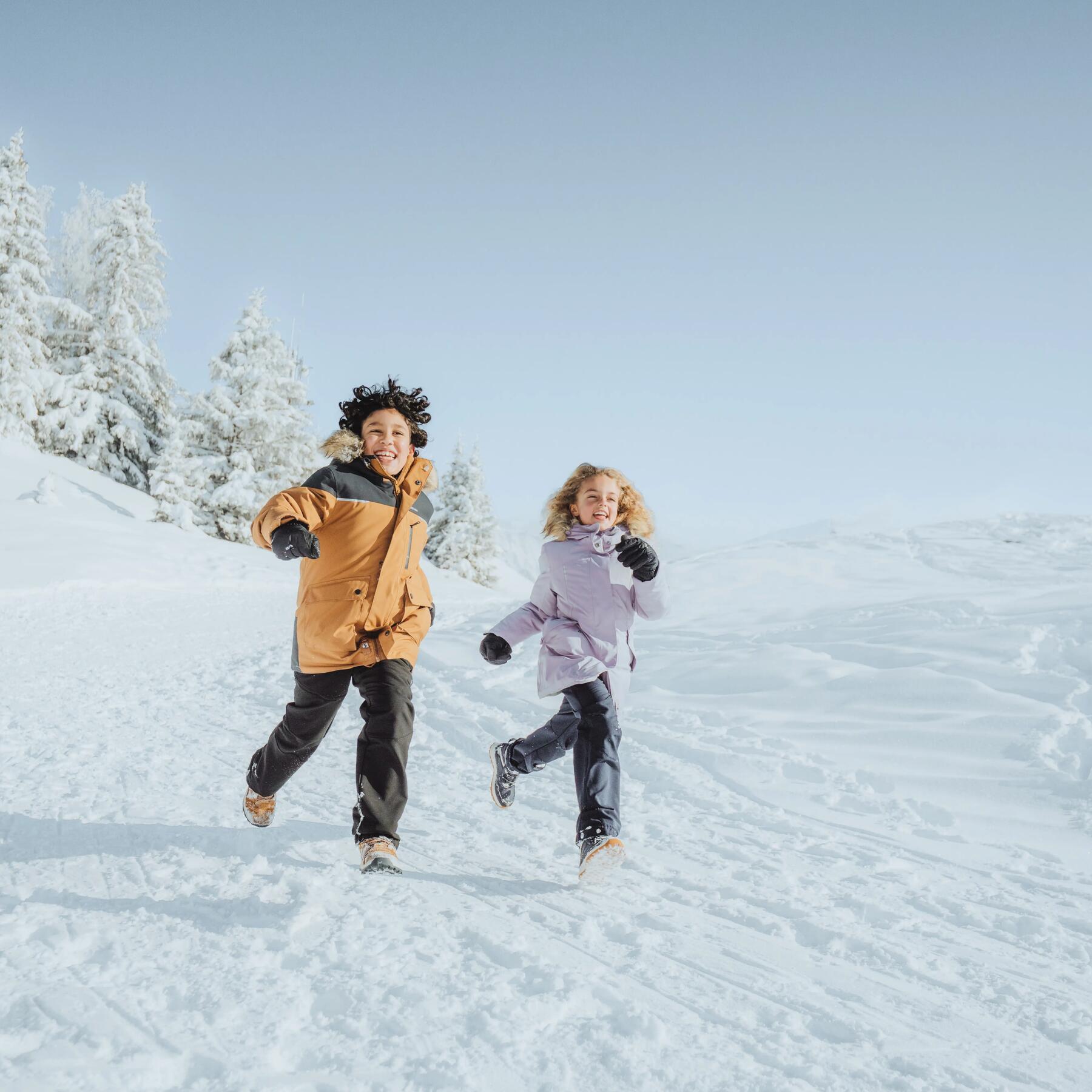
  • In winter: we recommend footwear padded with a lining or padding to insulate against the cold (such as wadding). But the most important thing to take into account in winter, especially in the mountains, is having a sole designed for snow! With SnowContact® technology, Quechua offers children’s hiking boots with more grip thanks to the shape of the crampons, and the material used for the sole! 

What shoes are best according to the practice?

During your walks or short hikes, shoes that are fairly flexible will serve to ensure you have grip and feel comfortable. In other words, on paths that are not too demanding and where the gradient is low, you can opt for lightweight models.

On mountain hikes, however, you should opt for models that offer greater protection and sturdiness, as the paths on your itinerary may be steep. The terrain is often more variable and the gradient higher.

In all cases, we do not recommend opting for footwear with an arch:indeed, the latter will gradually take shape as the foot muscles strengthen when walking; no need to artificially support it.
The Crossrock design: the shoe that can stand up to anything... even children!

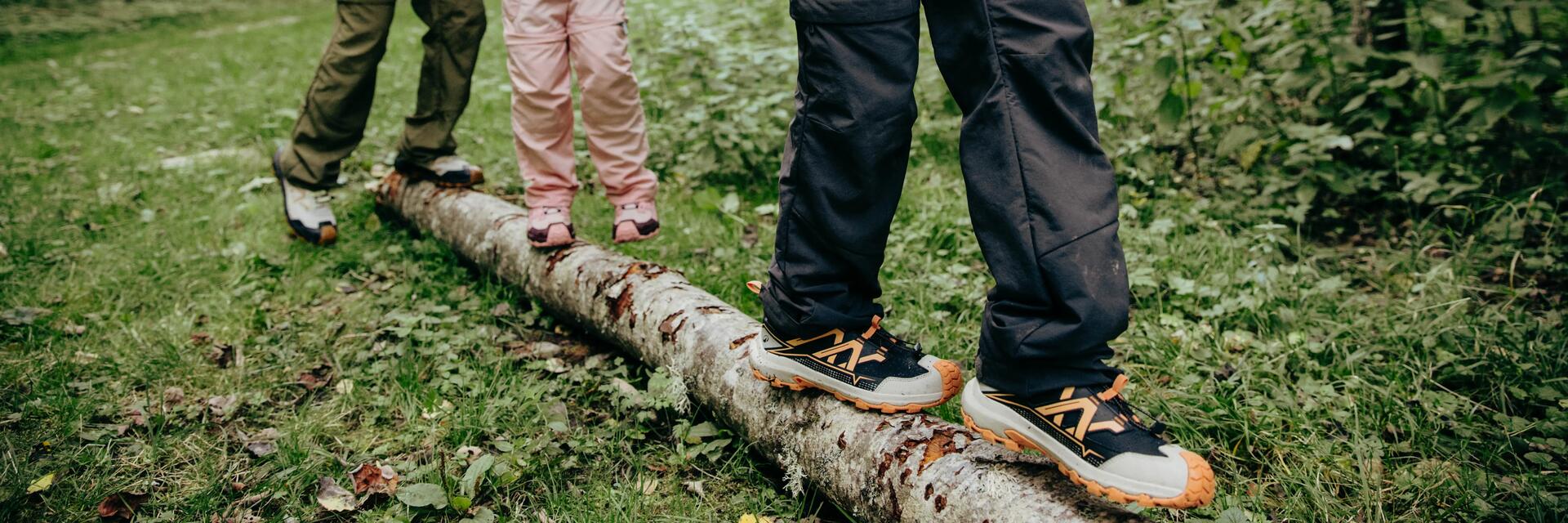
The Crossrock collection of kids’ hiking shoes has specially been designed by our design teams for children who turn every little outing in nature into a grand adventure. The Crossrock is available in waterproof and non-waterproof versions, with low-rise uppers"" and mid-rise uppers"". This allows your child to run, climb, jump, play and have magical fun, on all terrains.

All Crossrock shoes protect your child’s little feet with its sole providing good coverage, front toe bumper and reinforced upper. Their rubber sole offers excellent grip and strength for walking confidently on trails. Thanks to an EVA interlayer running the entire length of the foot, Crossrock shoes offer very good cushioning.

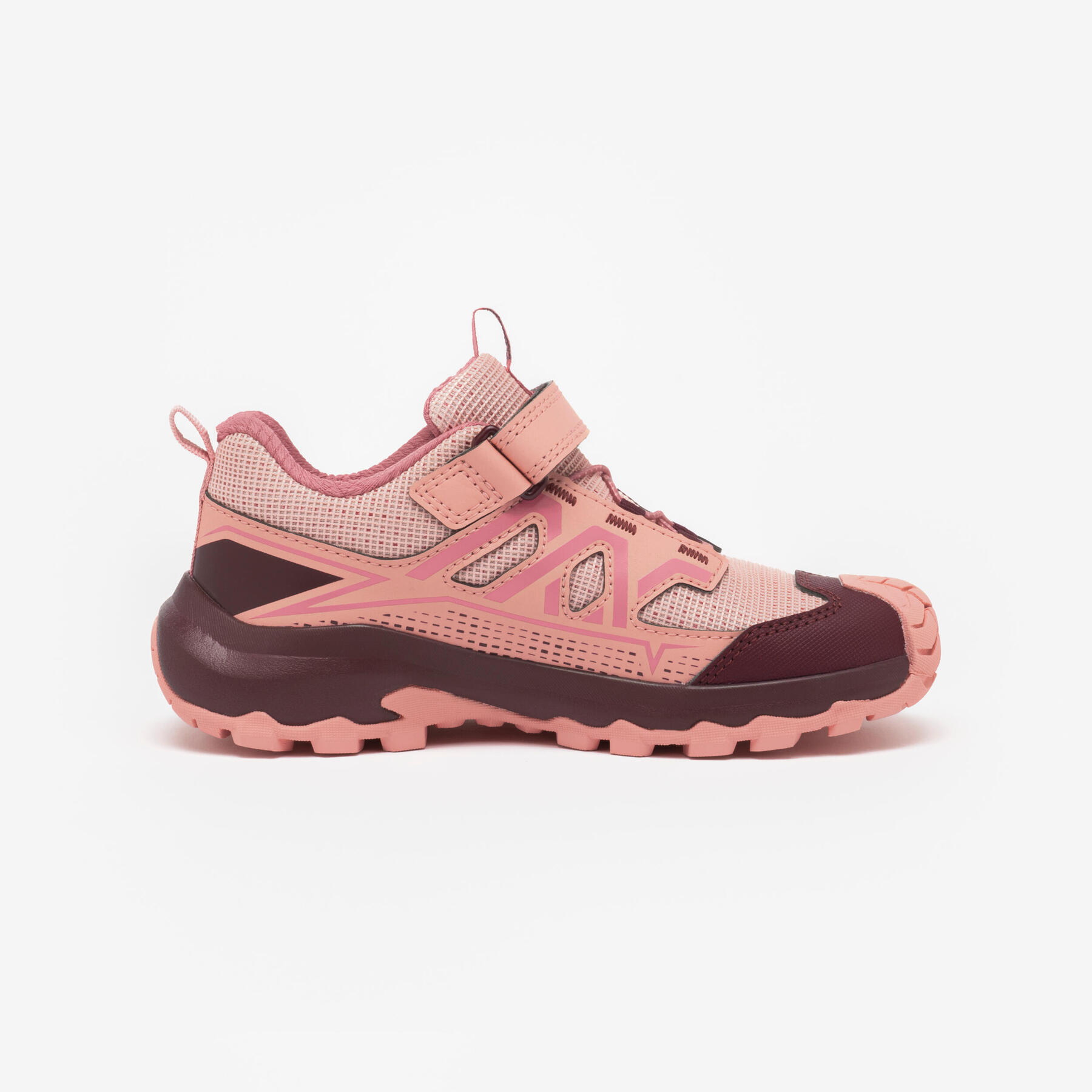
CROSSROCK LOW-RISE: lightweight and breathable (blue or pink)

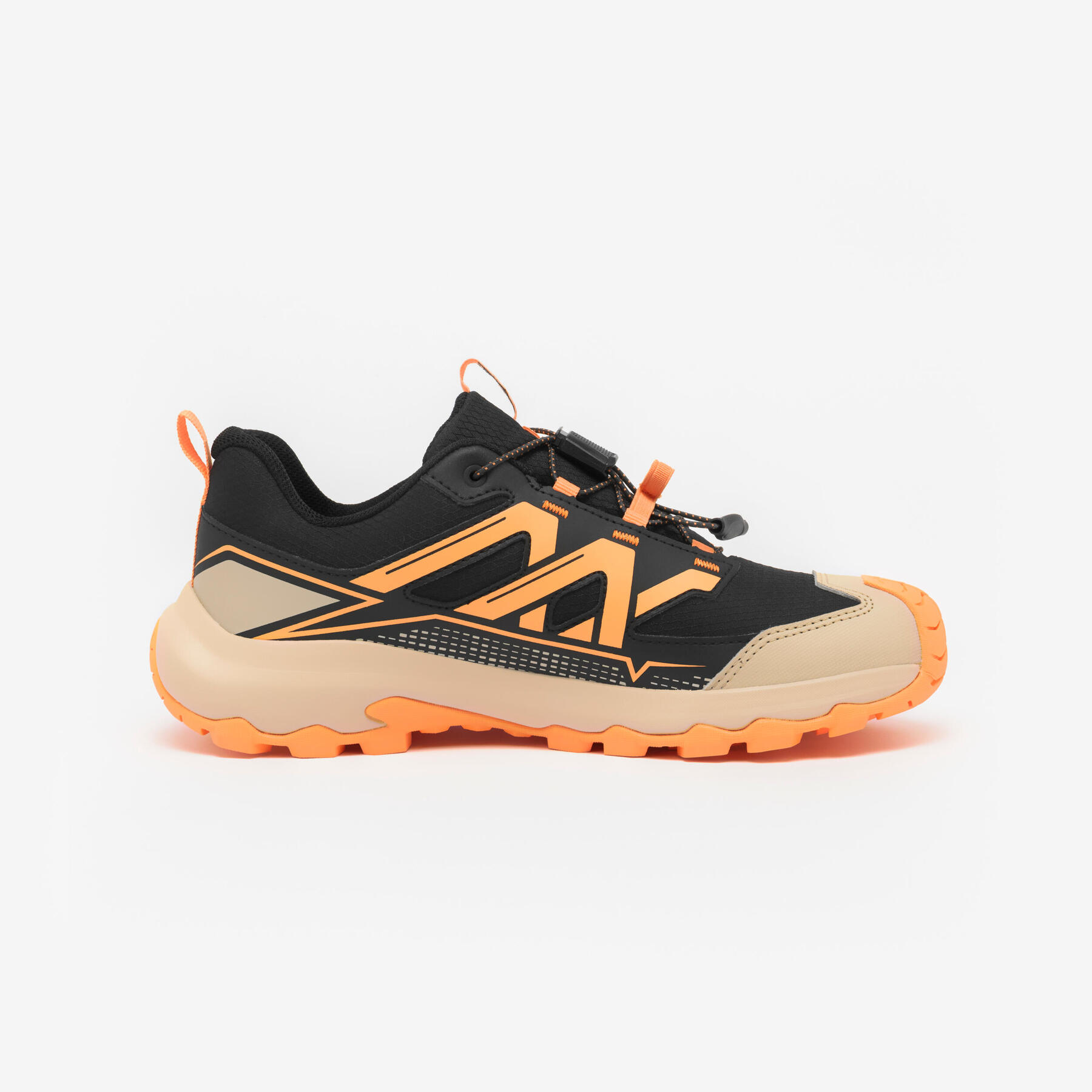
CROSSROCK LOW-RISE WTP: waterproof with freedom of movement for the ankle (blue or orange)

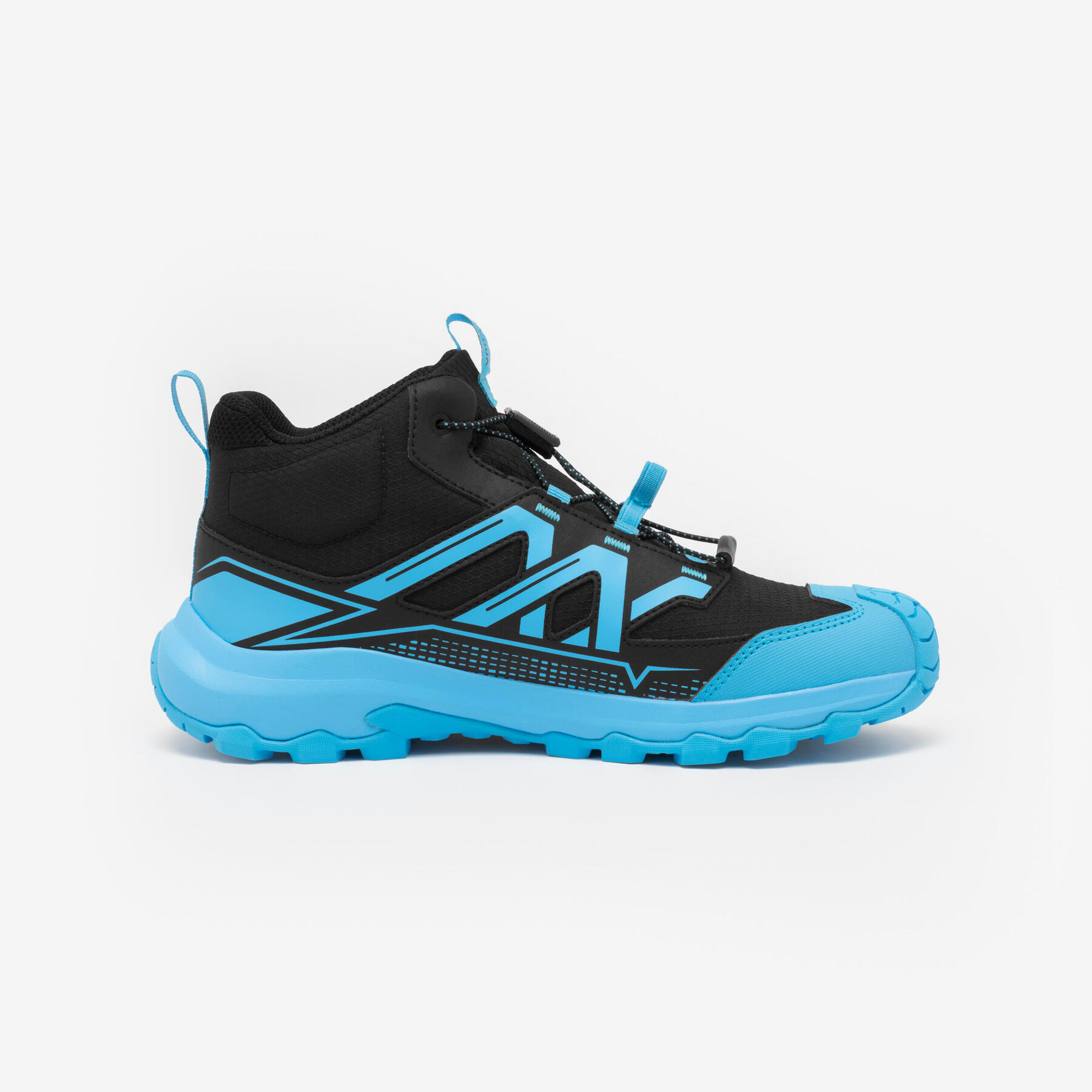
CROSSROCK MID-RISE WTP: waterproof with freedom of movement for the ankle (blue or orange)

How to choose junior hiking footwear?

How can you tell if a pair of hiking shoes fits my child?

It is highly recommended to go and try on in the shops. Here are some tips and advice to test if the shoes are a good fit for the child:

  • Take a size above the “classic” size so that the footwear offers enough volume around the toes and that the toes do not touch the tip of the footwear. During exercise, feet swell, the larger size therefore allows for more space.
  • Pass a finger behind the Achilles tendon and the upper to position the foot correctly and check the previous criteria.
  • Try on the footwear, imitating the conditions and movements as closely as possible. Some stores offer on-site modules to test multiple terrains and angles. Especially test on the downhills to check if the toes have enough space!
Remember to also offer them special hiking socks to prevent blisters, and try the shoes on with these socks! 

BONUS: What is the life span of a child's hiking boot?

Generally, hiking shoes have a lifespan of around 5,000 kilometres. The only (but huge) difference between children’s and adult hiking boots is that children’s feet are still growing (quickly)! You may need to change them before the 5,000 kilometre mark. Take care, however, to use them regularly and store them properly to prevent hydrolysis (water destruction): moisture and heat can damage the polyurethane (PU) soles, which will then come unstuck. In any case, the fact that children don’t wear their shoes until they’re completely worn out because of their growth shouldn’t affect the comfort and safety of their precious little feet!

Always try shoes on with hiking socks and aim for one size bigger to allow for swelling. Choose breathable models for summer and waterproof ones for wet terrain. Your child is now ready to hike safely