How to choose your hiking socks

How do you choose ski and snowboard socks?

Often seen as accessories, wearing good socks suitable for winter sports will play a real role in your day on the slopes.

Whether you enjoy downhill skiing, ski touring, cross-country skiing or snowboarding, a good pair of ski socks is as essential as your boots or ski gloves because they guarantee foot comfort, warmth, protection and performance.

Why should you wear socks specially designed for skiing?

You’re just about to set off to ski, so you slip on your ski socks with... your everyday socks. Stop right there! We explain to you why:

The socks that you wear every day are clearly not suitable for skiing or snowboarding, for the following reasons:

• They aren’t designed to keep your feet warm in cold conditions, which can make you feel cold and uncomfortable.

• They don’t handle perspiration well, which can cause dampness around the feet, increasing the risk of blisters and irritation.

• They aren’t designed with specific padded areas related to certain skiing movements, which can lead to pressure points and pain.

• And finally, do you know that unpleasant feeling of socks sliding around in your boots?
Because they don’t rise far enough up your calf and because they don’t hold well, your socks are going to slide and compress inside the ski liner, causing irritation and that frustrating point of discomfort.

Why should you wear socks specially designed for skiing?

You're going skiing, all your equipment is ready: skis, ski boots, ski clothing... So, why are you getting ready to put on your everyday socks? Everyday socks are not designed to protect your feet in the same way as those designed for skiing or snowboarding.

  • Without thermal protection, they will not keep your feet warm, which can cause real discomfort during your day of skiing or snowboarding.
  • They do not wick away perspiration, which can leave your feet damp and increase the risk of blisters and irritation.
  • They do not have specific padding areas for certain skiing movements, which can cause pressure points and pain.
And finally, are you familiar with that unpleasant feeling of your sock slipping inside your boot? Because they don't come up high enough on the calf and don't provide support, your socks will slip and bunch up inside your ski boot, causing irritation and discomfort.

Warm skiing socks, to keep your feet warm all day

Thickness is the primary factor in protecting against the cold, and this is achieved through the terry weave of the ski sock. The weave and composition guarantee real, constant thermal protection. To ensure warmth, we blend natural components such as wool, known for its ability to maintain the right temperature, with synthetic materials such as polyester for their ability to wick away perspiration.

Good to know:

the more intense your activity, the more important it is to choose thin socks that wick away perspiration. Conversely, the less intense your activity, the thicker your sock should be. Our 500 sock is the warmest, but it is not very breathable. That means it should not be worn by those who perspire a lot, but it is ideal for skiers whose activity is less intense, who perspire less or who often feel cold in their extremities during their days on the slopes.

For those who feel the cold, consider using warmers!

You know yourself, and you know that during your day of skiing, even though it's a sport, your feet will get cold. Anticipate this problem by stocking up on heat packs before you leave.

How do warmers work?

Stuck to your socks, warmers deliver gentle, consistent warmth for four to five hours. They are self-adhesive and can be placed on your toes, over your ski sock. Warmers self-activate on contact with air, and they need to be inserted into the sock while warm.

friends chatting in Decathlon thermal ski base layers

Ski socks at the right height

To protect your feet and maximise comfort, it is essential that your ski socks extend slightly above your ski boots, ideally to the middle of your shins. This has several advantages:

  • Prevent irritation: the sock covers sensitive areas where the boot may rub.
  • Provide better insulation: they help maintain the right temperature around the calves.
  • Prevent snow from getting in: In the case of a fall, it reduces the likelihood of snow getting into the ski boot.
Practical tip:

Women's ski socks and men's ski socks can have different heights to suit different body types.
Our technical ski socks and compression socks offer optimal support and fit all types of ski boots and adult ski boots.

You can choose socks according to your activity: alpine skiing, ski touring, cross-country skiing or snowboarding, depending on your level and your comfort and performance requirements.

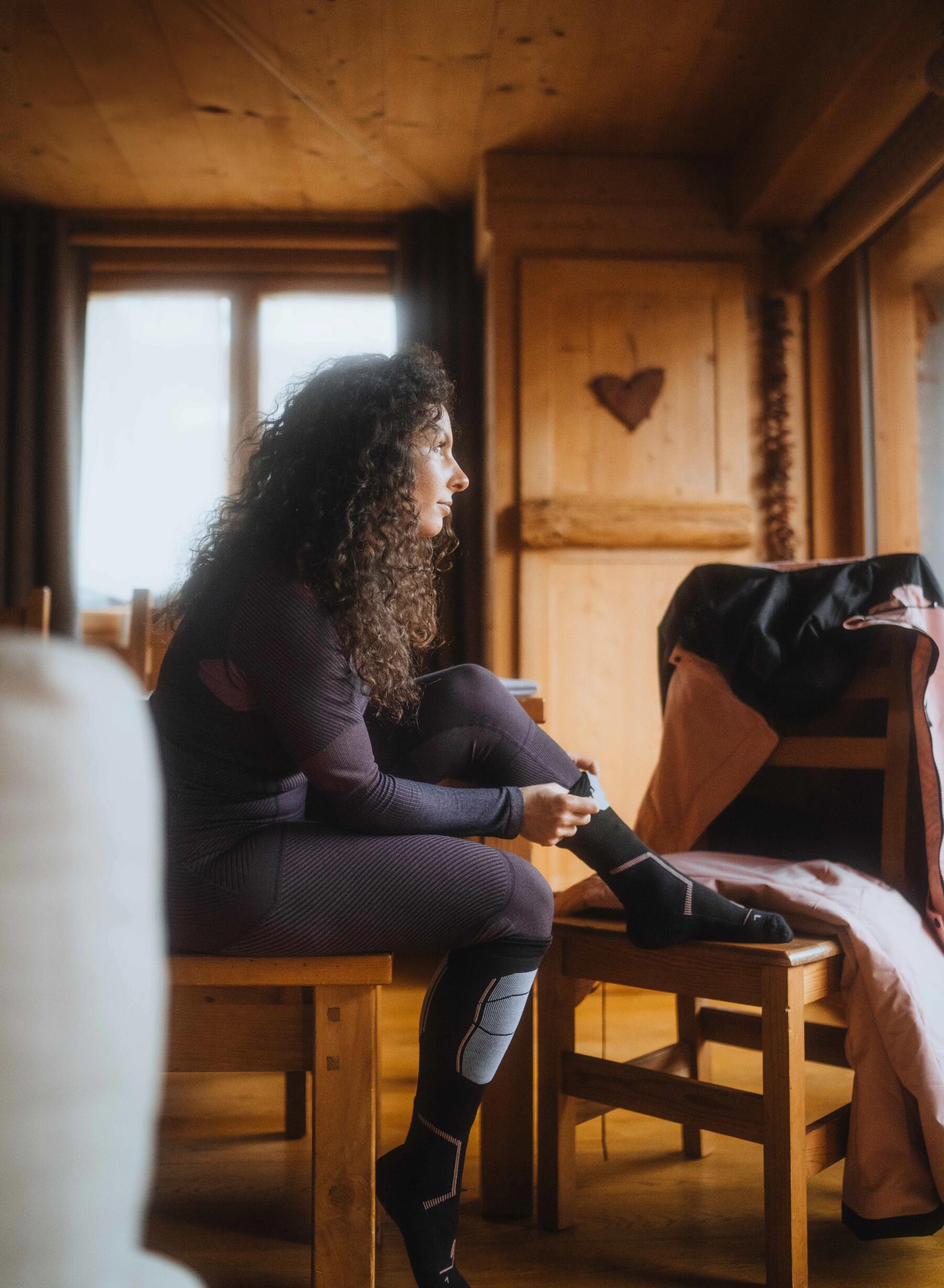
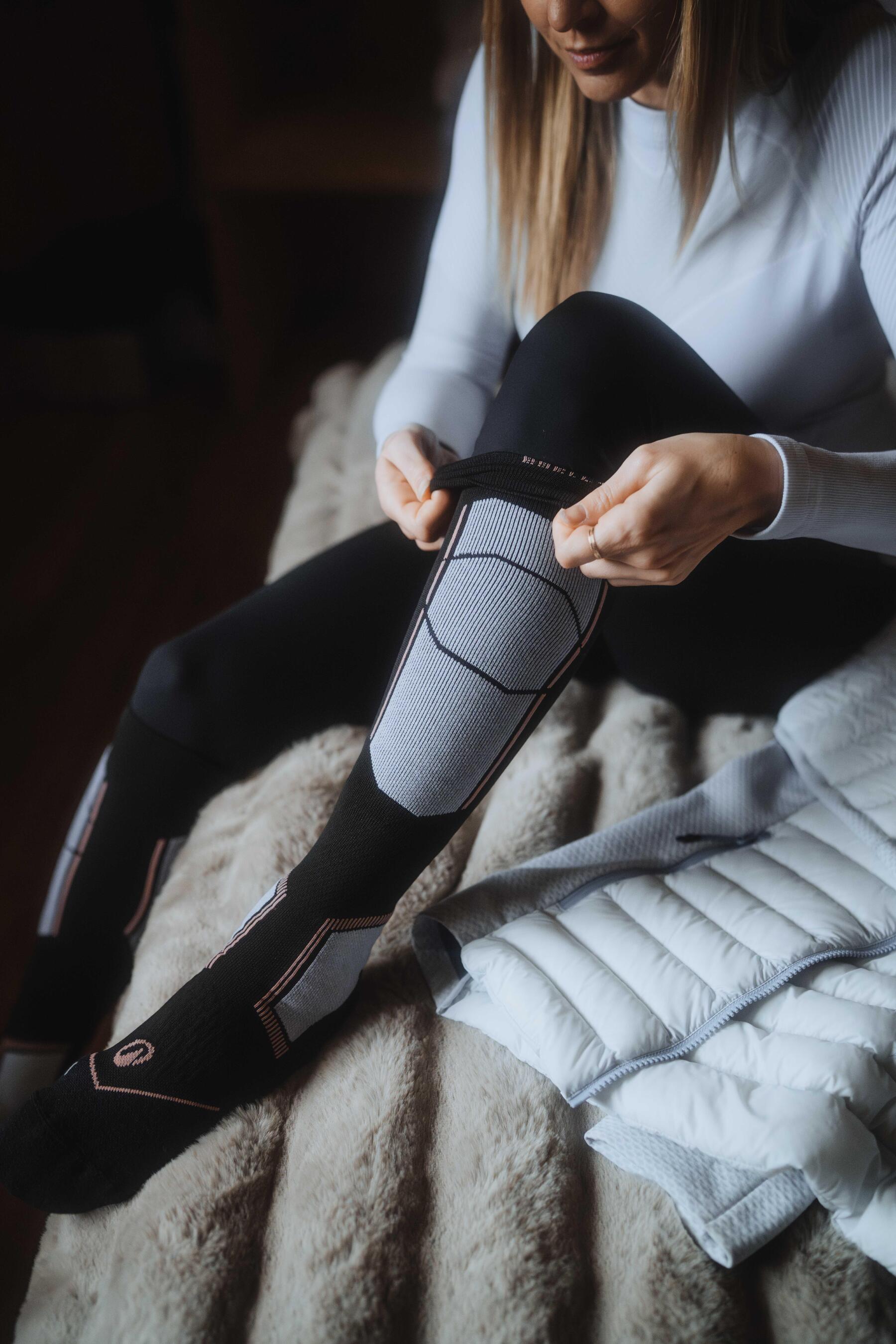
Woman putting on a Decathlon Quechua ski sock.

What’s the right ski sock size?

This is fairly obvious advice, but nevertheless very important: it is important to find the right size, neither too wide nor too narrow, so that the sock fits the foot perfectly. A sock that is too big can quickly lead to blisters. If there is too much material around the foot, there will be a greater chance of creases or areas of friction between the sock and the skin. Try on your socks before you leave for your winter sports holiday to check that they support your feet without being too tight.

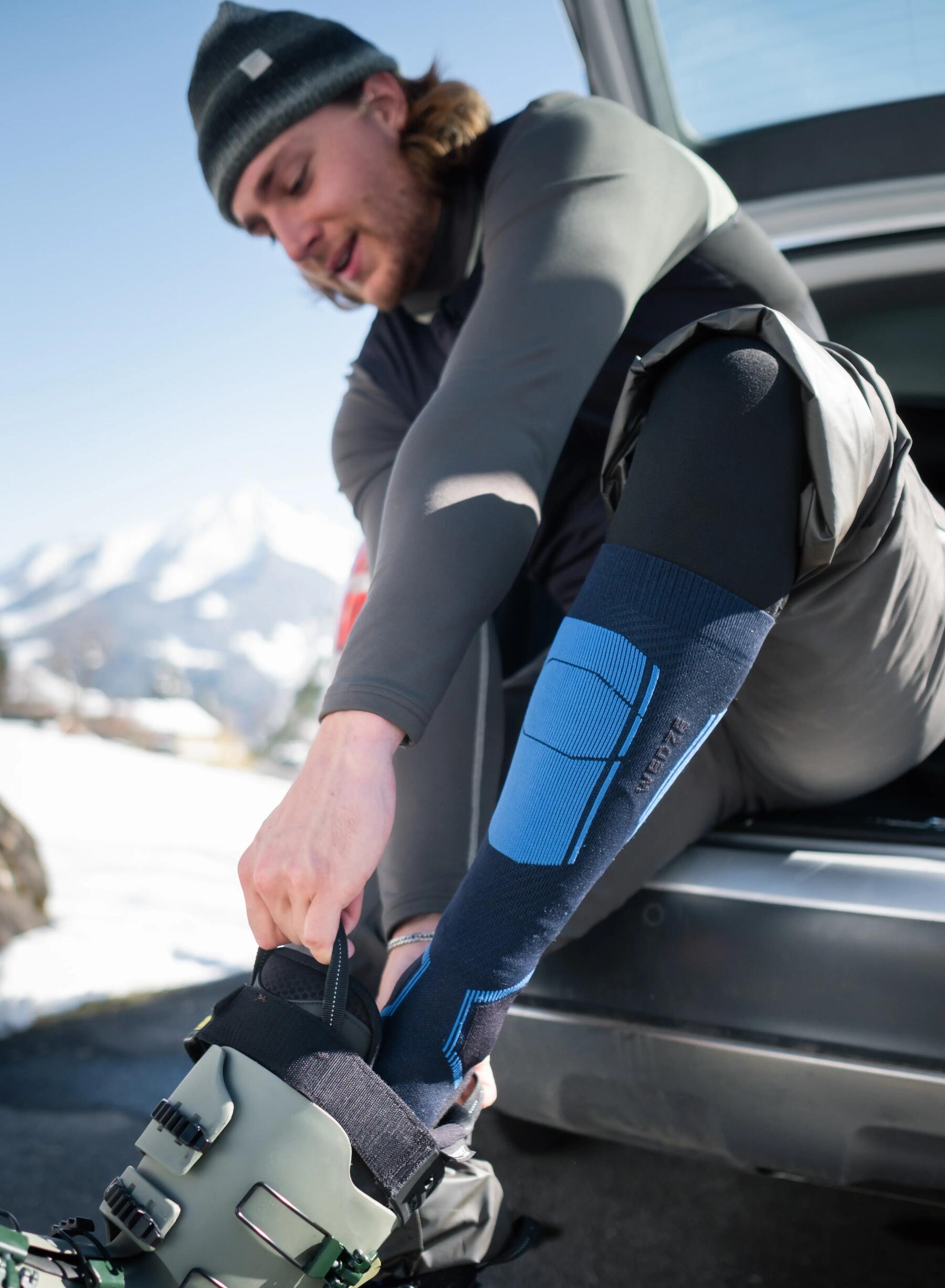
man putting on his ski boots

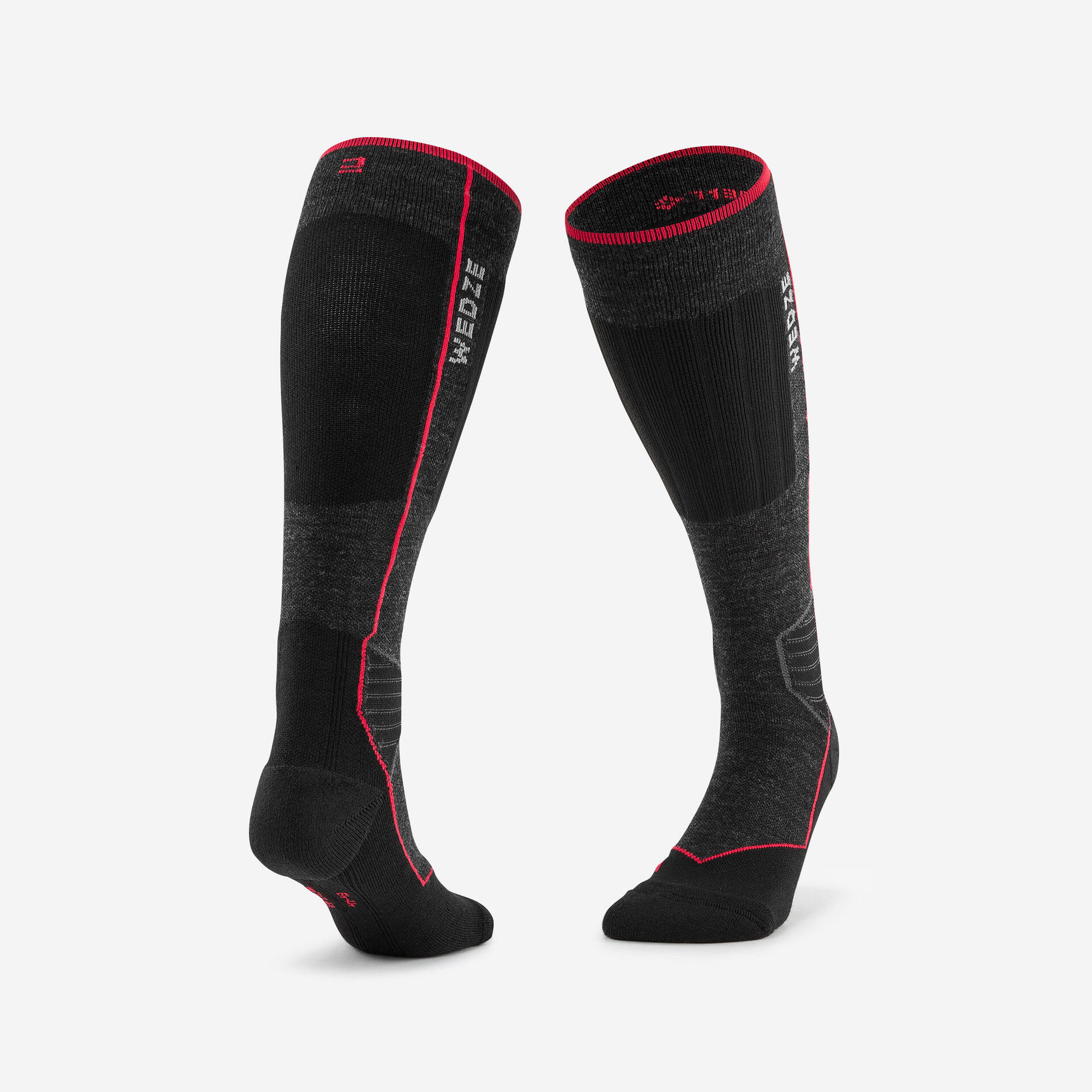
Thickness and reinforcement zones.

Although thickness has a role in providing warmth, it also has an impact on the shifting your weight in your ski boot.The thinner the ski sock, the more precision it will give you in your movements. Some socks have reinforced areas to improve your comfort. They are most often located:

  • Above the toes to localise the heat.
  • On the shin, at the heel or the malleolus.
  • For snowboarders, they can also be located behind the calf to protect it from frequent rear support.

Fabrics to prioritise.

Certain fabrics and materials play an important role in the composition and comfort of your socks.

  • Wool, generally found on the sole, combines durability, warmth and high moisture absorption.
  • Merino wool is excellent for temperature regulation and moisture management. It is also naturally antibacterial, which reduces odours.
  • Acrylic provides warmth but can be a little more fragile than other materials.
  • Polyamide is resistant to friction and easy to care for, often added as reinforcement to the heel and toe areas.
  • Polyester is water-repellent and offers thermoregulation and resistance to friction.

Speaking of materials, let's focus on elastane.

The fit of the sock on your foot is essential for your comfort throughout your days of activity. In addition to choosing the right size, opt for a model that contains more or less elastane! This elastic material provides good support and moulds to the shape of the foot, preventing the formation of creases that can be particularly uncomfortable. It also retains excellent resistance to tension and bending, and has a soft, silky feel.

Need some help in choosing THE best type?

Now that you know the essential criteria, let us help you choose the pair of ski socks that suits you best:

  • Decathlon ski socks

    Do you ski occasionally and are you looking for ski socks that offer the perfect balance between support and thermal protection?

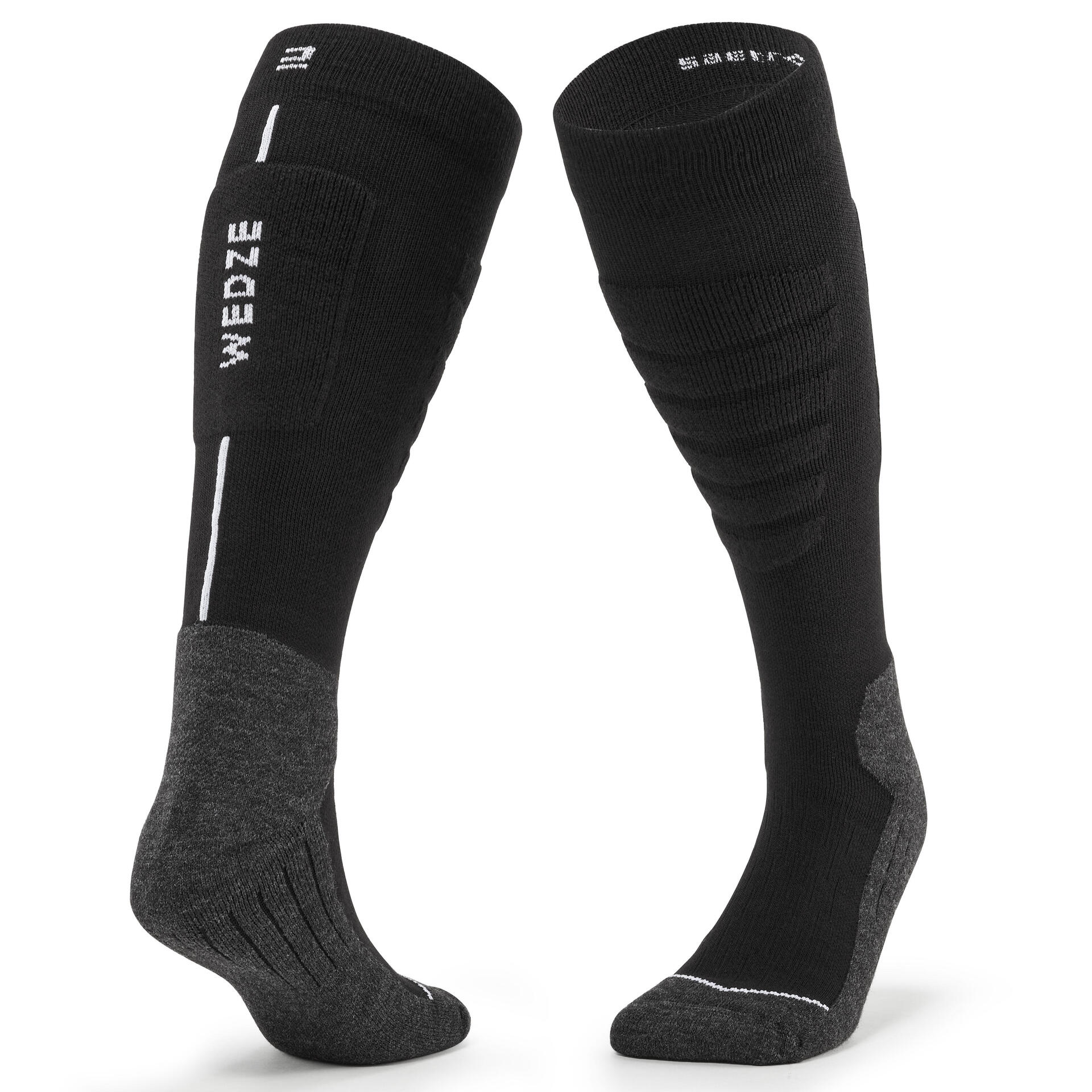
  • decathlon quechua 500 ski socks

    Do you ski regularly and want comfort and support? Choose our 500 socks, whose reinforcements will meet your expectations.

You are now an expert at choosing ski socks, they will no longer be just an accessory! All you have to do is select your ideal model and enjoy your winter sports days to the fullest!

Cléo

Hiking in summer, skiing in winter, at altitude all year round