Crural nerve: our 5 stretches

What positions should you choose? What stretches and exercises should you do? Find out here how to relieve crural nerve pain.

Do you suffer from cruralgia but don't know how to soothe it? We're here to help you. I'm Juliette, a sports coach and Pilates teacher. Here you can explore my favourite stretches and discover Hervé Perrigault's kinesitherapist advice.

What is the crural nerve?

The crural nerve (or femoral nerve) is a mixed nerve (sensory and motor) located in the lower limbs.

It provides feeling on the front surface of your leg, particularly at the front of your thigh, on the anteromedial side (front and inside) of your knee, but also at the ankle and on the inside of your foot.

It is also a motor nerve, meaning that it also allows certain muscles to contract, in particular the hip flexor muscles such as the psoas and the knee extensor muscles such as the quadriceps.
Spinal, pelvis, thigh and leg nerves: crural nerve pathway

The crural nerve stems from the lumbar nerve roots L2, L3, L4 (in the lower back). It descends forward into the hip and passes through the middle of the iliac and psoas muscles, which it innervates. It continues its course towards the front of your hip and divides into several branches to run down the front of your thigh, the inside of your knee, the tibia and finally your ankle and foot.

What are the symptoms of a crural nerve inflammation?

Cruralgia is a sensory condition of varying nature and intensity: This may be a tingling sensation, pins and needles, numbness, a burning sensation or even an electric shock.

Symptoms often occur on the front of the thigh, from the groin crease to the knee. Hervé Perrigault explains: "It's not nerve pain, it's pain in the zone regulated by the nerve. There is no motor element in cruralgia, just as in sciatica."

What to do if it's painful?

If you think you're suffering from cruralgia, there's just one thing to remember: consult a health professional, such as your GP. Only a medical consultation can determine whether or not a course of medication is required and allow sessions to be prescribed with a kinesitherapist or a physiotherapist.

The causes of cruralgia can be varied or even multiple, as Hervé Perrigault explains: "The causes can be mechanical: articular in the lumbar region, muscular, but also visceral and even more rarely tumoral. Treatment depends on the cause of the pain. But overall, it's like lumbago (lower back pain) or sciatica (sciatica pain). "

How can you relieve cruralgia naturally?

A number of natural remedies can help relieve crural pain: heat, stretching, gentle movement and rest.

"Warning: Rest means no excessive movement, but it doesn't mean lying down and not using your leg at all", explains the kinesitherapist.

↪ Relieving cruralgia with heat

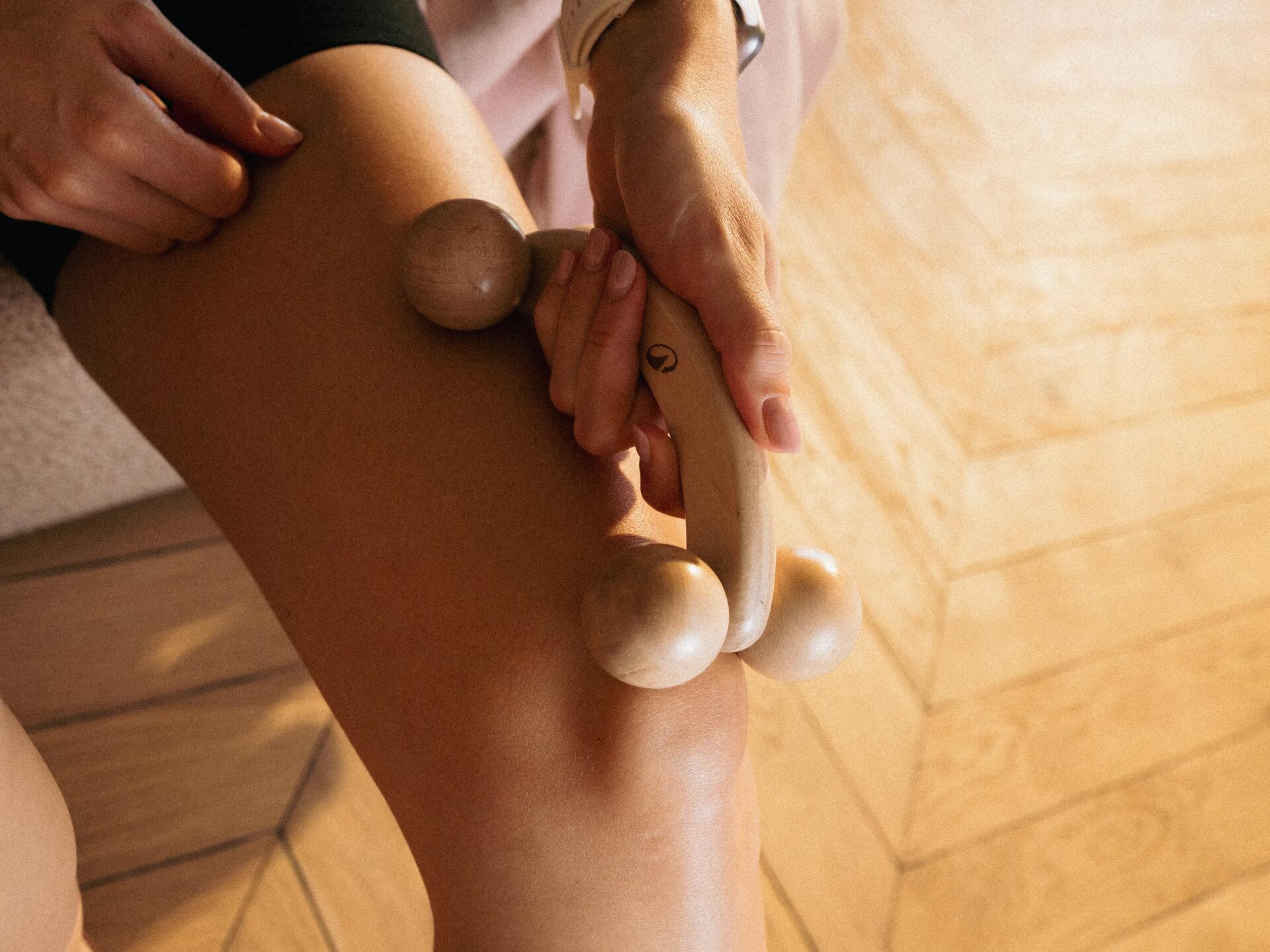
Heat can help to relax your muscles. Several techniques are available: you can use hot water bottles or heated blankets. Don't forget to wrap up warmly if it's cold—sometimes being cold can cause muscle tension!

↪ Stretching the crural nerve

As with the sciatic nerve, the crural nerve itself cannot be stretched. On the other hand, you can stretch the muscles around the nerve to relieve the pain.

Stretching also depends on your specific situation and your diagnosis. Hervé Perrigault explains: "In the case of cruralgia of high origin, it is necessary to see if there is a blockage in the lumbar region, for example, and stretch the area if necessary."

Stretching the front of the thigh rarely makes a difference, but it can relieve tension. The aim is to try and relax so that there is as little tension as possible in the pelvis, psoas, glutes and adductors. Here are a few tips on how to stretch a little lower.

↪ Keep moving

The worst thing you can do is remain immobile for long periods. Bear in mind that a nerve likes to be well irrigated (blood), have space and remain mobile. All these elements are provided by movement. So keep moving!

Don't exert yourself for too long, but try to move a little every day

5 ways of stretching the crural nerve

Here are 5 exercises you can do at home. For each exercise, follow the instructions and hold the position for approximately 30 seconds.

For stretching to be effective, you don't need to stay in the same position for long. On the other hand, try to do it as often as possible (ideally every day). Remember to breathe and relax as much as possible. If you tense up, it will be counterproductive.

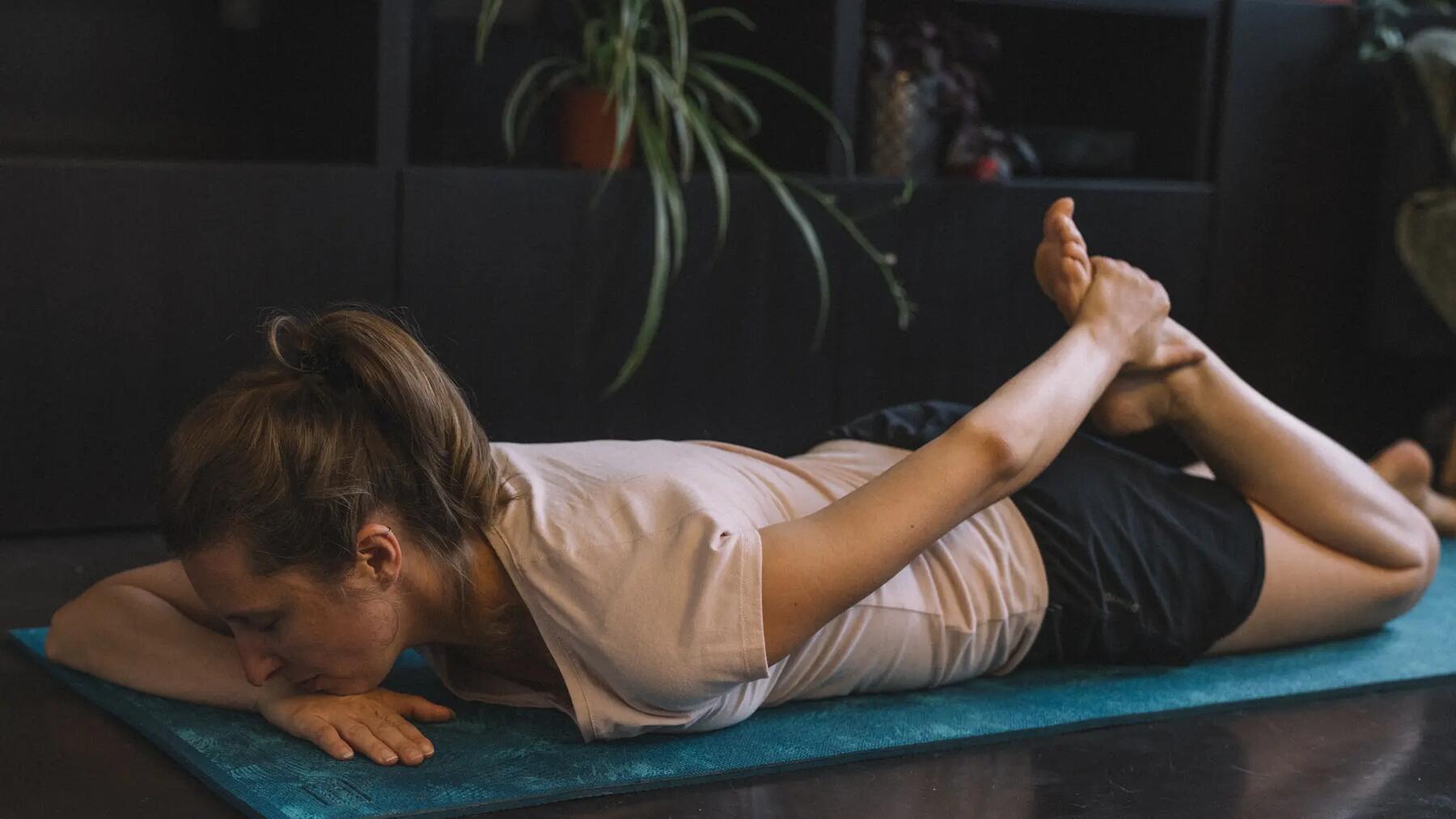
Quadricep stretch on the floor

Starting position: Lie face down on your mat.
Execution: Breathe in, bend your right leg and grasp your right ankle with your right hand. As you breathe out, bring your heel towards your buttocks. For more feeling, press your pubis into the mat. Repeat the exercise with your left leg.

💡 If you can't grab your ankle, use a yoga strap to make it easier!

Psoas stretching: lunge, knee on the floor

Starting position: On your mat, place yourself in the low lunge pose. Legs bent, right foot on the ground in front of you, left knee behind you.


Execution: Inhale, place your hands on your waist. As you breathe out, move your pubic bone upwards, by tilting your body weight forwards. Make sure you keep your right knee and ankle in line. Repeat the same movement on the other side.

💡 For more feeling, raise your arms upwards and lean to the right (when your right leg is in front of you). The same thing on the other side.

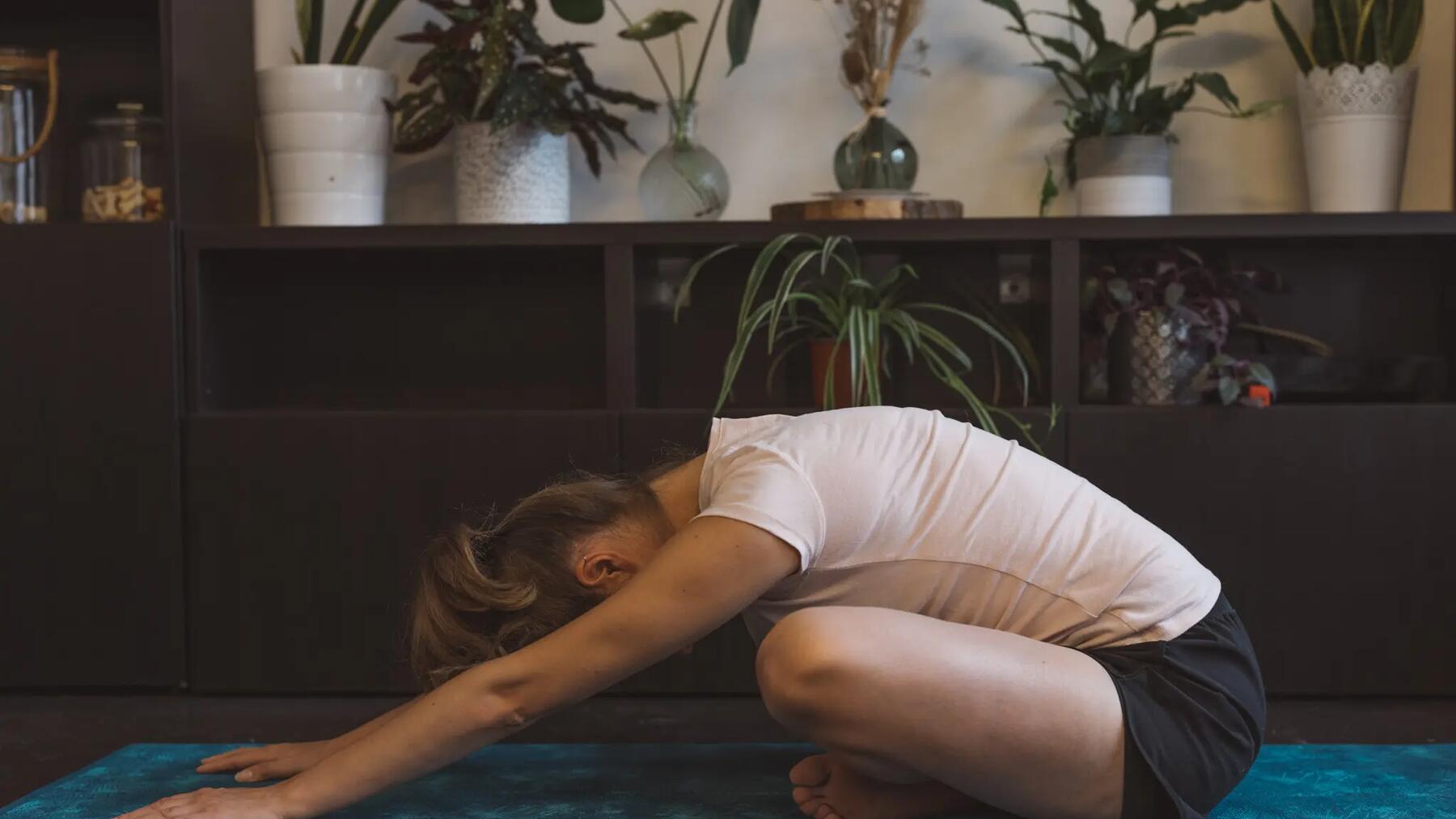
Gluteal stretching in a cross-legged position (makes it easier to open your hips)

Starting position: Sitting cross-legged on your mat.

Execution: Inhale and place hands in front of you. As you breathe out, slide your hands on the floor as far in front of you as you can while keeping your back straight. Keep both buttocks firmly planted on the ground.

💡 If the stretch is too intense, place a yoga brick under your hands for relief.

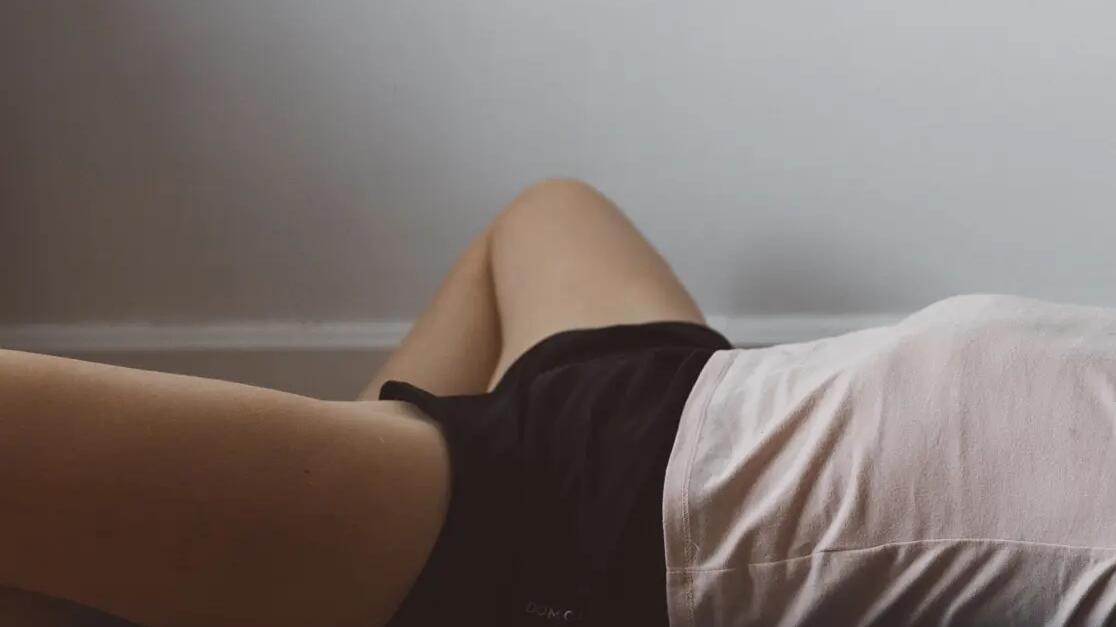
Relaxing your lower back lying on your back, knees together

Starting position: On your mat, lying on your back.

Execution:
Breathe in, bend your knees. Exhale and, using your arms, bring your knees close to your chest without taking your pelvis off the floor. Hug yourself.

💡 You can make small rocking movements from right to left to "massage" your lower back.

Adductor stretch, butterfly recline

Starting position: Lying on your back, bend your legs and place your feet flat on the floor, hip-width apart.


Execution: Inhale, open your arms to the side. Exhale and let your knees fall out to the side and towards the floor, soles of the feet together. Remember to keep your spine neutral (the back neither arched nor rounded).


💡 For an additional stretch in the lower back, you can extend your arms to the floor above your head and stretch out your spine.

What is the best position to be in when suffering from cruralgia? How do you sit properly?

The best position to be in is one where you're not in too much pain! For Hervé Perrigault, the least painful sitting position for cruralgia is often one "where you're sitting not too low and not too deep, on a high stool for example."

Remember that you are the best person to know what makes you feel good, so trust yourself!

How long does it take to recover from crural neuralgia?

There's really no set time for recovering from cruralgia. It all depends on what is causing the pain and the treatment chosen.  

If you suffer from chronic pain, "this means that the chosen treatment is not sufficient to act on the cause, or that it cannot act on the cause because the correct cause of the problem has not been identified", explains Hervé Perrigault.

If you have followed the advice of your doctor or kinesitherapist, you should consult them again.

What exercises and sports can you do to avoid crural nerve pain?

There is no specific physical activity that will prevent crural nerve pain, but a healthy lifestyle and daily exercise are a very good start.

Hervé Perrigault adds: "For things to get better, you have to look after the lumbopelvic-femoral area so that it remains functional". The lumbar vertebrae, the sacroiliac joint and the hip  are the joints you need to keep moving to keep everything healthy.

Walking, gentle yoga, stretching, whatever! Do what makes you feel good, and do it regularly and gently. Vary your enjoyment by trying out different activities: yin yoga, Pilates, tai chi or qi gong, for example.

What is lumbocruralgia?

Lumbocruralgia is an irritation of the crural nerve associated with lower back pain.

"Sometimes you have pain in one area and the cause of the pain is 40 or 50 centimetres away. The nerve transmits information to the brain, so we complain about a painful area when the problem is actually on the nerve path."

If you feel pain and you don't know what it is, the best thing to do is consult your GP.

Like sciatica, cruralgia is a painful condition that can disrupt your life. With medical advice, compliance, stretching, and targeted exercise, you can effectively relieve the crural nerve.

Juliette Gunther

Journalist, sports coach, Pilates teacher & writer

As a former ballet dancer-turned-sports coach, I love Pilates and stretching. I'm naturally inquisitive, so discovering new activities is second nature to me. My motto: be kind and keep pushing yourself.