What is the back?
What do you mean by ‘the back’, ‘the neck’ and ‘the lumbar region’? To understand this, let's take a closer look at the muscles that make up the back.
Stretching can help prevent or relieve back pain. What muscles make up the back? How do you stretch them? For a practical explanation and simple exercises, click here.
A sedentary lifestyle, physical work, stress, doing sport... So many little everyday things that can put strain on your back. When should you stretch and how? Juliette, journalist and Pilates teacher, helps you create a stretching routine for your back.
What do you mean by ‘the back’, ‘the neck’ and ‘the lumbar region’? To understand this, let's take a closer look at the muscles that make up the back.

The deepest layer of back muscles (those closest to the spine) are the spinal muscles.Then there are the paravertebral muscles.Then comes the most superficial layer, made up of the latissimus dorsi, the rhomboids, the trapezius and the serratus superior and inferior. These muscles extend the torso.
But the spine can also rotate and tilt. This part of the body moves in all directions, which is why it is important to keep this area flexible and mobile.
In everyday life, the deep back muscles and deep abdominal muscles help maintain good posture.The superficial muscles reinforce this structure and allow you to move! Think of it as the foundations of a house, with the materials on top adding to its solidity.
Does sciatica bother you on a regular basis? Whether you suffer from lower or upper back pain, movement is often the solution. Yes, a sedentary lifestyle is the enemy of a healthy back.
But athletes need to stretch too. From runners and cyclists to body-builders. Stretching is for everyone. The benefits are numerous: reduced muscle stiffness, tension release, increased muscular range, improved muscle performance and, in the long term, muscle growth. Still not sure?
While the gluteal muscles are not directly attached to the vertebrae, some are attached to the sacrum and coccyx, which are simply the base of the spine. That's why sometimes, when you have lower back pain, it can ‘’shoot‘’ all the way down to your buttocks. Stretching the gluteal muscles can relieve lower back pain.
When stretching, remember to BREATHE. The jerking stretches to music of the 1980s are long gone! Muscles are pretty well designed, but if you stretch them too fast and/or too hard, a nervous reflex contracts them... the exact opposite of what you're after. So... relax!
Active stretching methods do exist, but that's another story. ;)
There's no best time for stretching. In the morning it can help you get moving, and in the evening it can help you relax.
Before or after a session, during a specific session? You may not know when to stretch. It depends on your goal!
After a sports session, stretching should be short and not too intense, and can be described as recovery stretching. As a separate session, they enable you to work for longer and therefore gain in flexibility.
Once again, there are several factors to take into account. If you're just starting out, begin with one or two 15-20 minute sessions a week (combining several exercises and areas of the body).Spend 30 seconds on each side per exercise. Then increase the stretching time (up to 1 minute) when you feel more comfortable.
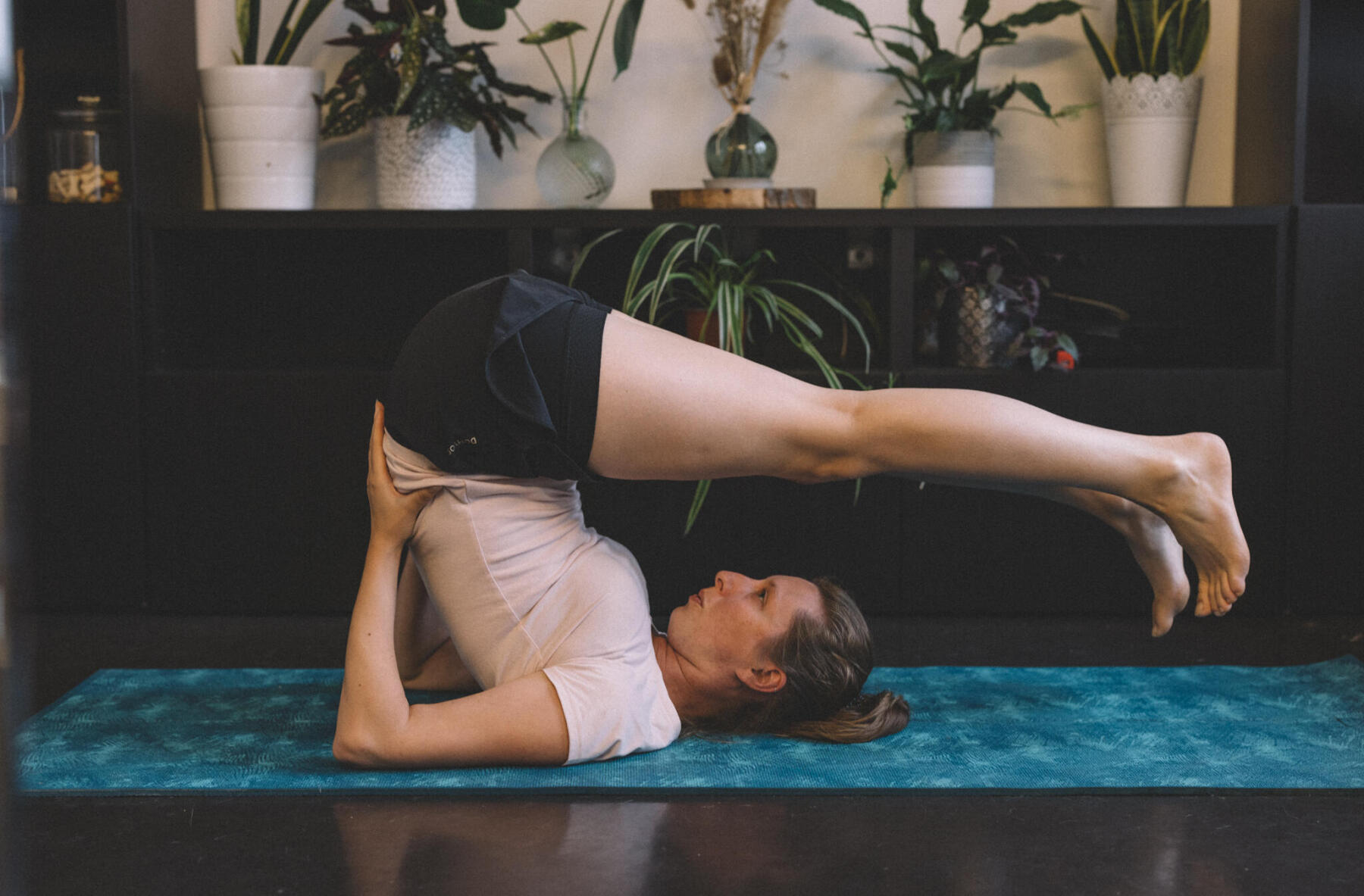
Starting position: lie on your back.
Inhale and, as you exhale, swing your legs so that your feet are behind your head. Support your lower back with your hands if you can't hold the position. Your buttocks are pointing towards the ceiling. Keep your legs bent if the stretch is too intense. For a more intense feeling, straighten your legs.
Muscles stretched: spinal extensor muscles: spinal, paravertebral, latissimus dorsi, rhomboids, trapezius, lower and upper serratus. Neck extensor muscles.
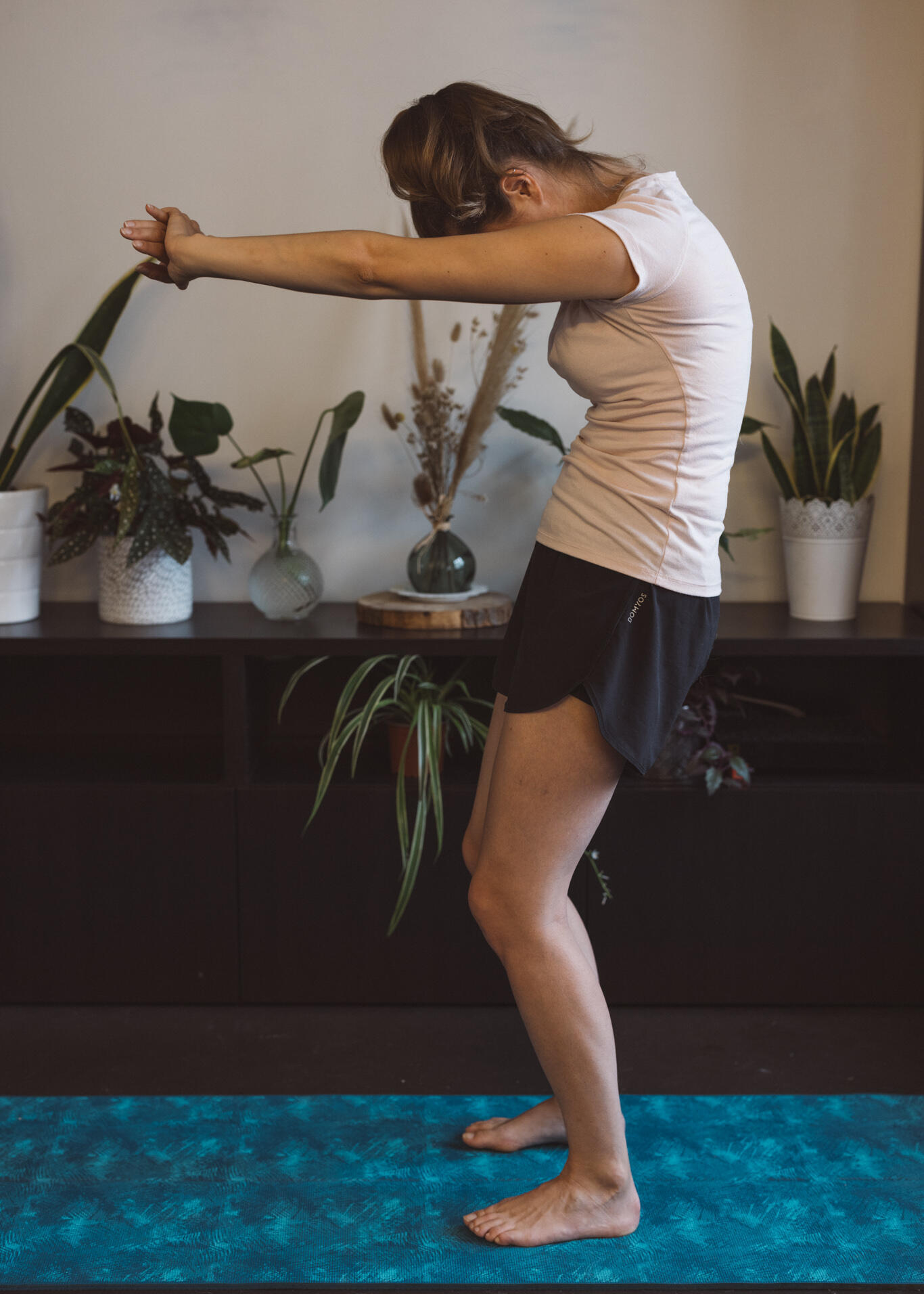
Starting position: standing, feet hip width apart.
Inhale and cross your hands in front of you. As you breathe out, push your hands forward, rounding your back and tilting your pelvis forward. Look at your navel and keep your shoulders low. Keep your legs slightly bent. Your spine makes a C shape.
Muscles stretched: spinal extensor muscles: spinal, paravertebral, latissimus dorsi, rhomboids, trapezius, lower and upper serratus. Neck extensor muscles.
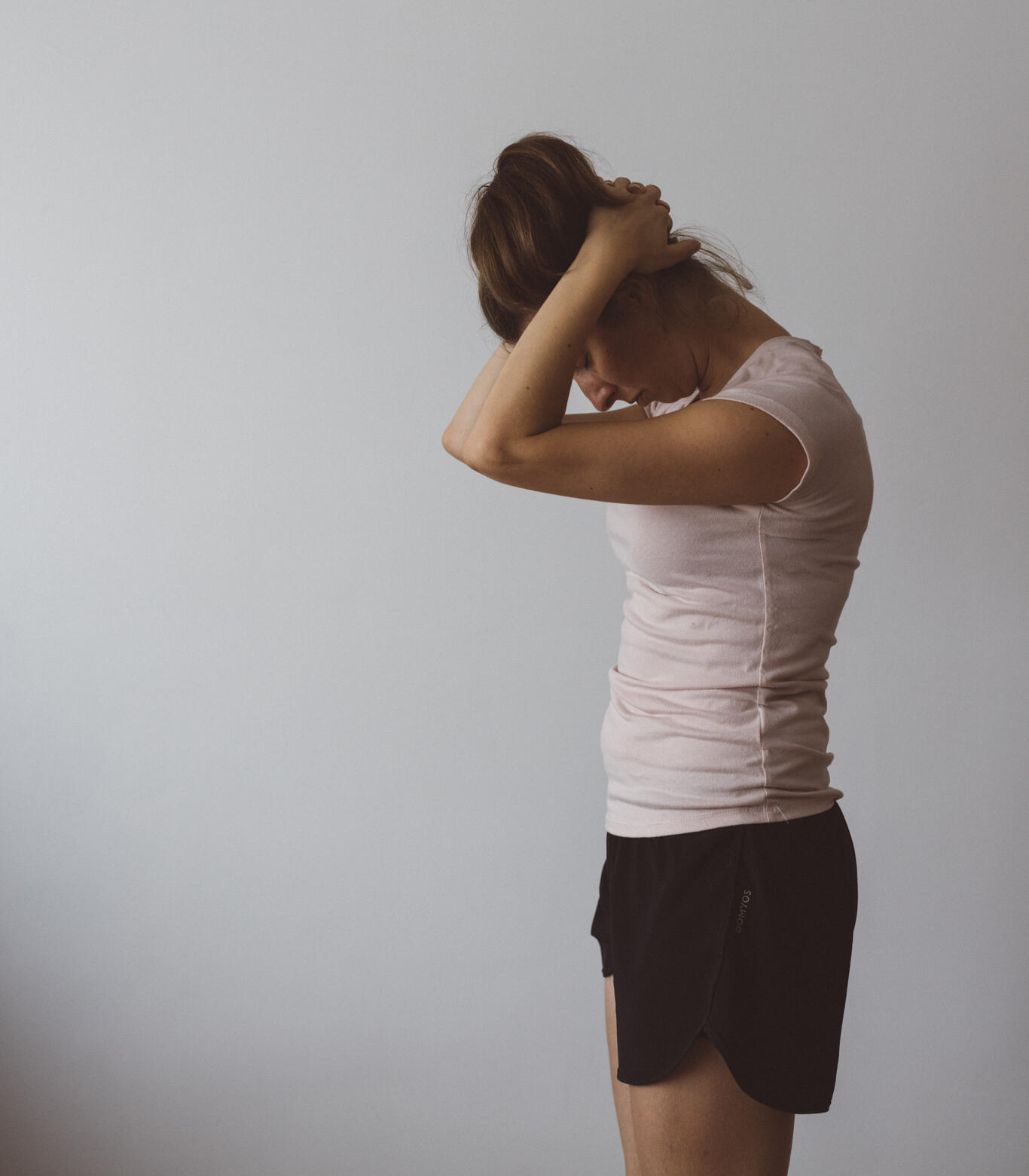
Starting position: Stand with your feet parallel.
Inhale and place your hands behind your head. As you breathe out, point your elbows towards the floor so that you feel a stretch in the back of your neck. Keep your chin a fist's width away from your breastbone. Don't pull on the back of your neck, just let the weight of your arms do the work.
To stretch further down your back, curl your spine a little more.
Muscles stretched: Neck extensor muscles.
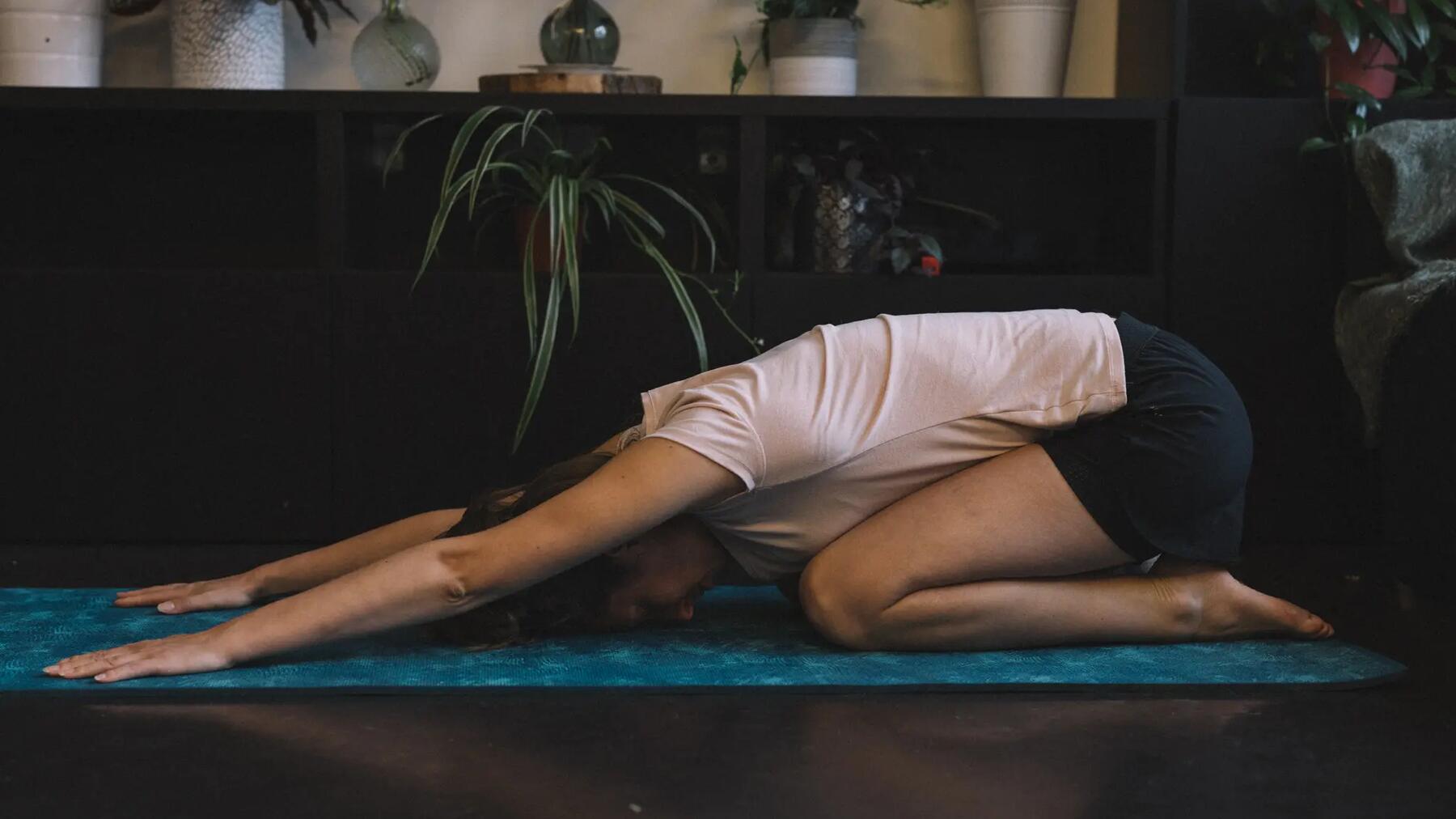
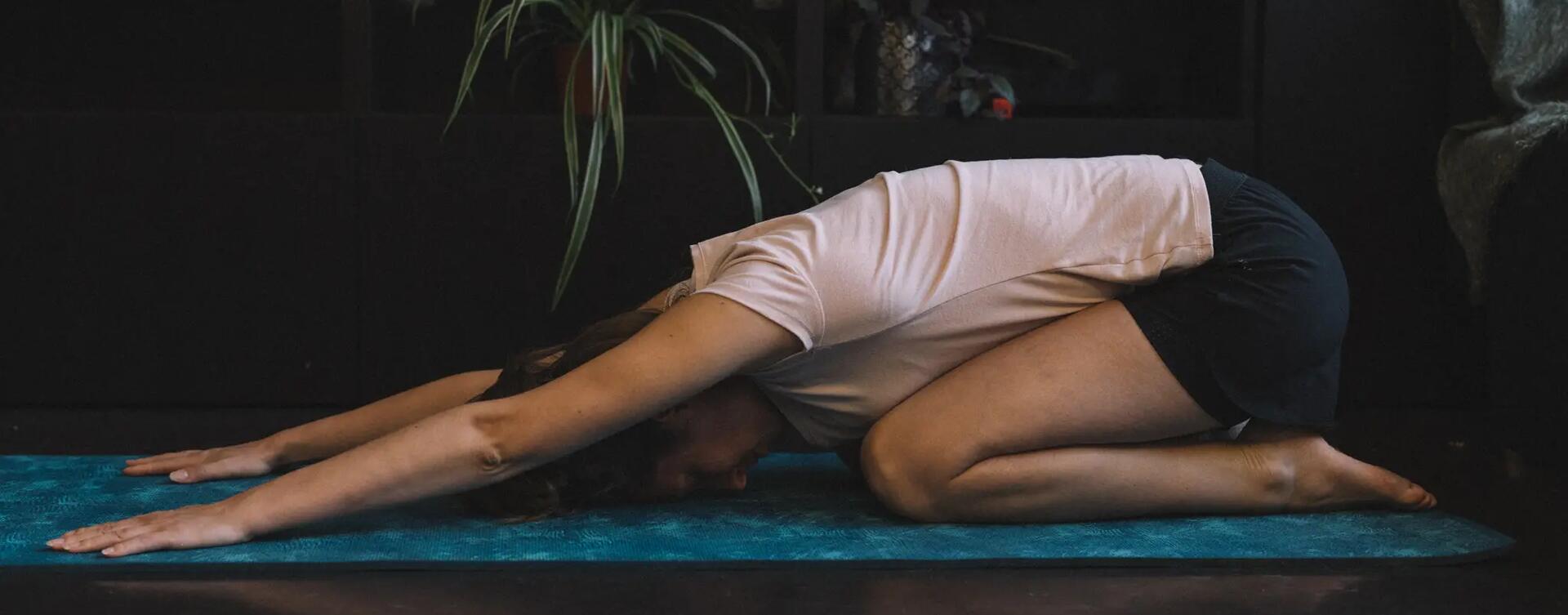
Starting position: sitting on your heels.
Inhale as you stretch your arms out on the floor in front of you. As you breathe out, slide your hands down to place your forehead on the floor. Try to keep your buttocks as close to your heels as possible and relax your shoulders and neck. You can open your knees to a greater or lesser extent; find the position that is most comfortable for you.
To relax your upper back too, in the same position, place your hands next to your feet and let your shoulders fall towards the floor. (Your body makes a little ball).
Muscles stretched: dorsalis major, gluteus maximus and medius.
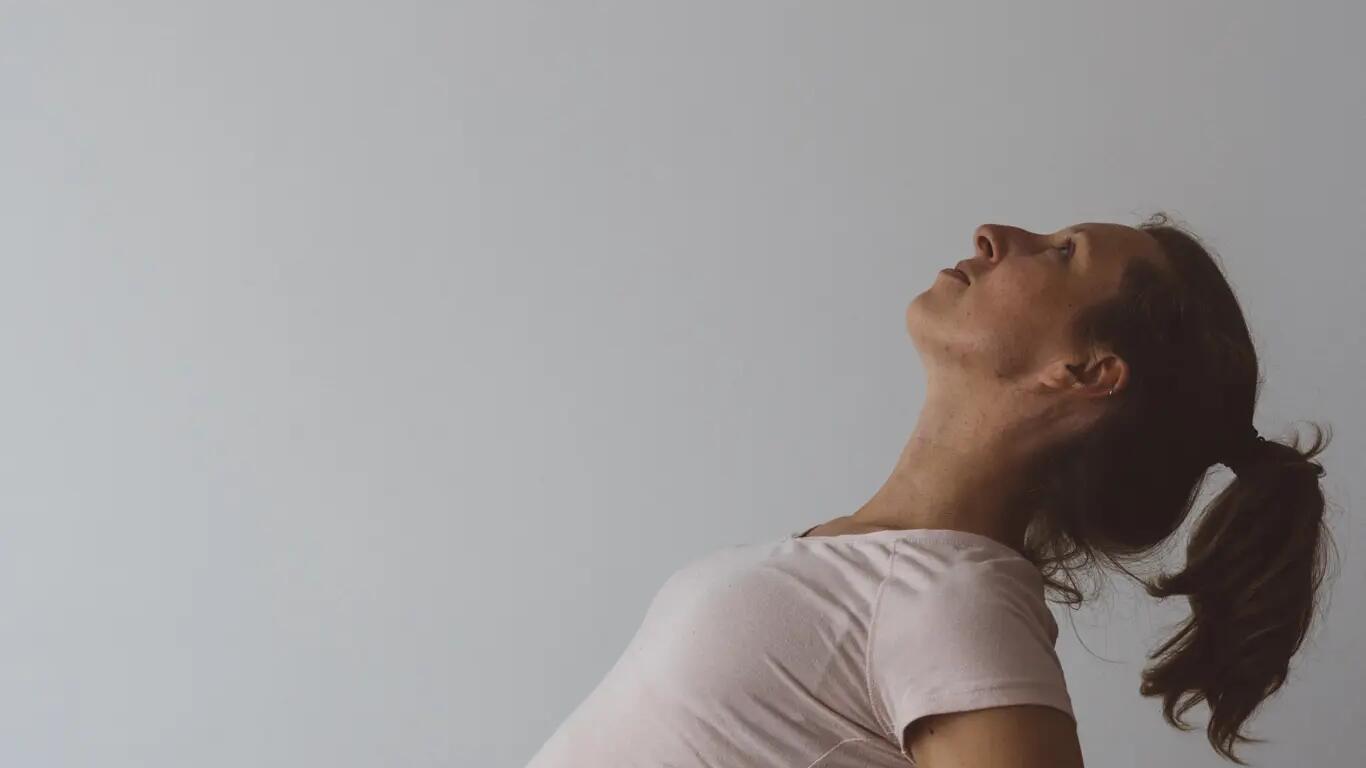
Starting position: Stand with your feet hip-width apart and your knees slightly bent.
Inhale and place your hands on your lower back. As you breathe out, tilt your torso backwards and your pelvis forwards. Keep your chest open and your shoulders low. Avoid relaxing your abdominal muscles. To do this, keep your navel drawn in.
Muscles stretched: Here the muscles stretched are more on the front of the body (abdominal muscles in particular) but this exercise relieves lower back tension.
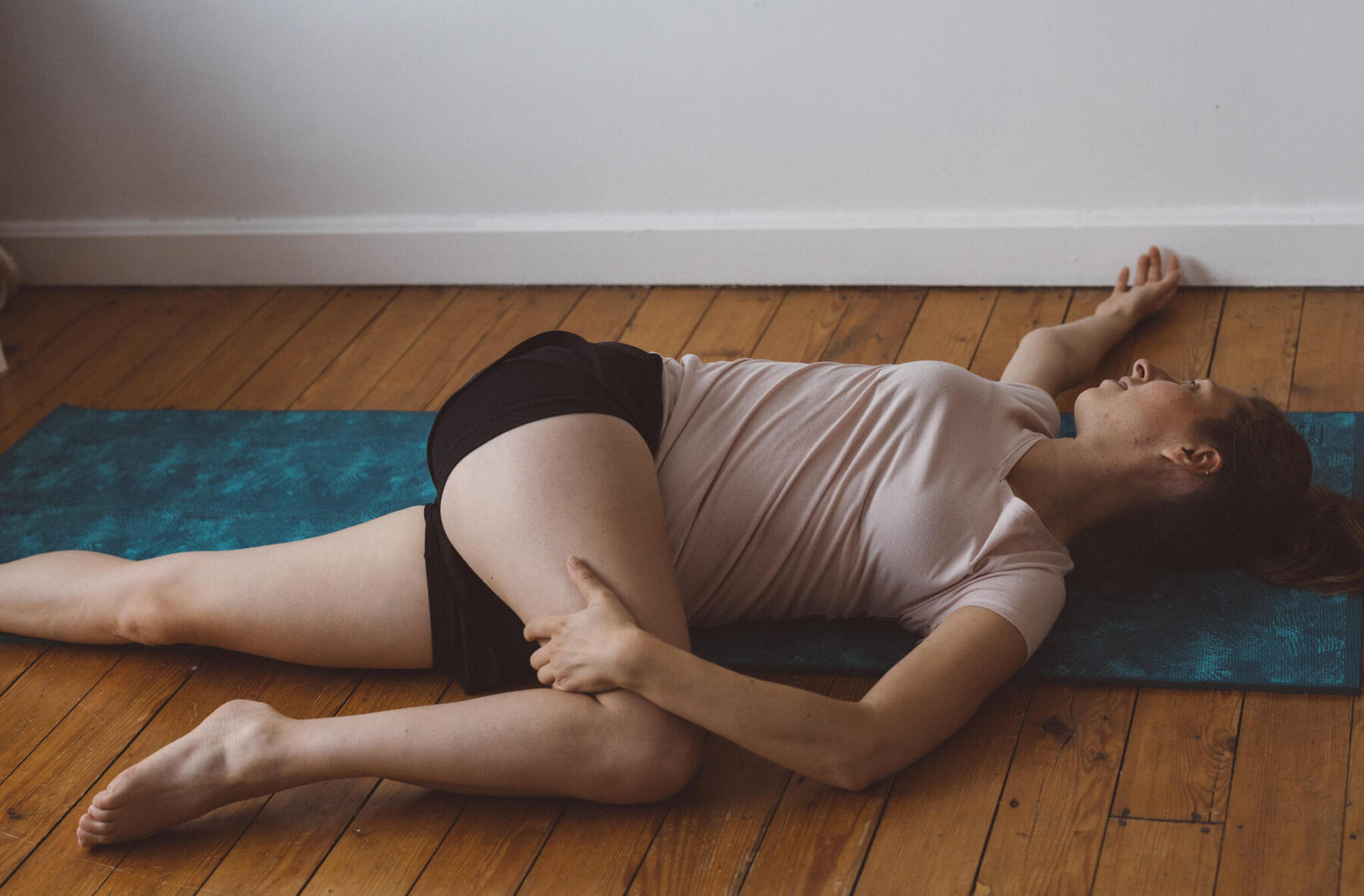
Starting position: lying on your back.
Inhale, bring both knees up to your chest (high) and open your arms at shoulder height on the floor. Exhale, bringing your knees to one side and your face to the opposite side of your knees. Try to keep both shoulders on the floor.
Repeat the stretch to the right and left.
For more feeling, keep one leg straight on the floor and perform the twist with just one knee.
If the pose is too intense, you can place a yoga brick under your knees.
Muscles stretched: dorsalis major, rectus major, obliques, gluteus maximus, gluteus medius, gluteus minimus and neck muscles.
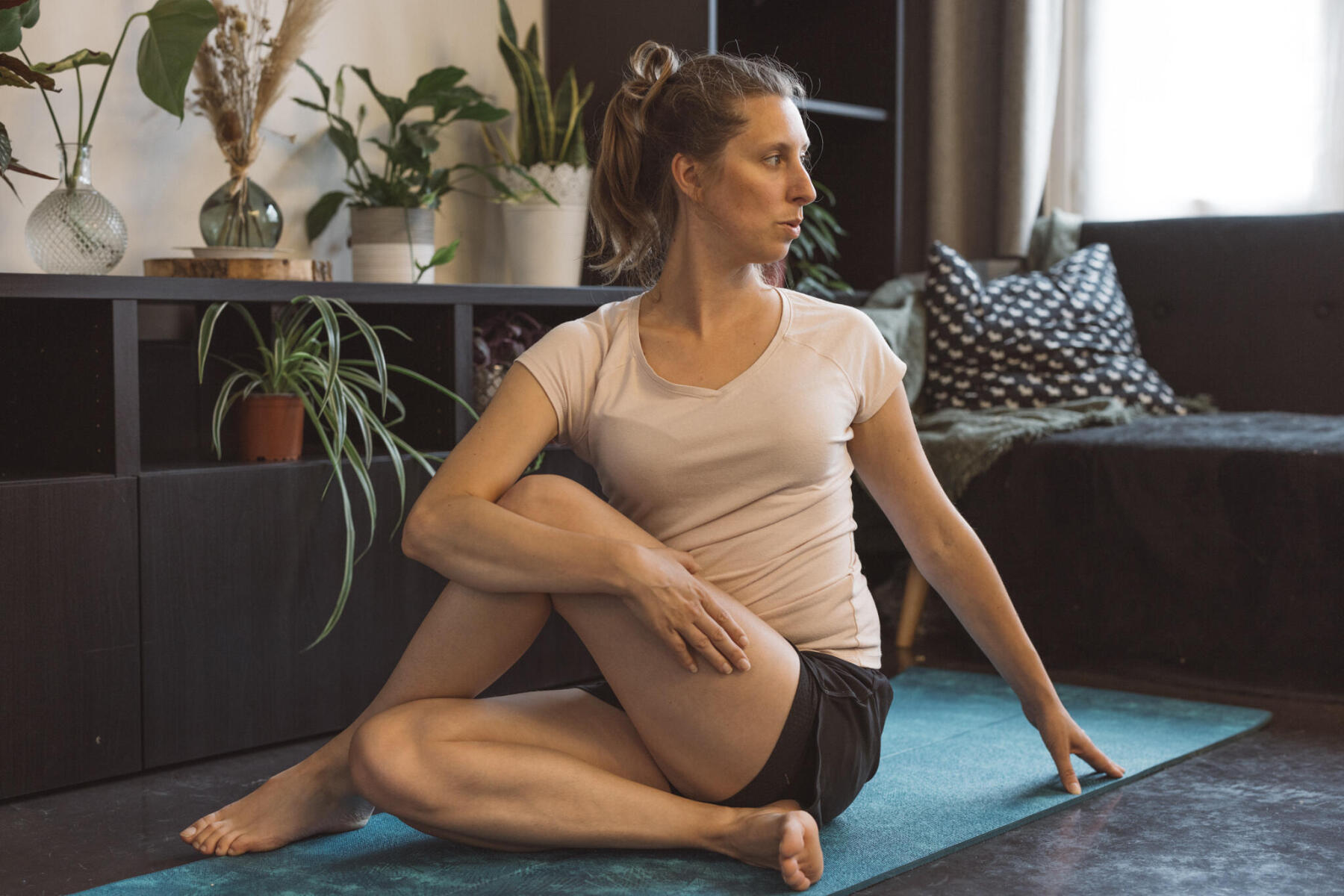
Starting position: sitting on the ground, cross your right leg over your left leg.
Inhale and hook the left elbow around the right knee. Exhale, twisting to look behind you over your right shoulder. Try to keep the glutes anchored on the ground and the torso extended.
Muscles stretched: gluteus maximus, medius, and minimus, neck muscles and deep spine muscles.
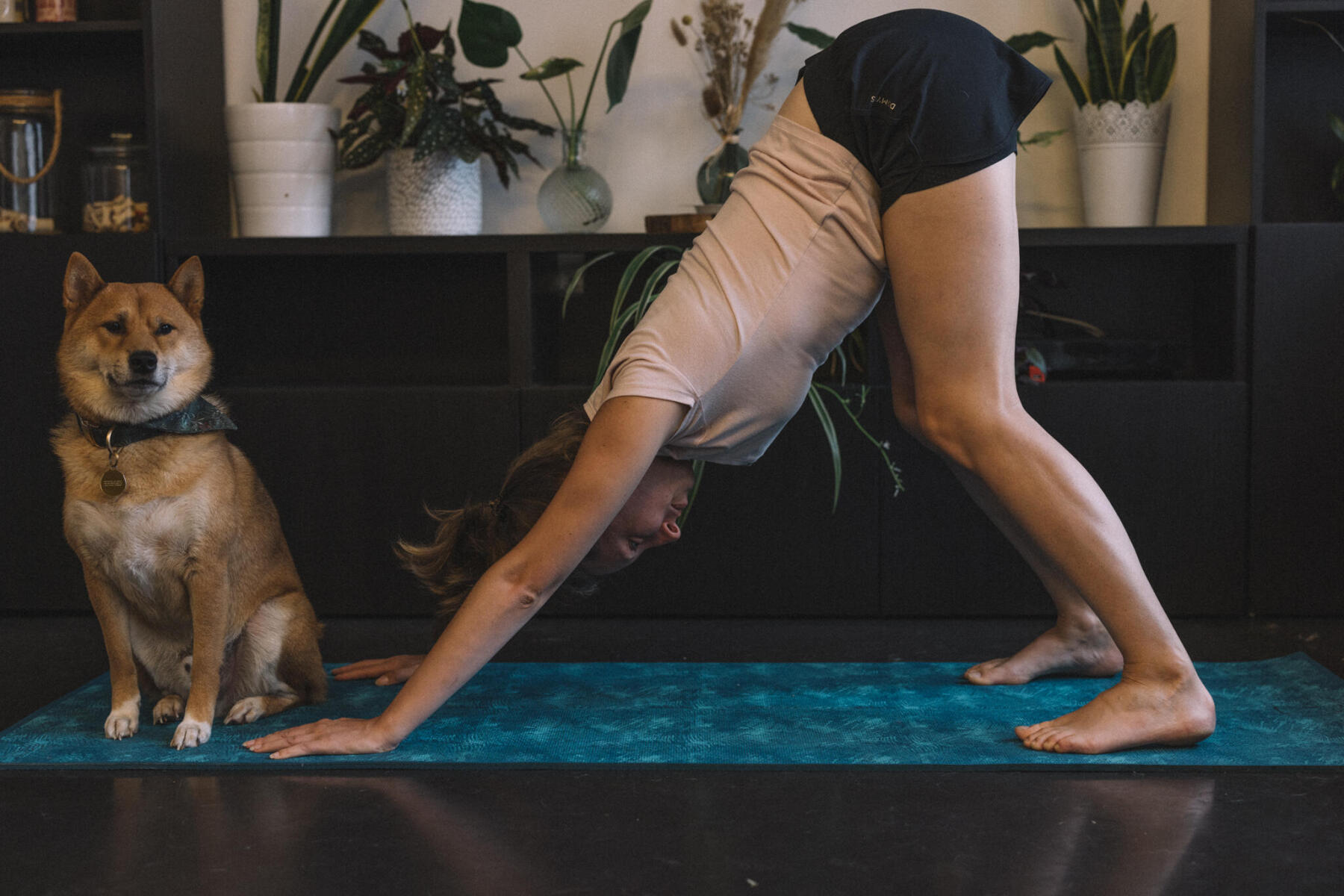
Starting position: On all fours.
Inhale, bend your toes on the floor. Exhale, push down on your hands and push your buttocks upwards. If it's too intense, keep your legs bent. Try to bring your torso closer to your thighs and push your heels into the floor. If you're flexible, don't force your chest towards the floor. Make sure you push off the ground with your hands.
Muscles stretched: dorsalis major, hamstrings, gluteus maximus and medius, calves.
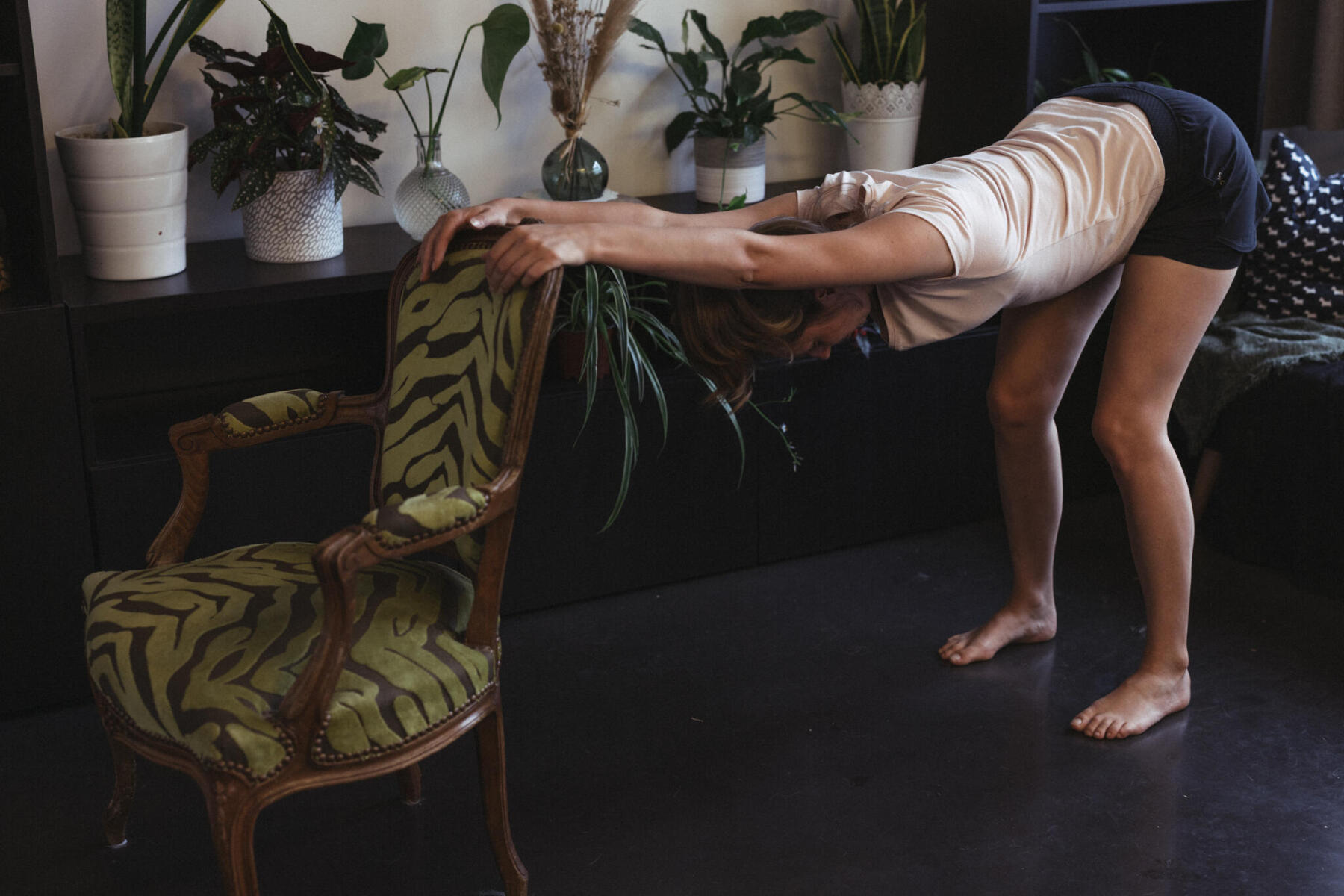
Starting position: Stand with your feet hip-width apart and your knees bent.
Inhale and place your hands shoulder-width apart on the back of a chair. Exhale and lower your torso parallel to the floor. Push your buttocks backwards. Make sure you keep your navel sucked in towards your spine.
Muscles stretched: dorsalis major, rectus major, rectus abdominis, obliques.
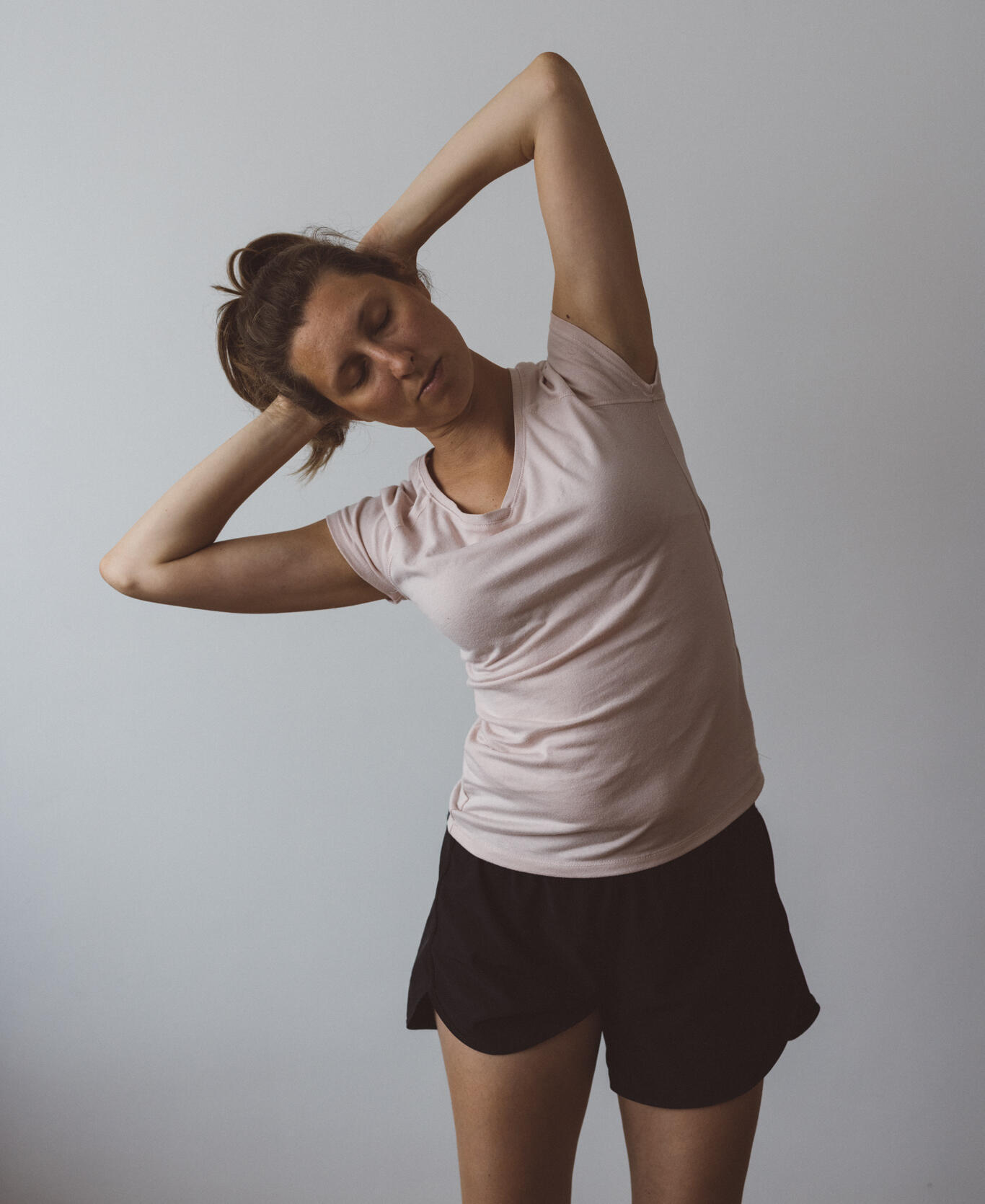
Starting position: Stand with your feet parallel.
Inhale, place your hands behind your head, elbows open. Exhaling, tilt your torso to the side from the middle of your chest. Keep your shoulders low and distribute your body weight evenly between your feet. Avoid squashing your ribs, which means stretching upwards before you start. Inhale, return to the centre. Exhale and repeat the movement on the other side.
Muscles stretched: dorsalis major, rectus major, quadratus lumborum, obliques.
⏱ For each exercise, start by holding the positions for 30 seconds, then gradually increase to 1 minute depending on how you feel.
Mix up the exercises as you wish, depending on your needs and the time you have available. Start with one session a week, then include this routine more often!
As you will have realised, the back is a complex part of the body, made up of numerous muscles that are used very often. So remember to stretch them!
As a former ballet dancer-turned-journalist, I love Pilates and stretching. I'm naturally inquisitive, so discovering new activities is second nature to me. My motto: Be kind and keep pushing yourself.